Pumping Bra Guide: How to Choose the Best Hands-Free Bra
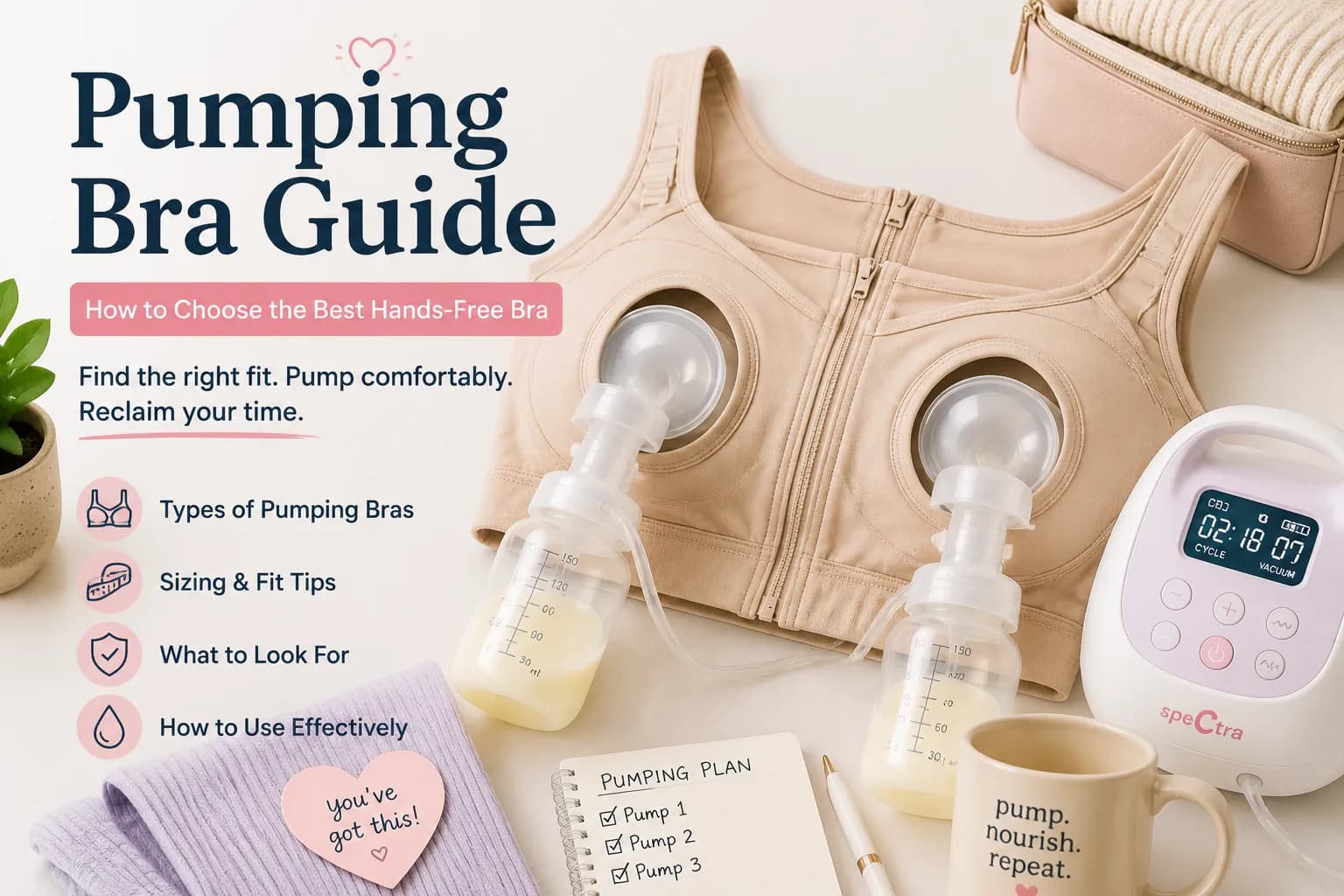
A pumping bra holds your breast pump flanges in place so you can pump hands-free. It's one of the most underrated pumping essentials — the right bra turns a 20-minute session from “sit still holding two bottles” into productive time where you can eat, work, or scroll your phone in peace.
Do You Need a Pumping Bra? (Quick Answer)
If you pump more than once a day, yes. Holding flanges manually for 15–20 minutes per session, 6–8 times a day, is exhausting and limits what you can do during sessions. A pumping bra is inexpensive ($15–$40) and pays for itself in reclaimed time within a day.
Even if you use a wearable breast pump, you may still want a pumping bra for sessions with your traditional pump (which typically has stronger suction and better output).
Types of Pumping Bras
1. Dedicated Pumping Bustier
A strapless, zip-front band that goes over or under your regular bra. You put it on only when pumping, then remove it.
- Pros: Affordable ($15–$25), fits over most bras, easy to put on/remove
- Cons: Extra step to put on, can slide on smaller frames, not wearable all day
- Best for: Budget-friendly option, moms who pump at a desk
2. Nursing + Pumping Combo Bra
A regular nursing bra with built-in flange openings. Wear it all day for nursing, then use the openings for pumping without changing.
- Pros: Wear all day, no bra changes, supports nursing and pumping
- Cons: More expensive ($30–$50), fewer size options, may not hold all flange brands
- Best for: Moms who breastfeed and pump (combination feeding)
3. DIY / Conversion Method
Cut small slits in an old sports bra to push flanges through. Free, but less secure.
- Pros: Free, immediate, works in a pinch
- Cons: Less secure hold, flanges may slip, ruins a bra
- Best for: Temporary solution while you decide what to buy
What to Look For in a Pumping Bra
| Feature | Why It Matters |
|---|---|
| Adjustable sizing | Breast size fluctuates throughout the day and between sessions |
| Secure flange hold | Flanges must stay sealed against your breast for proper suction |
| Compatible with your pump | Flange openings vary — check it fits your specific brand/size |
| Easy on/off | Zipper or clip front is faster than pulling over your head |
| Breathable fabric | You'll wear it 2–8 times a day; sweaty fabric causes irritation |
| No underwire | Underwire can compress milk ducts and reduce output |
Sizing Your Pumping Bra
Pumping bra sizing is different from regular bra sizing because your breasts change size throughout the day (fuller before pumping, smaller after). Tips:
- Measure when moderately full — not immediately after pumping (too small) or when engorged (too big)
- If between sizes, go up — too tight compresses ducts and reduces output
- Look for adjustable closures — hook-and-eye or velcro lets you adjust as your body changes
- Consider your flange size — larger flanges (27mm+) need bigger openings
Getting your flange size right matters just as much as the bra — wrong flanges reduce output regardless of what bra you're wearing.
How to Use a Pumping Bra Effectively
- Position flanges before securing: Center your nipple in the flange tunnel, then press the bra against your chest to seal
- Check the seal: If you hear air leaking or suction feels weak, reposition. A good seal is everything.
- Don't overtighten: The bra should hold flanges snug against your breast without compressing tissue around the flange
- Use breast compressions: Hands-free doesn't mean hands-off. Massage and compress during sessions to increase output by up to 48%
- Lean slightly forward: Gravity helps milk flow into bottles rather than pooling in the flange
Pumping Bra for Work
If you're pumping at work, your bra choice affects your efficiency. Consider:
- All-day combo bra: No bra changes needed — just clip open and attach flanges
- Bustier in your pump bag: Quick to throw on over your work clothes
- Discreet design: Some pumping bras look like regular bras under clothing
The PUMP Act requires your employer to provide a private space for pumping — but having a fast setup (bra + pump ready to go) helps you make the most of your break time. See our guide on pumping at work legal rights.
Common Pumping Bra Mistakes
- Bra too tight: Compresses milk ducts, reduces output, causes red marks. Loosen it.
- Wrong flange size in the bra: The bra can hold the flange, but if flange size is wrong, output suffers. Check your flange fit.
- Not checking seal: Air leaks kill suction. Always verify the seal before starting your session.
- Wearing an underwire bra while pumping: Can compress ducts and lead to clogged ducts or reduced supply
- Only owning one: If you pump 6+ times a day, having two lets you wash one while using the other
Pumping Bra vs. Wearable Pump: Do You Need Both?
A wearable pump (like Elvie or Willow) sits inside your regular bra and doesn't need a separate pumping bra. But many moms use both:
- Traditional pump + pumping bra at home for maximum output (stronger suction)
- Wearable pump at work or on-the-go for convenience
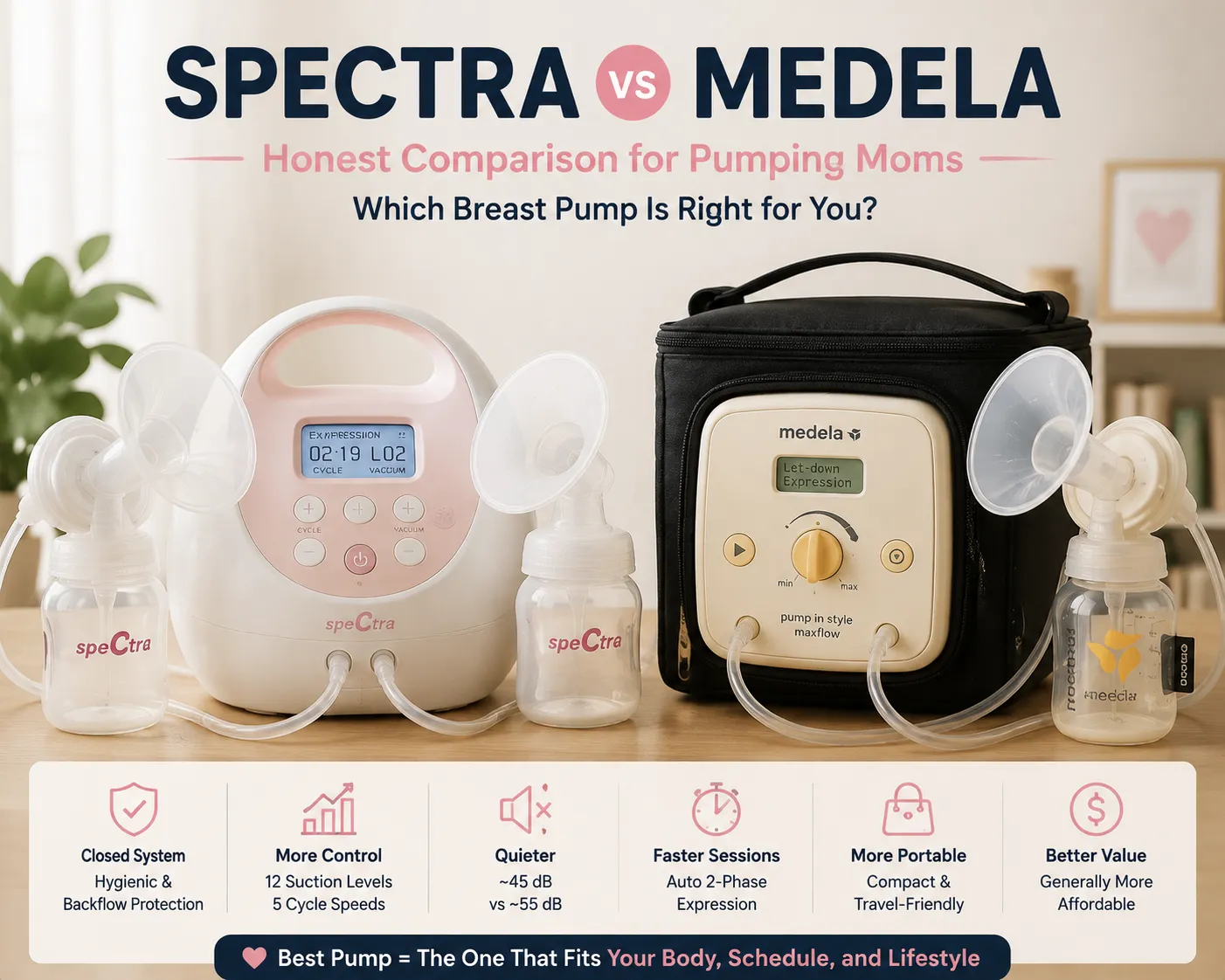
This combination gives you the best of both worlds. For help choosing a pump, see our breast pump selection guide.
Summary
- A pumping bra is essential if you pump more than once a day
- Choose between a dedicated bustier ($15–$25) or a nursing/pumping combo bra ($30–$50)
- Key features: adjustable, secure flange hold, no underwire, breathable
- Size up if between sizes — too tight reduces output
- Check flange seal every session and use breast compressions for more milk
- Consider owning two if you pump frequently
Track your pumping sessions and see how output changes with your setup.
Learn more about Pumping Tracker →Related Articles

Written by
Piaora Editorial Team
Evidence-based guides on pumping, breastfeeding, and PCOS — researched with input from lactation professionals and written for real moms.
Learn more about our team and editorial standards →