Breast Pump Flanges: How to Find the Right Size
The flange — also called a breast shield — is the funnel-shaped piece that fits over your nipple. It's the most important part of your pump setup, and it's the part most moms get wrong.
A poorly fitting flange is the #1 cause of pumping pain, nipple damage, and lower-than-expected output. The good news: it's completely fixable once you know your correct size.
What Is a Breast Pump Flange? (Quick Answer)
A flange is the cone-shaped piece that creates a seal around your breast and draws your nipple into the tunnel during pumping. The tunnel diameter — measured in millimeters — is what determines whether the flange fits correctly.
Most pumps come with a 24mm flange. But research from the Journal of Human Lactation suggests the majority of moms actually need a smaller size — often 21mm or less.
Why Flange Size Matters So Much
An incorrectly sized flange affects everything:
| Problem | Too Small | Too Large |
|---|---|---|
| Pain | Nipple compressed, rubbing | Areola pulled in, friction |
| Output | Milk flow restricted | Inefficient expression |
| Nipple appearance | White, blanched after pumping | Swollen, red, bruised |
| Supply impact | Incomplete emptying → supply drop | Incomplete emptying → supply drop |
How to Measure Your Flange Size
You measure the diameter of your nipple — not your areola. Here's how:
- Use a ruler or measuring tape
- Measure across the widest part of your nipple at the base
- Measure in millimeters
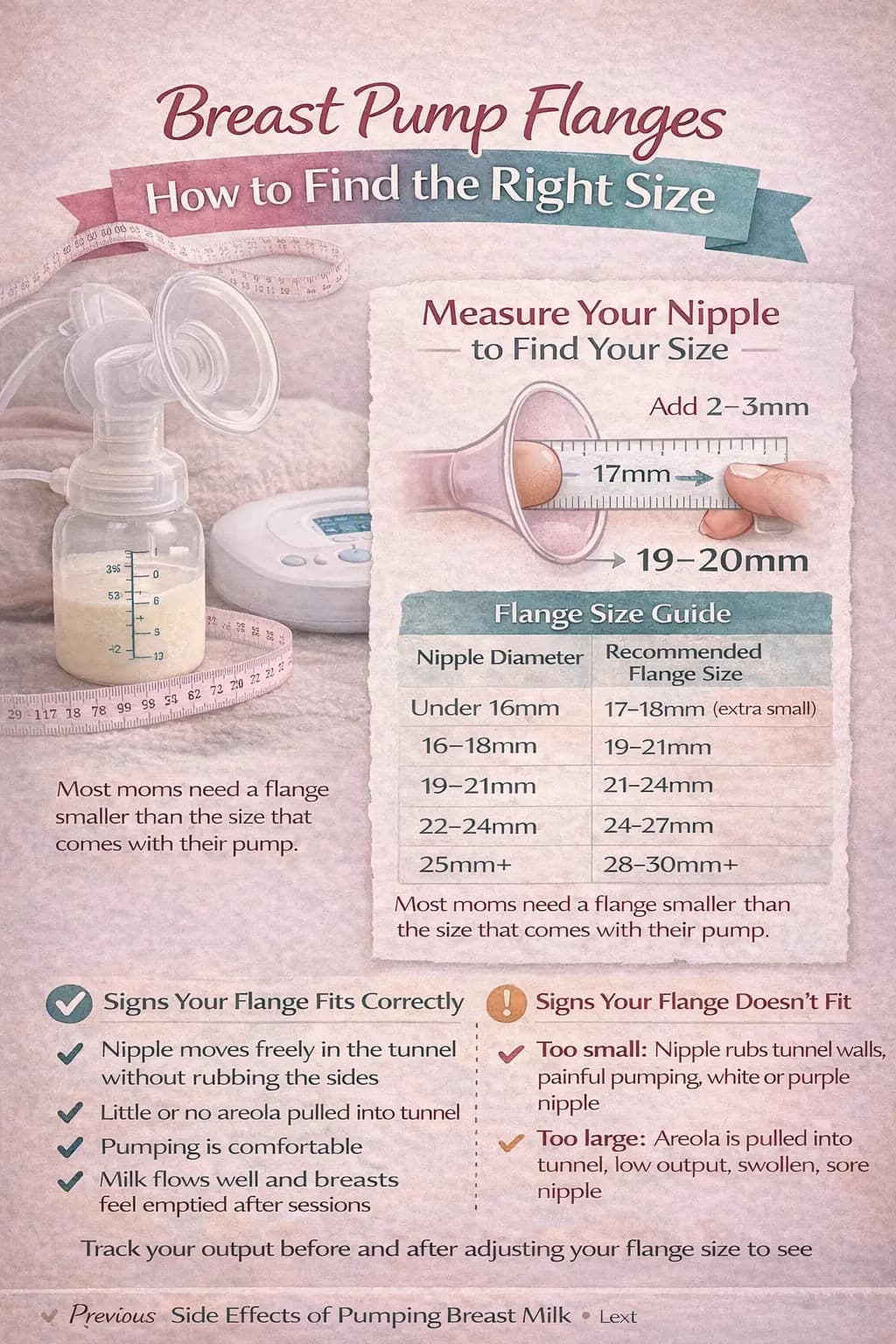
- Add 2–3mm to get your starting flange size
For example: if your nipple measures 17mm, start with a 19–20mm flange.
Important: Measure after pumping, not before. Nipples can swell during pumping, so your post-pump measurement is more accurate for sizing.
Flange Size Guide
| Nipple Diameter | Recommended Flange Size |
|---|---|
| Under 16mm | 17–18mm (extra small) |
| 16–18mm | 19–21mm |
| 19–21mm | 21–24mm |
| 22–24mm | 24–27mm |
| 25mm+ | 28–30mm+ |
These are starting points — the right size is ultimately determined by comfort and output, not just measurement.
Signs Your Flange Fits Correctly
A well-fitting flange should feel like this:
- Your nipple moves freely in the tunnel without rubbing the sides
- Little or no areola is pulled into the tunnel
- Pumping is comfortable — mild pulling sensation is normal, pain is not
- Milk flows well and breasts feel emptied after sessions
- No white or blanched nipple after pumping
Signs Your Flange Doesn't Fit
- Too small: Nipple rubs the tunnel walls, turns white or purple, pain during pumping
- Too large: Areola is pulled into the tunnel, nipple looks swollen or bruised, output is lower than expected
- Either: Incomplete emptying, supply gradually dropping, persistent soreness
If pumping hurts, flange fit is almost always the first thing to check. Common pumping side effects and how to fix them →
Flange Sizes Available and Where to Find Them
Most major pump brands offer flanges in multiple sizes, but availability varies:
- Standard sizes: 21mm, 24mm, 27mm, 30mm
- Small sizes (17–19mm) are less common but available from most brands as accessories
- Silicone flange inserts (like Pumpin' Pals) can reduce the effective size of a standard flange
- Check your pump brand's website for compatible accessories
Choosing the right pump is just as important as the right flange. How to choose the right breast pump →
Do Both Sides Need the Same Size?
Not necessarily. Many moms have asymmetrical nipples and need different sizes on each side. Measure both nipples separately and size each flange independently.
When to Get a Professional Fitting
If you've tried adjusting your flange size and still have pain or low output, a lactation consultant can measure you properly and recommend the right fit. Many offer virtual consultations, making it easy to get help without leaving home.
Final Thoughts
Flange fit is the single most impactful adjustment most moms can make to improve their pumping experience. If pumping hurts or output is lower than expected, check your flange size before assuming anything else is wrong.
A 5-minute measurement can make every pumping session more comfortable and more effective.
Track your output before and after adjusting your flange size to see the difference.
Learn more about Pumping Tracker →Related Articles
Written by
Piaora Editorial Team
Evidence-based guides on pumping, breastfeeding, and PCOS — researched with input from lactation professionals and written for real moms.
Learn more about our team and editorial standards →