Baby Refusing Bottle: Why It Happens & What to Try
Bottle refusal is one of the most stressful challenges for pumping moms — especially when you're heading back to work. The good news: most babies can learn to accept a bottle with patience and the right approach. Here's why it happens and what actually works.
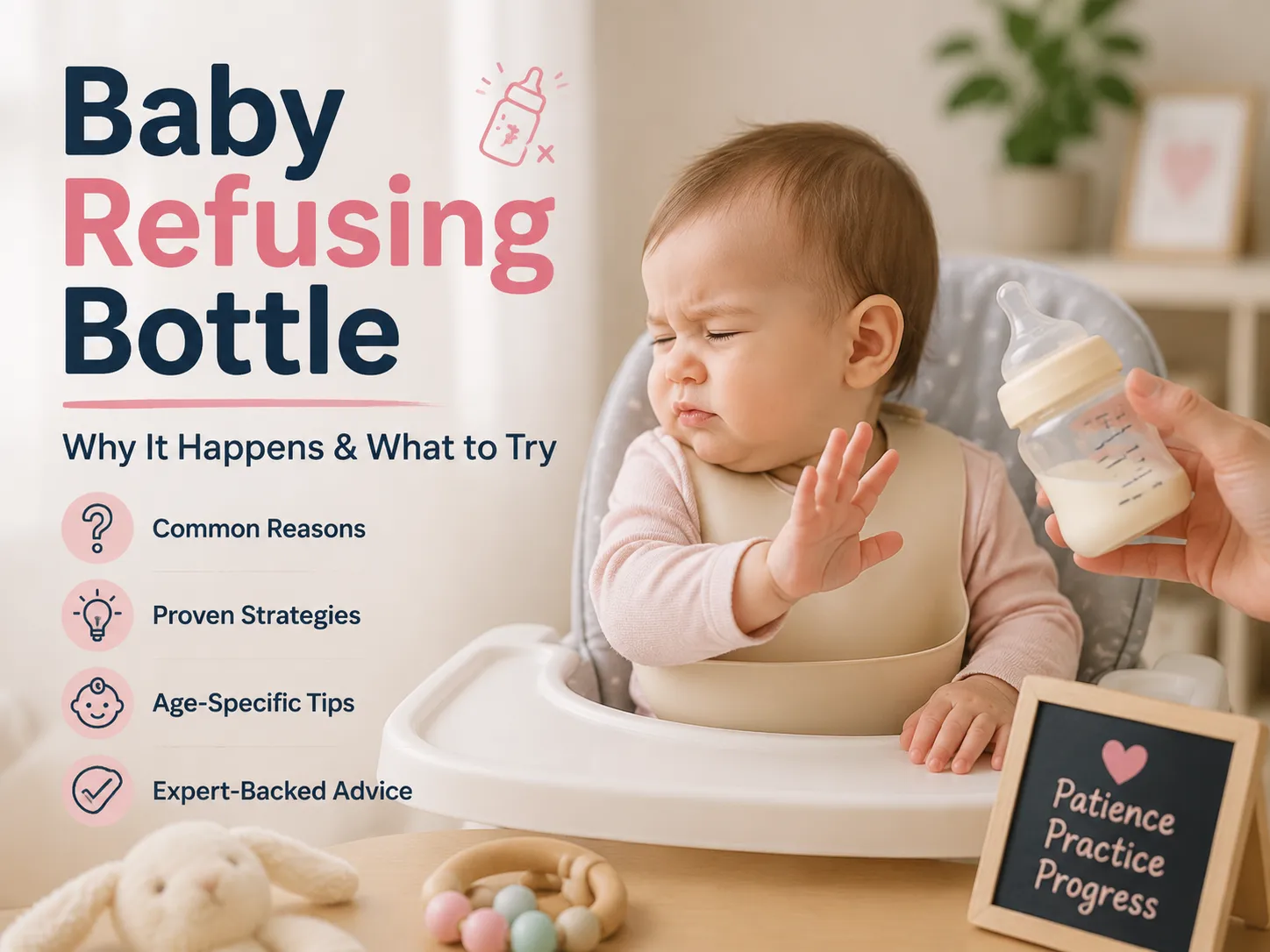
Why Do Breastfed Babies Refuse Bottles?
Bottle refusal isn't stubbornness — it's usually a preference or discomfort issue. According to the American Academy of Pediatrics, the most common reasons include:
Nipple Confusion / Flow Preference
Breastfeeding and bottle-feeding require different mouth movements. Breast milk flows in response to active suckling, while bottles can drip passively. Some babies prefer the breast because they control the flow, while others reject bottles because the flow is too fast or too slow.
Taste or Temperature Difference
Stored breast milk can taste different than fresh — especially if you have high lipase, which gives refrigerated or frozen milk a soapy or metallic taste. Temperature matters too: many babies prefer milk warmed to body temperature. See our guide on how to warm breast milk safely.
Mom Is Present
Many babies won't take a bottle when they can smell or see mom. They know the breast is available and prefer it. This is completely normal — and it's why many lactation consultants recommend having someone else offer the first bottles.
Wrong Timing
Offering a bottle when baby is overtired, overstimulated, or either too hungry or not hungry enough can trigger refusal. The ideal window is when baby is calm, alert, and showing early hunger cues — not crying from hunger.
Bottle or Nipple Doesn't Fit
Just like breast pump flanges, bottle nipples aren't one-size-fits-all. The shape, material, and flow rate all matter. Some babies need a slow-flow nipple that mimics breastfeeding pace.
When to Introduce the Bottle (Timing Matters)
The La Leche League recommends introducing a bottle between 3–6 weeks of age — after breastfeeding is established but before baby becomes strongly set in their ways:
- Too early (<2 weeks): May interfere with breastfeeding establishment and supply
- Sweet spot (3–6 weeks): Baby has learned to breastfeed but is still flexible
- Delayed (>8 weeks): Baby may be more resistant — possible but requires more patience
If you're returning to work, start bottle practice at least 2–3 weeks before your return date.
10 Strategies That Actually Work
1. Have Someone Else Offer It
This is the single most effective tip. Leave the room — or even the house — and let your partner, grandparent, or caregiver offer the bottle. Many babies who refuse every bottle from mom will happily take one from someone else.
2. Try Different Bottle Nipples
Buy a few different nipple shapes and flow rates. Common options that work for breastfed babies:
- Wide-base, slow-flow nipples — mimic breast shape and pace
- Angled/anti-colic nipples — reduce air intake
- Silicone vs. latex — some babies have a strong preference
Don't buy 10 of the same bottle. Buy singles of 3–4 different brands and let baby tell you which one they prefer.
3. Use Paced Bottle Feeding
Paced feeding mimics breastfeeding rhythm and gives baby more control:
- Hold baby upright (not reclined)
- Hold the bottle nearly horizontal so milk doesn't flood the nipple
- Let baby draw the nipple in — don't push it into their mouth
- Pause every 20–30 seconds by tilting the bottle down
- A feed should take 15–20 minutes, similar to breastfeeding pace
4. Warm the Milk (and the Nipple)
Many breastfed babies reject cold bottles. Warm the milk to body temperature and try running warm water over the nipple before offering it. The temperature and softness will feel more familiar. Our warming guide covers the safest methods.
5. Offer at the Right Time
Don't wait until baby is screaming from hunger. The ideal window is when baby shows early hunger cues (rooting, hand-to-mouth, lip-smacking) but is still calm. Alternatively, try offering when baby is slightly drowsy — some babies accept bottles in a sleepy state.
6. Try a Different Position
Some babies won't take a bottle in a breastfeeding position (because they expect the breast). Try:
- Facing outward on your lap (looking around the room)
- In a bouncer or car seat
- Walking around while offering
- Facing a window with natural light
7. Use Fresh Milk First
If baby is rejecting stored milk, try freshly pumped milk (still warm from pumping). If baby accepts fresh but refuses stored milk, high lipase may be the issue — consider scalding milk before storing to prevent taste changes.
8. Drip Milk on the Nipple
Before offering, squeeze a few drops of milk onto the outside of the bottle nipple so baby can taste and smell it. This can spark interest and encourage them to latch onto the bottle nipple.
9. Try Skin-to-Skin (Without Breastfeeding)
Hold baby skin-to-skin and offer the bottle when they're calm and content. The comfort of closeness can help them accept something new. Just make sure the breast isn't accessible during the attempt.
10. Be Patient and Consistent
Offer the bottle once a day without pressure. Never force it — this creates negative associations. Most babies need 5–14 days of consistent gentle offering before they accept a new feeding method. Stay calm, keep sessions short (5–10 minutes), and try again later.
Age-Specific Bottle Refusal
| Age | Common Reason | Strategy |
|---|---|---|
| 0–4 weeks | Too early — still learning to breastfeed | Wait until 3–4 weeks unless medically needed |
| 4–8 weeks | Flow or nipple preference | Try different nipples; have someone else offer |
| 2–4 months | Strong breast preference established | Paced feeding; different positions; patience |
| 4–6 months | Distraction, developmental changes | Quiet environment; offer when drowsy |
| 6+ months | May prefer cup or solids | Try sippy cup or open cup; supplement with solids |
When Bottle Refusal Is a Medical Concern
Most bottle refusal is behavioral and resolves with patience. However, contact your pediatrician if:
- Baby is refusing both breast and bottle (may indicate illness)
- Baby is losing weight or not gaining appropriately
- Baby is having fewer wet diapers (fewer than 6 per day)
- You suspect oral ties (tongue tie or lip tie) affecting latch
- Baby seems in pain during feeding (arching back, screaming)
Conditions like reflux, ear infections, oral thrush, or tongue ties can all cause feeding refusal that looks like simple bottle preference but needs medical attention.
What NOT to Do
- Don't starve baby into accepting — withholding breastfeeding to force bottle acceptance is dangerous and unnecessary
- Don't force the nipple in — this creates negative associations and worsens refusal
- Don't try during a meltdown — stop if baby is distressed and try again later
- Don't switch nipples constantly — give each nipple 3–5 attempts before deciding it's not working
- Don't panic — most babies figure it out within 1–2 weeks of consistent offering
Preparing for Going Back to Work
If you're returning to work and baby hasn't taken a bottle yet:
- Start 2–3 weeks before your return date — give yourself buffer time
- Practice with your daycare provider — some babies accept bottles from new people more readily than family
- Leave a worn shirt with your scent near baby during feeds (comfort without breastfeeding expectation)
- Consider a trial day at daycare before your actual start date
- Have a backup plan — cup feeding, syringe feeding, or spoon feeding can bridge the gap while baby adjusts
For more on managing the transition: Pumping schedule for returning to work →
Alternative Feeding Methods If Bottle Refusal Persists
If baby truly won't take a bottle despite weeks of trying, these alternatives can work:
- Open cup feeding — even young babies can lap milk from a small cup held to their lips
- Sippy cup or straw cup — works well for babies 4+ months
- Syringe or spoon feeding — slow but effective as a temporary bridge
- Supplemental nursing system (SNS) — tube feeding at the breast for specific medical situations
These aren't failures — they're valid alternatives. Your baby still gets your breast milk, just through a different delivery method.
Summary
- Bottle refusal is common and usually temporary
- Introduce bottles between 3–6 weeks of age
- Have someone other than mom offer the first bottles
- Try paced feeding with a slow-flow nipple
- Warm the milk to body temperature
- Be patient — most babies accept within 1–2 weeks of consistent practice
- Never force it; if it's not working, stop and try again later
- See your pediatrician if baby refuses all feeding or is losing weight
Track every feeding and pumping session to stay on top of your baby's intake.
Learn more about Pumping Tracker →Related Articles
Written by
Piaora Editorial Team
Evidence-based guides on pumping, breastfeeding, and PCOS — researched with input from lactation professionals and written for real moms.
Learn more about our team and editorial standards →