Wearable Breast Pump Pros and Cons: Is It Worth It?
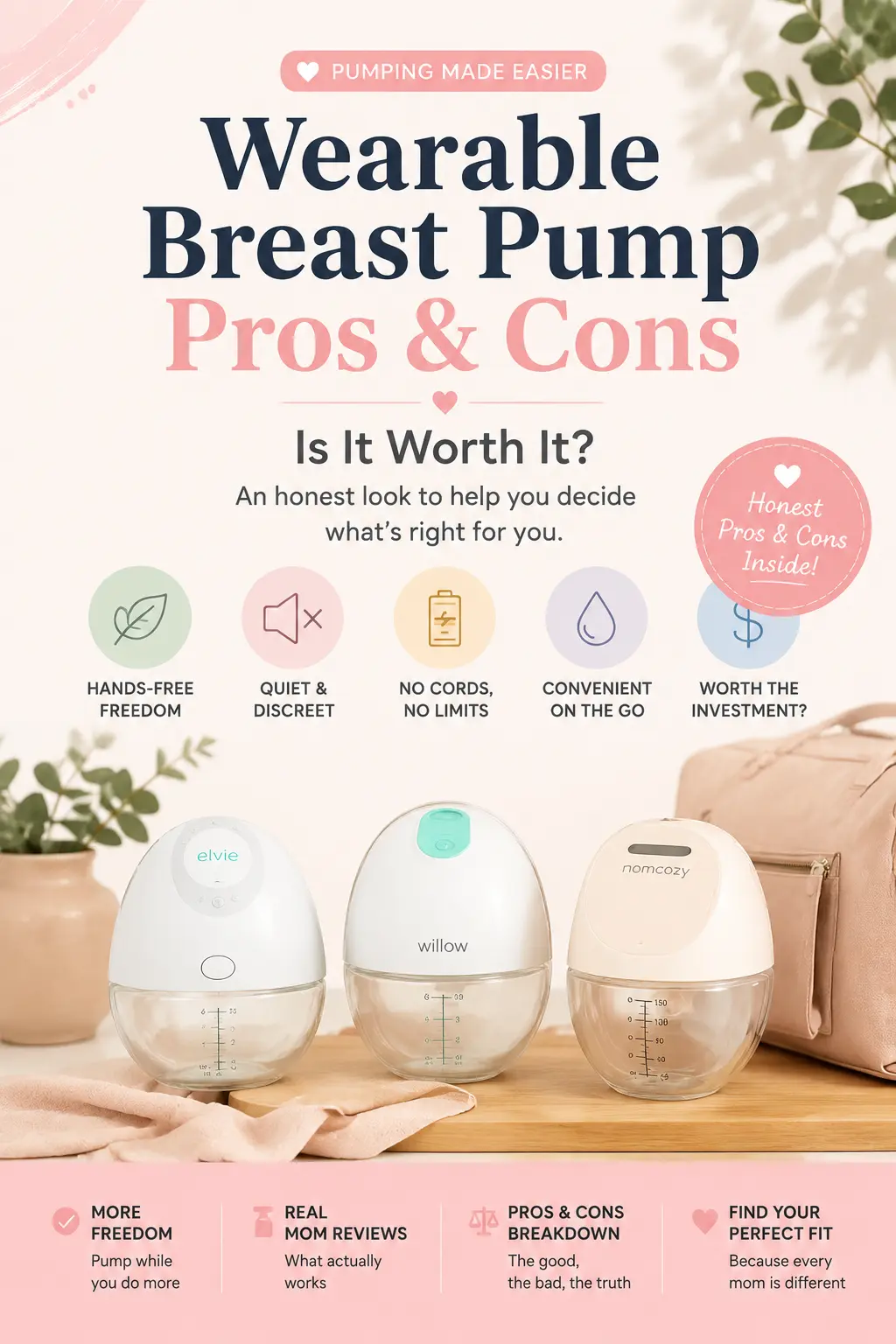
Wearable breast pumps — the kind that fit inside your bra with no tubes, no cords, and no sitting still — have become one of the most talked-about products for pumping moms. Brands like Elvie, Willow, and Momcozy have made hands-free pumping mainstream.
But are they actually worth it? The honest answer: it depends on how and where you pump. Here's a complete breakdown of the pros and cons of wearable breast pumps so you can decide if one is right for you.
What Is a Wearable Breast Pump?
A wearable breast pump (also called a hands-free breast pump or in-bra pump) is a self-contained pumping unit that fits inside your bra. Unlike traditional electric pumps, there are no external tubes, no motor sitting on a table, and no need to stay in one place while pumping. Many insurers now cover wearable pumps — check the Healthcare.gov breastfeeding benefits page for your coverage details.
Popular wearable pump brands include:
- Elvie Pump — one of the first mainstream wearable pumps, known for its app and quiet motor
- Willow Go — spill-proof design, works in any position including lying down
- Momcozy M9 / S12 Pro — more affordable options with strong suction
- eufy S1 Pro — newer entrant with hospital-grade suction claims
Prices range from around $100 (Momcozy) to $500+ (Elvie, Willow). Most are covered by insurance under the ACA. How to get a breast pump through insurance →
Pros of Wearable Breast Pumps
1. Truly hands-free pumping
The biggest advantage: you can pump while doing other things. Working at your desk, on a call, cooking, driving (with a pumping bra), or chasing a toddler. For working moms who struggle to find time to pump, this is a genuine game-changer.
2. Discreet under clothing
Wearable pumps are designed to be invisible under a shirt or blazer. You can pump during a meeting, on a commute, or in a public space without anyone knowing. This is a significant advantage for moms who pump at work or travel frequently. Pumping while traveling for work →
3. No cords or external motor
Traditional pumps require you to be near an outlet or carry a battery pack. Wearable pumps have a built-in rechargeable battery — you can pump anywhere without worrying about power.
4. Quieter than most traditional pumps
Most wearable pumps are significantly quieter than hospital-grade or traditional electric pumps. You can pump during a phone call or in a quiet office without the loud rhythmic noise.
5. App connectivity (on premium models)
Higher-end wearable pumps like Elvie and Willow connect to an app that tracks your output in real time, lets you adjust suction levels, and logs your sessions automatically. This makes it easier to monitor your supply and spot trends.
Cons of Wearable Breast Pumps
1. Lower suction than traditional pumps
This is the most significant drawback. Most wearable pumps don't match the suction strength of hospital-grade or traditional double electric pumps. For moms who need maximum output — especially those building supply or exclusively pumping — a wearable pump alone may not be enough.
Many moms use a wearable pump for convenience sessions (at work, on the go) and a traditional pump for dedicated pumping sessions at home.
2. Expensive
Quality wearable pumps cost $200–$500+. Even with insurance coverage, you may face out-of-pocket costs. Budget options like Momcozy exist, but suction and durability vary.
3. More parts to clean
Wearable pumps have more components than traditional pumps — flanges, valves, membranes, milk containers, and charging components. Cleaning all of these multiple times a day adds up, especially when you're already exhausted.
4. Fit and flange sizing is critical
Because the entire unit sits inside your bra, fit matters more than with a traditional pump. If the flange size is wrong or the unit doesn't sit correctly, you'll get poor output and potential nipple pain. Getting the right fit takes trial and error. How to find the right flange size →
5. Battery life limits long sessions
Most wearable pumps offer 2–3 hours of battery life per charge. For moms who pump frequently throughout the day, you may need to charge between sessions. This is less of an issue if you have access to a charger at work.
6. Not ideal for low supply
If you're struggling with milk supply, a wearable pump is generally not the right primary pump. The lower suction means less stimulation, which can make supply issues worse. Stick with a hospital-grade or strong double electric pump until your supply is established. How to increase milk supply while pumping →
Wearable Pump vs. Traditional Pump: Which Is Better?
| Factor | Wearable Pump | Traditional Pump |
|---|---|---|
| Suction strength | Moderate | Strong (hospital-grade available) |
| Hands-free | ✓ Fully hands-free | Requires pumping bra |
| Portability | ✓ No cords, fits in bra | Requires bag/outlet |
| Noise level | ✓ Quiet | Louder |
| Cost | $100–$500+ | $50–$300 (often free via insurance) |
| Best for supply issues | Not ideal | ✓ Better |
| Cleaning | More parts | Fewer parts |
Who Should Get a Wearable Breast Pump?
A wearable pump is a good fit if:
- You pump at work and need to pump during meetings or at your desk
- You travel frequently and need a discreet, portable option
- You have an established milk supply and aren't struggling with output
- You want to pump while doing other tasks (cooking, walking, working)
- You're using it as a secondary pump alongside a traditional pump
A wearable pump is probably not the right primary pump if:
- You're exclusively pumping and need maximum output
- You're struggling with low milk supply
- You're in the early weeks establishing supply
- Budget is a concern and you can only afford one pump
Tips for Getting the Most Out of a Wearable Pump
- Get the right flange size — this is the single biggest factor in output and comfort
- Use it for convenience sessions, not as your only pump if supply is a concern
- Charge between sessions so you're never caught with a dead battery
- Track your output — wearable pumps can make it easy to lose track of how much you're actually getting
- Clean thoroughly — the extra parts mean more places for milk residue to hide
Tracking your output across sessions — whether you use a wearable or traditional pump — helps you spot supply trends early. Try our free Pumping Tracker →
Final Verdict: Are Wearable Breast Pumps Worth It?
For working moms who pump at the office, a wearable pump is often worth every penny. The freedom to pump during a meeting or at your desk — without anyone knowing — is genuinely valuable.
For moms who primarily pump at home or are dealing with supply issues, a traditional double electric pump will likely serve you better as your primary pump. Many moms end up with both: a traditional pump for home sessions and a wearable for on-the-go.
Whatever pump you use, the most important thing is consistency — pumping at regular intervals to maintain your supply. How to build a pumping schedule that works for you →
Track every session — wearable or traditional — with our free Pumping Tracker.
Learn more about Pumping Tracker →Related Articles
Written by
Piaora Editorial Team
Evidence-based guides on pumping, breastfeeding, and PCOS — researched with input from lactation professionals and written for real moms.
Learn more about our team and editorial standards →