PCOS Treatment Options: What Works and What Doesn't
There's no cure for PCOS — but there are effective ways to manage it. The right treatment depends on your specific symptoms, whether you want to get pregnant, and what your body responds to. This guide covers every major treatment option, what the evidence says, and how to think about your choices.
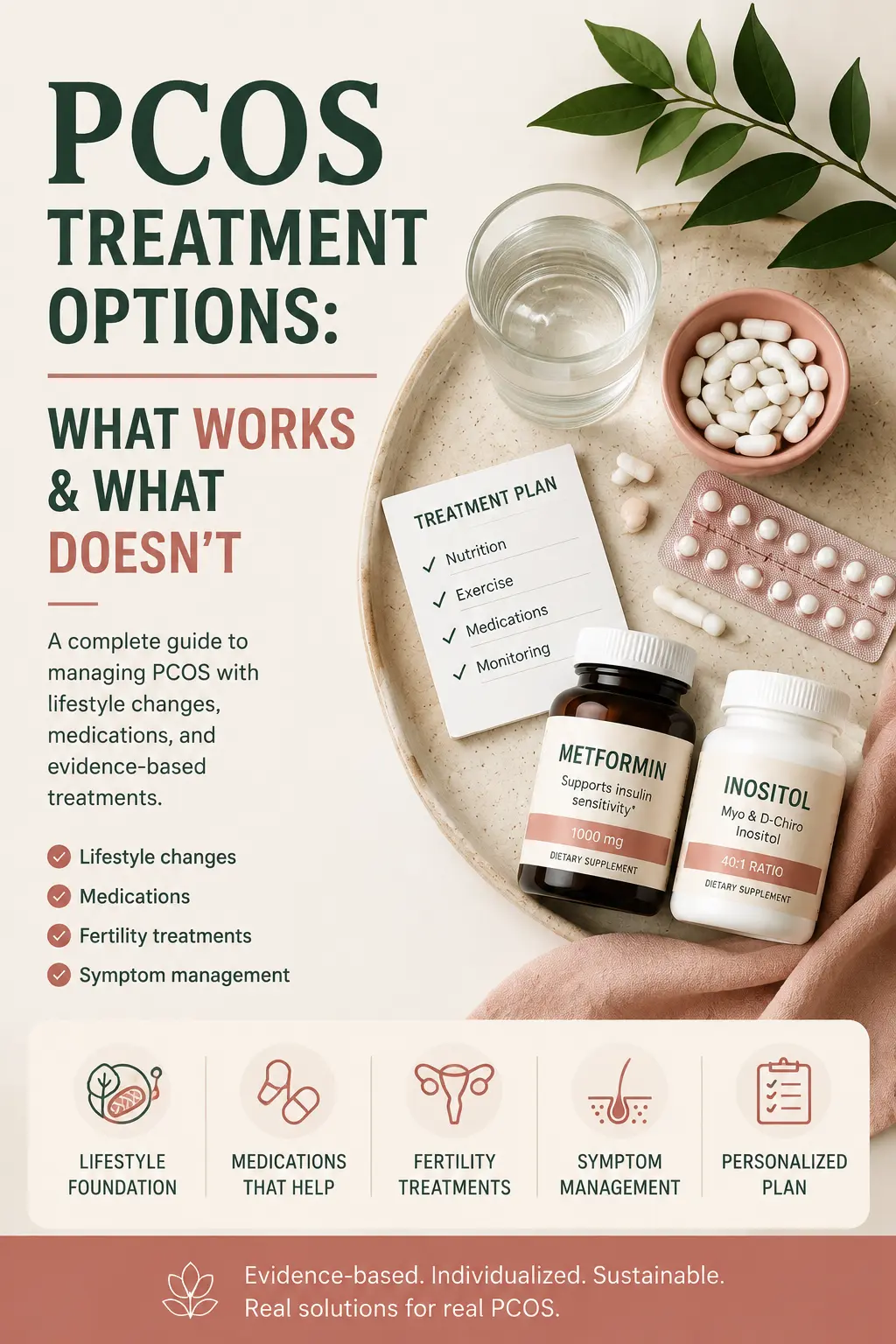
The Foundation: Lifestyle Changes First
According to Medscape and the 2023 International PCOS Guidelines, lifestyle changes are considered first-line treatment for PCOS — before any medication. This isn't just a platitude; the evidence is strong.
Even a 5–10% reduction in body weight (for women who are overweight) can significantly improve insulin resistance, lower androgen levels, restore ovulation, and reduce symptoms across the board.
Diet
The most evidence-backed dietary approach for PCOS is a low-glycemic diet — one that minimizes blood sugar spikes and reduces insulin demand. This directly addresses the insulin resistance that drives many PCOS symptoms.
- Prioritize whole grains, legumes, vegetables, and lean protein
- Reduce refined carbohydrates, sugary drinks, and ultra-processed foods
- Anti-inflammatory foods (fatty fish, olive oil, berries) may also help
Exercise
Regular exercise improves insulin sensitivity independently of weight loss. Both aerobic exercise (walking, cycling, swimming) and resistance training have shown benefits for PCOS. Aim for at least 150 minutes of moderate activity per week.
Sleep and stress
Poor sleep and chronic stress both worsen insulin resistance and raise cortisol, which can increase androgen production. These are often overlooked but genuinely important parts of PCOS management.
Medications for PCOS
When lifestyle changes aren't enough — or when specific symptoms need targeted treatment — medications are the next step. Different medications address different aspects of PCOS.
Metformin
Metformin is an insulin-sensitizing medication originally developed for type 2 diabetes. It's one of the most commonly prescribed medications for PCOS, particularly for women with insulin resistance or metabolic concerns.
According to the American Academy of Family Physicians, metformin combined with lifestyle management is first-line therapy for PCOS patients with metabolic complications.
What it helps with:
- Insulin resistance and blood sugar regulation
- Lowering androgen levels (indirectly, by reducing insulin)
- Restoring more regular cycles in some women
- Reducing risk of type 2 diabetes
- May support weight loss
What it doesn't help much with: Acne, hirsutism, and hair loss respond less well to metformin alone.
PCOS and insulin resistance explained →
Combined oral contraceptives (birth control pills)
The combined pill (estrogen + progestin) is often the first medication prescribed for PCOS symptoms like irregular periods, acne, and hirsutism. It works by:
- Regulating the menstrual cycle
- Reducing androgen production from the ovaries
- Increasing sex hormone-binding globulin (SHBG), which binds free testosterone
Not all pills are equal for PCOS. Pills with anti-androgenic progestins (drospirenone, cyproterone acetate, dienogest) are generally preferred over those with androgenic progestins (levonorgestrel, norethindrone).
Important: The pill manages symptoms while you're taking it but doesn't treat the underlying condition. Symptoms typically return when you stop.
Spironolactone
Spironolactone is an anti-androgen medication that blocks the effects of testosterone and DHT on target tissues. It's particularly effective for:
- Hirsutism (excess facial/body hair)
- Acne
- Hair loss (androgenic alopecia)
It's usually prescribed alongside the pill (which provides contraception — spironolactone can cause birth defects if taken during pregnancy).
Takes 6–12 months to see full effect. Generally well-tolerated, though some women experience increased urination, dizziness, or breast tenderness.
Inositol (supplement)
Myo-inositol and D-chiro-inositol are naturally occurring compounds that improve insulin signaling. They're not prescription medications but have a growing evidence base for PCOS.
Studies suggest inositol can improve insulin resistance, lower androgens, restore ovulation, and improve egg quality. The most studied ratio is 40:1 myo-inositol to D-chiro-inositol.
Generally considered safe with few side effects. Not a replacement for metformin in severe insulin resistance, but a reasonable option for milder cases or as an add-on.
Treatments for Specific Symptoms
| Symptom | First-line treatment | Second-line |
|---|---|---|
| Irregular periods | Combined pill or lifestyle | Metformin, progestin |
| Acne | Combined pill | Spironolactone, topical treatments |
| Hirsutism | Combined pill | Spironolactone, eflornithine cream |
| Hair loss | Minoxidil (topical) | Spironolactone, combined pill |
| Insulin resistance | Lifestyle changes | Metformin, inositol |
| Weight management | Diet + exercise | Metformin, GLP-1 agonists |
Fertility Treatments for PCOS
PCOS is one of the most common causes of infertility, but most women with PCOS can get pregnant with appropriate treatment.
Letrozole (first-line for ovulation induction)
Letrozole is now the preferred first-line medication for inducing ovulation in PCOS, having largely replaced clomiphene (Clomid) based on better pregnancy rates and fewer side effects. It's taken for 5 days early in the cycle to stimulate ovulation.
Clomiphene (Clomid)
Still widely used, though letrozole has better outcomes in PCOS specifically. Works by blocking estrogen receptors, which triggers the body to produce more FSH and stimulate ovulation.
Metformin + letrozole
Combining metformin with letrozole can improve ovulation rates, particularly in women with significant insulin resistance.
IVF
For women who don't respond to oral medications, IVF is an option. Women with PCOS generally have good egg reserves and respond well to stimulation, though they're at higher risk of ovarian hyperstimulation syndrome (OHSS).
PCOS and fertility: complete guide →
What Doesn't Work (or Has Weak Evidence)
The PCOS supplement market is enormous and largely unregulated. Some things to be skeptical of:
- Most herbal supplements — spearmint tea, saw palmetto, vitex — have very limited evidence and inconsistent results
- High-dose biotin — only helps if you're actually deficient; most people aren't
- Detox teas and cleanses — no evidence for PCOS; some can be harmful
- Cutting out all carbs — very low-carb diets can work short-term but are hard to sustain; a low-GI approach is more evidence-based and sustainable
Building Your Treatment Plan
PCOS treatment is not one-size-fits-all. The right approach depends on:
- Your most bothersome symptoms
- Whether you want to get pregnant now, later, or not at all
- Your metabolic profile (insulin resistance, weight, cholesterol)
- What you've already tried
Work with a doctor — ideally an endocrinologist or gynecologist with PCOS experience — to build a plan that addresses your specific situation. Tracking your symptoms over time helps you and your doctor understand what's working.
Track your PCOS symptoms over time
A dedicated PCOS tracker is coming to Piaora. Join the waitlist for early access.
Related Articles
Written by
Piaora Editorial Team
Evidence-based guides on pumping, breastfeeding, and PCOS — researched with input from lactation professionals and written for real moms.
Learn more about our team and editorial standards →