PCOS Diet: What to Eat and What to Avoid
Diet is one of the most powerful tools for managing PCOS — but the advice online is often contradictory, overly restrictive, or not backed by evidence. This guide cuts through the noise and gives you a clear, practical framework based on what the research actually shows.
The goal isn't a perfect diet. It's a sustainable one that reduces insulin resistance, lowers inflammation, and supports hormonal balance over time.
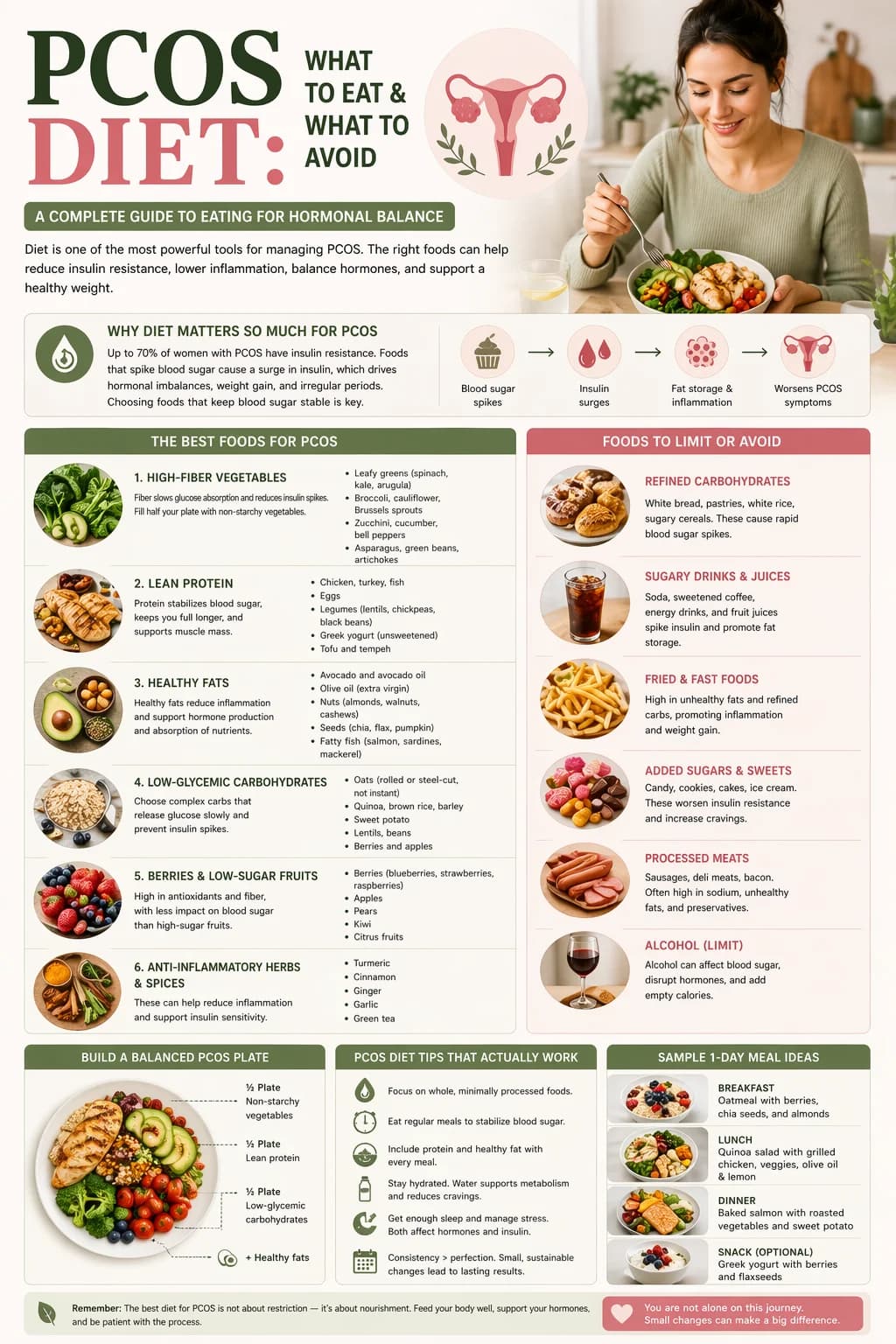
Why Diet Matters So Much for PCOS
The core issue in most PCOS cases is insulin resistance — and diet directly affects insulin levels. According to the NIH, up to 70% of women with PCOS have insulin resistance, which drives elevated androgens, weight gain, and irregular periods.
Foods that spike blood sugar cause a surge in insulin. Over time, repeated insulin spikes worsen insulin resistance and amplify PCOS symptoms. Choosing foods that keep blood sugar stable is the single most impactful dietary change you can make. Learn more about this mechanism in our guide to PCOS and insulin resistance.
The Best Foods for PCOS
High-Fiber Vegetables
Fiber slows glucose absorption, reducing insulin spikes. Non-starchy vegetables are the foundation of a PCOS-friendly diet.
- Leafy greens (spinach, kale, arugula)
- Broccoli, cauliflower, Brussels sprouts
- Zucchini, cucumber, bell peppers
- Asparagus, green beans, artichokes
Lean Protein
Protein has minimal effect on blood sugar and helps you feel full longer, reducing overall calorie intake without hunger. It also supports muscle mass, which improves insulin sensitivity.
- Chicken, turkey, fish
- Eggs
- Legumes (lentils, chickpeas, black beans)
- Greek yogurt (unsweetened)
- Tofu and tempeh
Healthy Fats
Healthy fats don't raise blood sugar and help reduce inflammation — a key driver of PCOS symptoms. Research published in the Nutrients journal supports anti-inflammatory diets for improving PCOS outcomes.
- Avocado and avocado oil
- Olive oil (extra virgin)
- Nuts (almonds, walnuts, cashews)
- Seeds (chia, flax, pumpkin)
- Fatty fish (salmon, sardines, mackerel)
Low-Glycemic Carbohydrates
You don't need to eliminate carbohydrates — you need to choose the right ones. Low-glycemic carbs release glucose slowly, preventing insulin spikes.
- Oats (rolled or steel-cut, not instant)
- Quinoa, brown rice, barley
- Sweet potato
- Lentils and legumes
- Most fruits (especially berries)
Anti-Inflammatory Foods
Chronic low-grade inflammation is common in PCOS and worsens insulin resistance. These foods actively reduce inflammation:
- Berries (blueberries, strawberries, raspberries)
- Turmeric and ginger
- Green tea
- Dark chocolate (70%+ cacao)
- Tomatoes
Foods to Limit or Avoid with PCOS
| Food / Category | Why to Limit |
|---|---|
| Sugary drinks (soda, juice, energy drinks) | Rapid blood sugar spike, no fiber to slow absorption |
| Refined carbs (white bread, white rice, pastries) | High glycemic index, causes insulin spikes |
| Processed snacks (chips, crackers, cookies) | High in refined carbs, unhealthy fats, and additives |
| Fried foods | Pro-inflammatory, high in unhealthy fats |
| Excess red and processed meat | Linked to increased inflammation |
| Alcohol | Disrupts hormonal balance, affects liver function |
| Dairy (for some women) | May raise IGF-1 and androgens in some women — individual response varies |
Note on dairy: the evidence is mixed. Some women with PCOS find that reducing dairy improves acne and other androgen-related symptoms. Others see no difference. It's worth experimenting and tracking your response.
The Best Dietary Approaches for PCOS
Several dietary patterns have been studied specifically in women with PCOS:
Low-Glycemic Index (Low-GI) Diet
The most well-supported approach for PCOS. A 2013 study in the European Journal of Clinical Nutrition found that a low-GI diet improved menstrual regularity, insulin sensitivity, and quality of life in women with PCOS more effectively than a standard healthy diet.
Mediterranean Diet
Rich in vegetables, legumes, whole grains, fish, and olive oil — the Mediterranean diet is naturally anti-inflammatory and low-glycemic. Research supports its benefits for insulin resistance and cardiovascular health, both relevant to PCOS.
Anti-Inflammatory Diet
Focuses on reducing chronic inflammation through food choices. Overlaps significantly with the Mediterranean diet. Emphasizes omega-3 fatty acids, colorful vegetables, and minimizing processed foods.
What About Low-Carb or Keto?
Low-carb diets can improve insulin sensitivity and support weight loss in PCOS. However, very low-carb (ketogenic) diets are difficult to sustain long-term and may not be appropriate for everyone. If you try low-carb, focus on quality — vegetables, legumes, and whole foods rather than processed low-carb products. For a broader overview of management strategies, see our PCOS treatment options guide.
Practical Tips for Building a PCOS-Friendly Diet
- Don't skip meals — irregular eating patterns cause blood sugar fluctuations that worsen insulin resistance
- Always pair carbs with protein or fat — this slows glucose absorption and reduces insulin spikes
- Eat breakfast — skipping breakfast is associated with higher insulin levels throughout the day
- Stay hydrated — water, herbal tea, and green tea are ideal; avoid sugary drinks
- Cook at home when possible — restaurant and processed foods often contain hidden sugars and refined carbs
- Read labels — sugar hides under many names (dextrose, maltose, corn syrup, fructose)
PCOS-Friendly Sample Day of Eating
| Meal | Example |
|---|---|
| Breakfast | Scrambled eggs with spinach and avocado on whole grain toast |
| Snack | A handful of almonds and a small apple |
| Lunch | Grilled chicken salad with mixed greens, chickpeas, olive oil dressing |
| Snack | Greek yogurt (unsweetened) with berries |
| Dinner | Baked salmon with roasted vegetables and quinoa |
Final Thoughts
There is no single "PCOS diet" — but there are clear principles that work: keep blood sugar stable, reduce inflammation, and prioritize whole foods over processed ones. The best diet is one you can actually sustain.
Start with one or two changes rather than overhauling everything at once. Track how your symptoms respond over time — cycle regularity, energy levels, skin, and weight are all useful indicators of whether your diet is working. You can use our HOMA-IR Calculator to monitor changes in insulin resistance, and explore PCOS exercise strategies to complement your dietary changes.
For more on managing PCOS through lifestyle, read our guide on PCOS and weight gain.
Related Articles
Written by
Piaora Editorial Team
Evidence-based guides on pumping, breastfeeding, and PCOS — researched with input from lactation professionals and written for real moms.
Learn more about our team and editorial standards →Frequently Asked Questions
Track Your PCOS Symptoms & Diet Progress
We're building a PCOS tracker to help you log symptoms, track your cycle, and see how lifestyle changes affect your body over time. Join the waitlist for early access.
Free. No spam. Privacy Policy