PCOS and Hair Loss: Causes, Treatment & What Actually Helps
Hair loss is one of the most distressing symptoms of PCOS — and one of the least talked about. While excess body and facial hair gets more attention, many women with PCOS experience the opposite on their scalp: thinning hair, a widening part, and a gradual loss of density that can feel impossible to stop.
Here's what's actually happening, and what you can do about it.
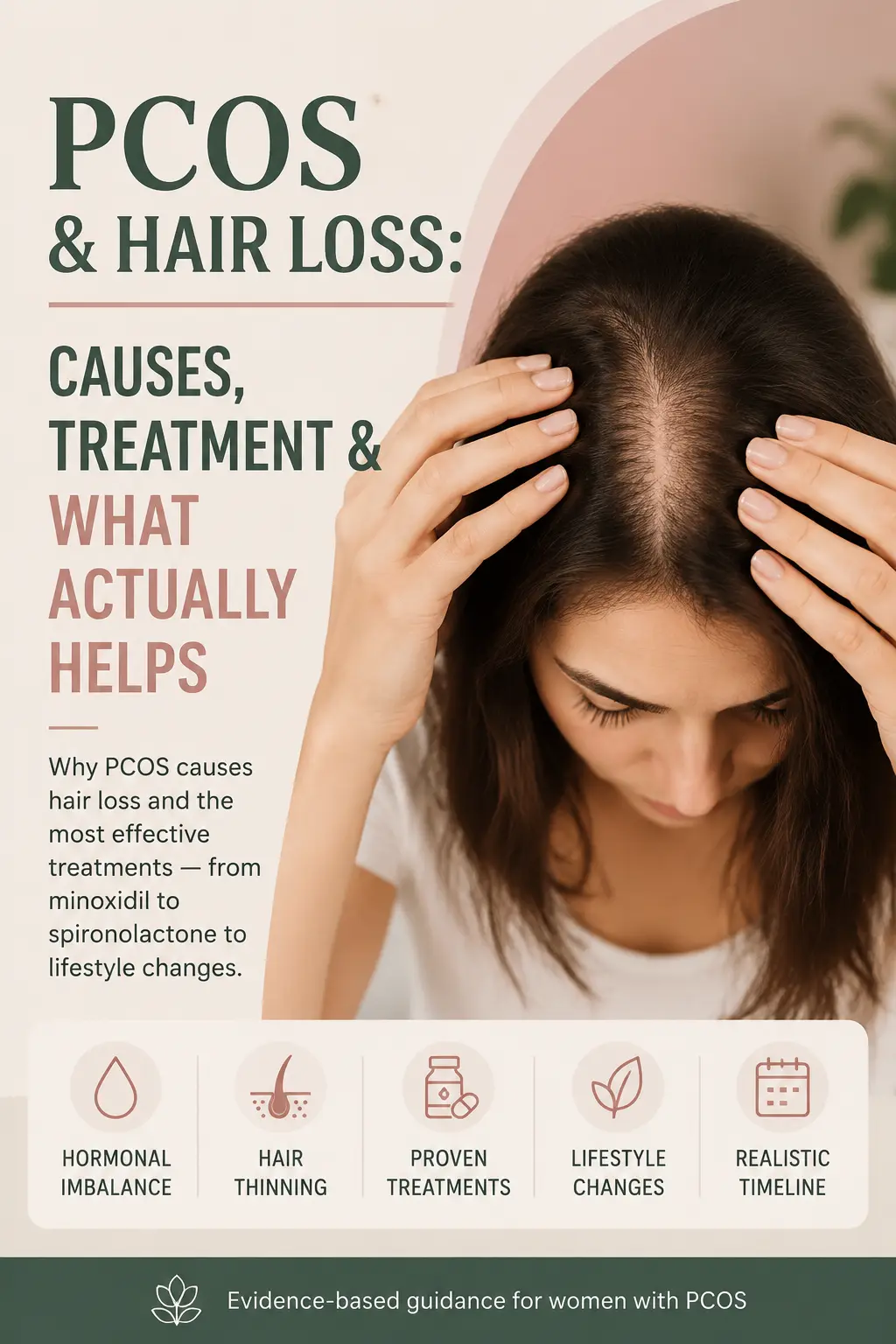
Why Does PCOS Cause Hair Loss?
PCOS-related hair loss is a form of androgenic alopecia (also called female pattern hair loss). It's caused by elevated androgens — male sex hormones like testosterone and DHT (dihydrotestosterone) — that are common in PCOS.
Here's the mechanism: DHT binds to receptors in hair follicles on the scalp and causes them to shrink over time. The hair growth cycle shortens, hairs become finer and shorter, and eventually the follicle may stop producing hair altogether.
According to Medical News Today, this type of hair loss in PCOS is directly linked to the increase in androgen hormones that characterizes the condition.
Not all women with PCOS experience hair loss — it depends on your individual androgen levels and your hair follicles' sensitivity to DHT. Some women have high androgens but no hair loss; others have moderate androgens but significant thinning.
What Does PCOS Hair Loss Look Like?
PCOS hair loss is different from the diffuse shedding you might experience after pregnancy or illness. It follows a specific pattern:
- Thinning at the top of the scalp and crown
- A widening center part
- The hairline at the front usually stays intact (unlike male pattern baldness)
- Hair becomes finer and shorter over time, not just fewer strands
- May be accompanied by increased hair on the face, chin, or body (hirsutism)
According to Harvard Health, androgenetic alopecia in women begins with gradual thinning at the part line, followed by increasing diffuse hair loss radiating from the top of the head.
Other Causes of Hair Loss in PCOS
Androgens are the primary driver, but other factors common in PCOS can contribute:
- Insulin resistance — high insulin levels can increase androgen production, worsening hair loss PCOS and insulin resistance →
- Thyroid issues — PCOS is associated with higher rates of thyroid dysfunction, which independently causes hair loss
- Nutritional deficiencies — iron deficiency and low ferritin are common in women with PCOS and can cause or worsen hair loss
- Stress — chronic stress elevates cortisol, which can disrupt the hair growth cycle
- Crash dieting — rapid weight loss (common in attempts to manage PCOS weight) can trigger telogen effluvium (sudden diffuse shedding)
Getting Diagnosed
If you're experiencing hair loss with PCOS, it's worth getting a proper evaluation. Your doctor may check:
- Total and free testosterone
- DHEA-S (another androgen)
- Thyroid function (TSH, T3, T4)
- Ferritin and iron levels
- Prolactin (elevated prolactin can also cause hair loss)
A dermatologist can also examine your scalp and hair follicles to confirm the pattern and rule out other causes.
Treatment Options for PCOS Hair Loss
There's no single cure, but several treatments have good evidence behind them. Most work best when started early — the sooner you address hair loss, the more you can preserve.
Minoxidil (topical)
Minoxidil is the most widely used and best-studied treatment for female pattern hair loss. It's available over the counter as a 2% or 5% solution or foam, applied directly to the scalp.
It works by prolonging the hair growth phase and increasing blood flow to follicles. It doesn't address the underlying androgen issue, but it can significantly slow hair loss and promote regrowth.
- Takes 3–6 months to see results
- Must be used continuously — stopping causes hair loss to resume
- 5% is generally more effective than 2% for women
Spironolactone (oral)
Spironolactone is an anti-androgen medication that blocks DHT from binding to hair follicles. It's commonly prescribed for PCOS-related hair loss, acne, and hirsutism.
It addresses the root cause (excess androgens) rather than just the symptom. Many women see significant improvement in hair density with spironolactone, especially when combined with minoxidil.
- Prescription only
- Not safe during pregnancy — requires reliable contraception
- Takes 6–12 months to see full effect
Birth control pills
Combined oral contraceptives (estrogen + progestin) can lower androgen levels and reduce hair loss in PCOS. They're often prescribed alongside spironolactone.
Not all birth control pills are equal for hair loss — some progestins have androgenic activity and can worsen hair loss. Pills with anti-androgenic progestins (like drospirenone or cyproterone acetate) are preferred.
Metformin
Metformin reduces insulin resistance, which in turn can lower androgen levels. For women whose hair loss is driven primarily by insulin resistance, metformin may help indirectly.
Nutritional support
Addressing deficiencies that contribute to hair loss:
- Iron/ferritin — get levels checked; supplementing if low can make a significant difference
- Vitamin D — deficiency is common in PCOS and linked to hair loss
- Zinc — has mild anti-androgenic properties; some evidence for hair loss
- Biotin — widely marketed but only helpful if you're actually deficient
Lifestyle Changes That Help
Addressing the underlying PCOS — particularly insulin resistance — can reduce androgen levels and slow hair loss:
- Low-glycemic diet — reduces insulin spikes that drive androgen production PCOS diet guide →
- Regular exercise — improves insulin sensitivity
- Stress management — chronic stress worsens both PCOS and hair loss
- Avoid crash dieting — rapid weight loss triggers shedding; aim for gradual, sustainable changes
What to Expect: Realistic Timeline
Hair loss treatment is slow. This is one of the most frustrating aspects — you won't see results for months, and it's easy to give up before the treatment has had time to work.
- 3 months: Shedding may slow; no visible regrowth yet
- 6 months: Some regrowth may be visible; density may start to improve
- 12 months: Full effect of most treatments; significant improvement possible
The goal of treatment is usually to stop further loss and maintain what you have, with some regrowth possible. Complete reversal of significant hair loss is uncommon, which is why early treatment matters.
When to See a Doctor
See a doctor if:
- You're noticing significant thinning or a widening part
- Hair loss is accompanied by other PCOS symptoms (irregular periods, acne, excess facial hair)
- You've tried OTC treatments for 6+ months without improvement
- Hair loss is sudden or patchy (this may indicate a different condition like alopecia areata)
A dermatologist or endocrinologist can help identify the specific cause and recommend the most appropriate treatment for your situation.
Summary
- PCOS hair loss is caused by elevated androgens (DHT) shrinking hair follicles
- It follows a female pattern — thinning at the crown and part, not the hairline
- Contributing factors include insulin resistance, thyroid issues, and nutritional deficiencies
- Most effective treatments: minoxidil (topical), spironolactone (oral), and addressing insulin resistance
- Treatment takes 6–12 months to show full effect — consistency is key
- Early treatment preserves more hair — don't wait
Track your PCOS symptoms over time
A dedicated PCOS tracker is coming to Piaora. Join the waitlist for early access.
Related Articles
Written by
Piaora Editorial Team
Evidence-based guides on pumping, breastfeeding, and PCOS — researched with input from lactation professionals and written for real moms.
Learn more about our team and editorial standards →