PCOS and Mental Health: Anxiety, Depression & How to Cope
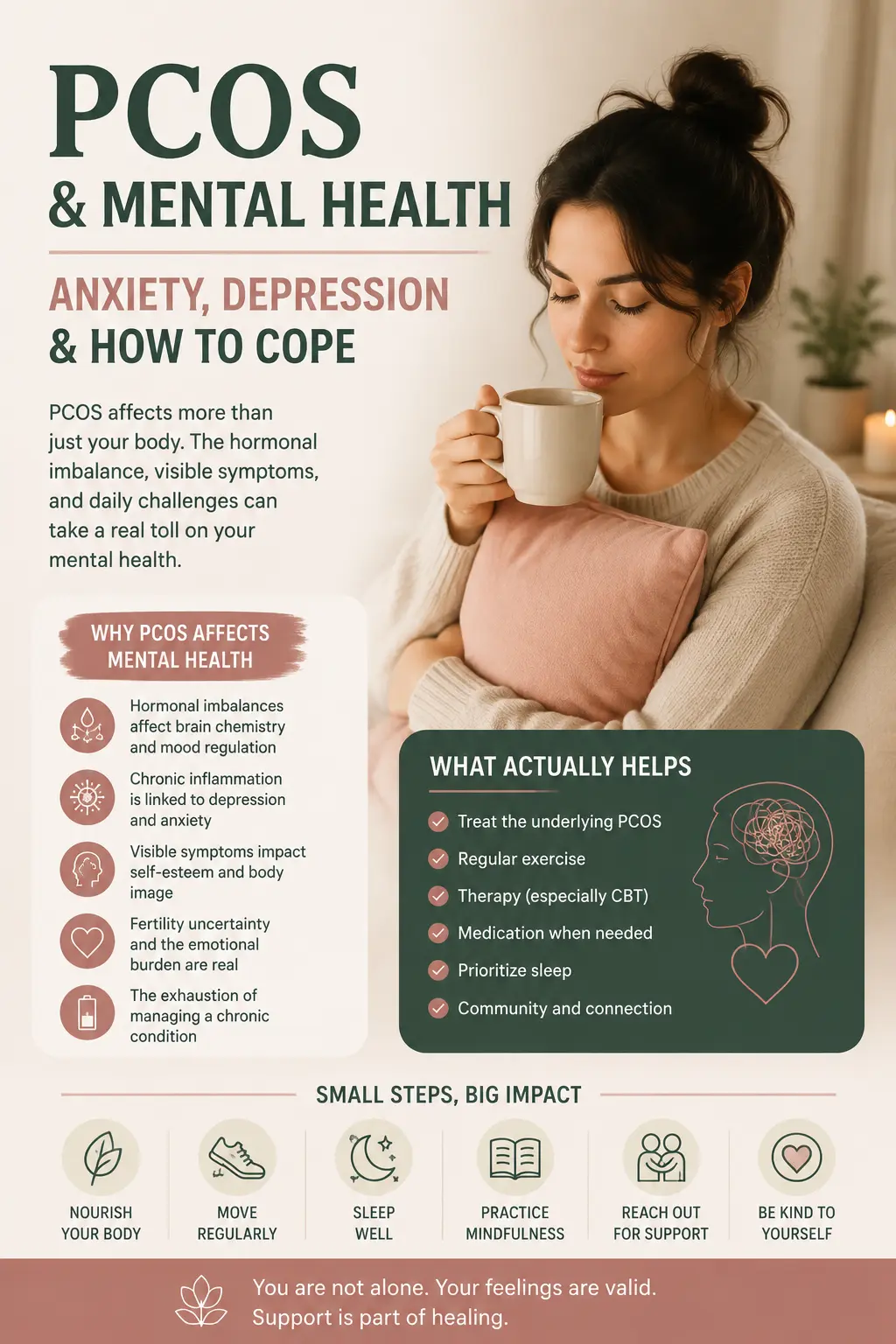
If you have PCOS and you've been feeling anxious, depressed, or emotionally overwhelmed — you're not imagining it, and you're not alone. PCOS has a profound and well-documented impact on mental health that goes far beyond the physical symptoms.
This isn't just stress about having a chronic condition. The hormonal disruptions of PCOS directly affect brain chemistry, mood regulation, and emotional resilience.
How Common Is Mental Health Impact in PCOS?
More common than most people realize. A 2024 systematic review and meta-analysis published in the Archives of Women's Mental Health found that women with PCOS have a depression prevalence of approximately 34.8% — more than twice the rate seen in the general population. Anxiety disorders affect around 17% of women with PCOS.
A 2024 paper in Fertility and Sterility concluded that management of PCOS must include assessment and treatment of mental health symptoms — not as an afterthought, but as a core part of care.
Yet mental health screening is still routinely missed in PCOS appointments. Many women spend years feeling like their emotional struggles are separate from their PCOS — when in fact they're deeply connected.
Why Does PCOS Affect Mental Health?
The relationship between PCOS and mental health runs in multiple directions simultaneously.
Hormonal imbalances affect the brain directly
Estrogen and progesterone play important roles in mood regulation, serotonin production, and stress response. The hormonal dysregulation in PCOS — irregular cycles, low progesterone, elevated androgens — disrupts these systems. High androgen levels have been associated with increased anxiety and mood instability.
Insulin resistance, which affects the majority of women with PCOS, also has neurological effects. Insulin signaling in the brain affects mood, cognition, and stress regulation. When insulin signaling is disrupted, it can contribute to depression and cognitive symptoms like brain fog.
Chronic inflammation
PCOS is characterized by low-grade chronic inflammation. Inflammation is now recognized as a significant contributor to depression — it affects neurotransmitter function and can trigger depressive episodes, independent of life circumstances.
The psychological burden of visible symptoms
Acne, unwanted hair growth, hair thinning, and weight gain — these are symptoms that affect how women look and how they feel about themselves. The psychological impact of these visible changes is significant, particularly for younger women. Body image concerns, social withdrawal, and reduced self-esteem are common. PCOS and hair loss →
Fertility uncertainty and grief
For women who want to have children, PCOS brings uncertainty and sometimes grief. The fear of infertility — even before trying to conceive — is a significant source of anxiety. And for those who are actively trying, the irregular cycles and failed cycles add cumulative emotional weight. PCOS and fertility →
The exhaustion of managing a chronic condition
PCOS requires ongoing management — diet, exercise, medications, monitoring. The mental load of managing a chronic condition that has no cure is real. Add to this the frustration of slow progress, contradictory advice, and healthcare providers who don't always take PCOS seriously, and it's no surprise that emotional burnout is common.
Common Mental Health Experiences in PCOS
Anxiety
Health anxiety (worrying about symptoms, future complications, fertility), social anxiety (related to visible symptoms), and generalized anxiety are all more common in PCOS. Hypervigilance about the body is also common — constantly monitoring symptoms, cycles, and any changes.
Depression
Depression in PCOS can manifest as low mood, fatigue, loss of interest, or a persistent sense of hopelessness. It may be linked to hormonal fluctuations (worse at certain cycle phases), chronic inflammation, or the psychological burden of managing the condition.
Disordered eating
Women with PCOS have higher rates of disordered eating patterns, including binge eating and restrictive eating. This is often connected to the combination of weight gain (due to insulin resistance), societal pressure to lose weight, and the emotional regulation role that food can play.
Brain fog
Many women with PCOS describe cognitive symptoms — difficulty concentrating, memory problems, mental fatigue. This "brain fog" is likely related to insulin resistance affecting brain function and, in some women, to sleep disruption (sleep apnea is more common in PCOS).
What Actually Helps
Treat the underlying PCOS
Addressing the hormonal and metabolic aspects of PCOS — through lifestyle changes and where appropriate, medication — can improve mental health. Studies show that metformin, which reduces insulin resistance, can have positive effects on mood. Reducing inflammation through diet also helps. PCOS treatment options →
Exercise
Exercise is one of the most evidence-backed interventions for both PCOS symptoms and mental health. According to the Mayo Clinic, regular exercise can reduce anxiety and depression symptoms significantly. It improves insulin sensitivity, reduces inflammation, increases endorphins, and directly reduces anxiety and depression symptoms. Even moderate activity (30 minutes of walking most days) makes a measurable difference. See our PCOS exercise guide for specific recommendations.
Therapy — especially CBT
Cognitive behavioral therapy (CBT) has strong evidence for anxiety and depression and can be particularly helpful for the specific thought patterns that PCOS tends to generate — catastrophizing about symptoms, health anxiety, body image concerns, and perfectionism around diet and lifestyle.
Medication for mental health
If depression or anxiety is significant, antidepressants or anti-anxiety medications may be appropriate. These don't have to be permanent — sometimes a period of medication support alongside therapy can help break a difficult cycle. Talk to your doctor openly about mental health symptoms, not just physical ones.
Sleep
Sleep is foundational for both mental health and PCOS management. Sleep deprivation worsens insulin resistance, raises cortisol, and significantly impacts mood. If you're snoring or feel unrested despite sleeping, ask your doctor about sleep apnea — it's more common in PCOS and often undiagnosed.
Community and not being alone in it
Isolation makes everything harder. Finding other women with PCOS — through online communities, support groups, or simply talking openly — can reduce the sense of being uniquely broken and provide practical emotional support.
Talking to Your Doctor
Mental health symptoms are medical symptoms. Bring them up directly at your PCOS appointments:
- "I've been experiencing more anxiety than usual — is this related to my PCOS?"
- "I think I might be depressed. Can we talk about options?"
- "My brain fog has been really affecting my work. Is there anything we can address?"
If your doctor dismisses mental health concerns as separate from PCOS, consider seeking a second opinion — ideally from an endocrinologist or gynecologist who specializes in PCOS and takes a whole-person approach.
The Bottom Line
PCOS is not just a hormonal condition. It affects the whole person — body and mind. The anxiety, the low mood, the brain fog, the emotional exhaustion of managing a chronic illness — these are real, they're common, and they deserve the same attention as physical symptoms.
You're not weak for finding PCOS emotionally difficult. It genuinely is.
Track your PCOS symptoms — including mood and energy
A dedicated PCOS tracker is coming to Piaora. Join the waitlist for early access.
Related Articles
Written by
Piaora Editorial Team
Evidence-based guides on pumping, breastfeeding, and PCOS — researched with input from lactation professionals and written for real moms.
Learn more about our team and editorial standards →