PCOS and Fertility: Can You Get Pregnant with PCOS?
PCOS is one of the most common causes of female infertility — but it is also one of the most treatable. The vast majority of women with PCOS who want to conceive are able to do so, either naturally or with medical support.
This guide explains how PCOS affects fertility, what your options are, and what you can do right now to improve your chances.
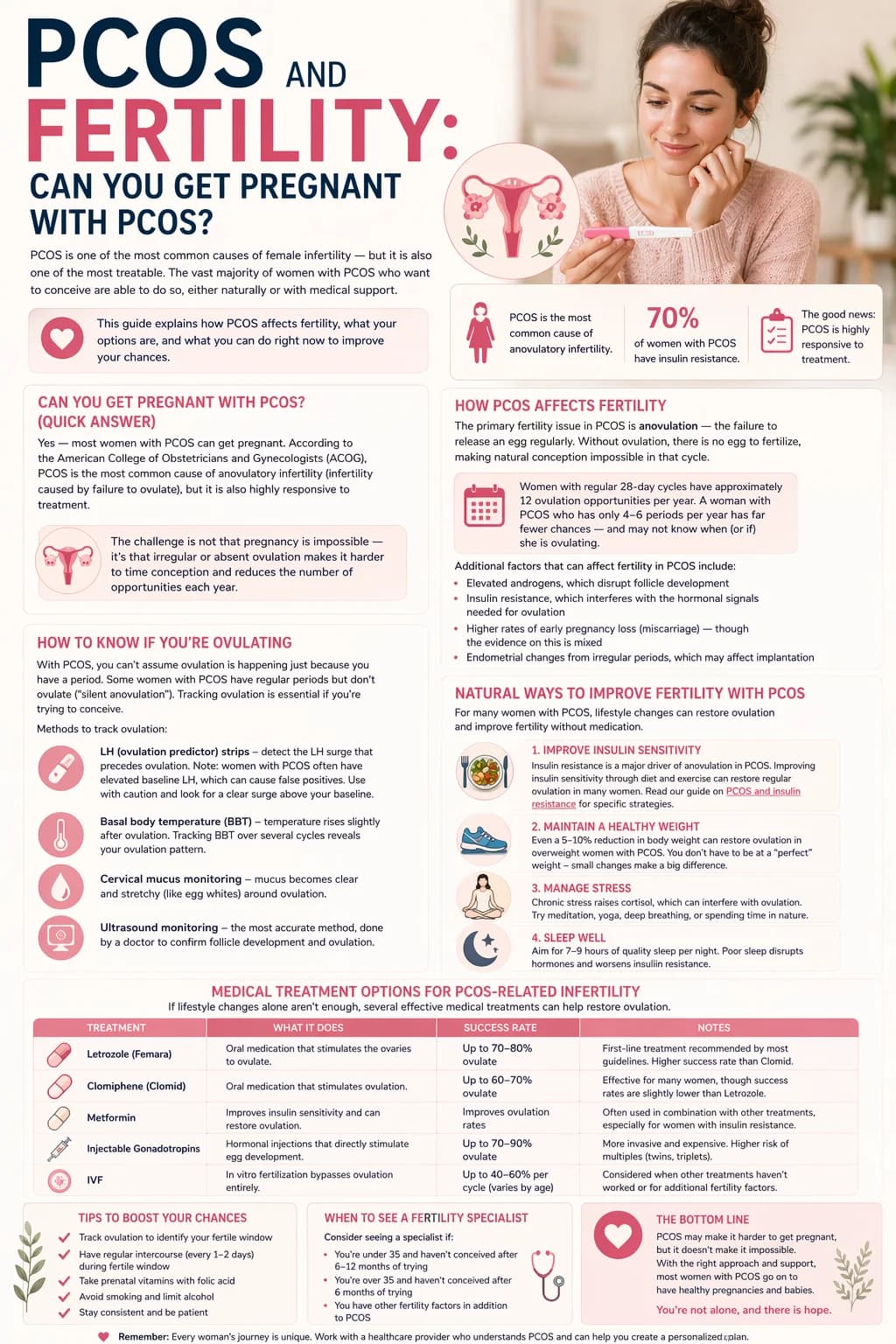
Can You Get Pregnant with PCOS? (Quick Answer)
Yes — most women with PCOS can get pregnant. According to the American College of Obstetricians and Gynecologists (ACOG), PCOS is the most common cause of anovulatory infertility (infertility caused by failure to ovulate), but it is also highly responsive to treatment.
The challenge is not that pregnancy is impossible — it's that irregular or absent ovulation makes it harder to time conception and reduces the number of opportunities each year.
How PCOS Affects Fertility
The primary fertility issue in PCOS is anovulation — the failure to release an egg regularly. Without ovulation, there is no egg to fertilize, making natural conception impossible in that cycle.
Women with regular 28-day cycles have approximately 12 ovulation opportunities per year. A woman with PCOS who has only 4–6 periods per year has far fewer chances — and may not know when (or if) she is ovulating.
Additional factors that can affect fertility in PCOS include:
- Elevated androgens, which disrupt follicle development
- Insulin resistance, which interferes with the hormonal signals needed for ovulation
- Higher rates of early pregnancy loss (miscarriage) — though the evidence on this is mixed
- Endometrial changes from irregular periods, which may affect implantation
How to Know If You're Ovulating
With PCOS, you can't assume ovulation is happening just because you have a period. Some women with PCOS have regular periods but don't ovulate ("silent anovulation"). Tracking ovulation is essential if you're trying to conceive.
Methods to track ovulation:
- LH (ovulation predictor) strips — detect the LH surge that precedes ovulation. Note: women with PCOS often have elevated baseline LH, which can cause false positives. Use with caution and look for a clear surge above your baseline.
- Basal body temperature (BBT) — temperature rises slightly after ovulation. Tracking BBT over several cycles reveals your ovulation pattern.
- Cervical mucus monitoring — mucus becomes clear and stretchy (like egg whites) around ovulation.
- Ultrasound monitoring — the most accurate method, done by a doctor to confirm follicle development and ovulation.
Natural Ways to Improve Fertility with PCOS
For many women with PCOS, lifestyle changes can restore ovulation and improve fertility without medication.
1. Improve Insulin Sensitivity
Insulin resistance is a major driver of anovulation in PCOS. Improving insulin sensitivity through diet and exercise can restore regular ovulation in many women. Read our guide on PCOS and insulin resistance for specific strategies.
2. Achieve a Healthy Weight
According to the Mayo Clinic, losing just 5–10% of body weight can restore ovulation in overweight women with PCOS. Even small improvements in weight can have significant hormonal effects.
3. Follow a Low-Glycemic Diet
Reducing blood sugar spikes lowers insulin levels, which in turn reduces androgen production and supports more regular ovulation. A PCOS-friendly diet is one of the most effective fertility interventions available.
4. Reduce Stress
Chronic stress elevates cortisol, which disrupts the hormonal axis controlling ovulation. Managing stress through exercise, mindfulness, adequate sleep, and social support can improve hormonal balance and fertility.
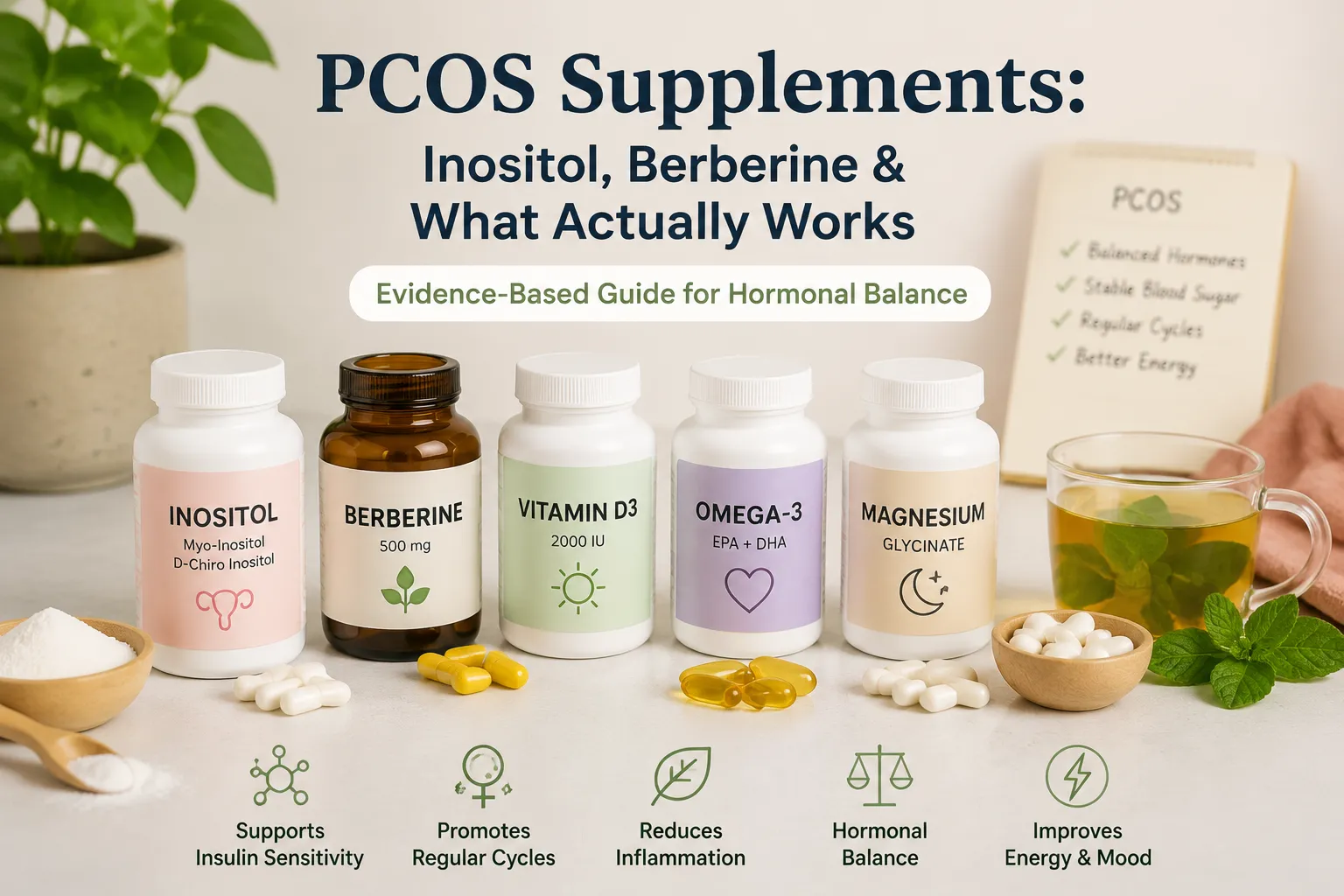
5. Consider Inositol Supplements
Myo-inositol and D-chiro-inositol have been shown in multiple studies to improve ovulation rates in women with PCOS. A meta-analysis in the International Journal of Endocrinology found significant improvements in ovulation frequency and hormonal markers. Always consult your doctor before starting supplements.
Medical Treatments for PCOS-Related Infertility
If lifestyle changes alone don't restore ovulation, several medical options are available:
| Treatment | How It Works | Success Rate |
|---|---|---|
| Letrozole (Femara) | Stimulates ovulation; now preferred first-line treatment for PCOS | ~40–60% ovulation rate per cycle |
| Clomiphene (Clomid) | Stimulates ovulation; older first-line treatment | ~60–85% ovulation rate |
| Metformin | Improves insulin sensitivity; can restore ovulation | Variable; often used with letrozole |
| Gonadotropins (FSH injections) | Directly stimulates follicle development | High, but requires careful monitoring |
| IVF | Egg retrieval and fertilization outside the body | Varies by age and clinic |
| Ovarian drilling | Laparoscopic procedure to reduce androgen-producing tissue | ~50% ovulation restoration |
According to ACOG, letrozole is now recommended as the first-line ovulation induction agent for women with PCOS, having shown higher live birth rates than clomiphene in clinical trials.
When to See a Fertility Specialist
See your doctor or a reproductive endocrinologist if:
- You have been trying to conceive for 12 months without success (or 6 months if you're over 35)
- You have irregular or absent periods and are trying to conceive
- You have confirmed PCOS and want to start trying to conceive
- You have had recurrent miscarriages
Don't wait until you've been trying for a year if you know you have PCOS — early intervention gives you more options and more time.
PCOS and Pregnancy: What to Expect
Women with PCOS who do conceive have a slightly higher risk of certain pregnancy complications, including gestational diabetes, preeclampsia, and preterm birth. According to the NIH, these risks are manageable with appropriate prenatal care and monitoring.
Many women with PCOS also find that their symptoms improve during pregnancy due to hormonal changes — particularly the reduction in androgens.
Final Thoughts
PCOS makes conception more challenging — but not impossible. With the right approach, most women with PCOS can achieve pregnancy. The key is understanding your own ovulation pattern, addressing the underlying hormonal imbalances, and seeking medical support when needed.
Track your cycle and symptoms consistently. The more data you have, the better equipped you and your doctor are to make informed decisions about your fertility journey.
Related Articles
Written by
Piaora Editorial Team
Evidence-based guides on pumping, breastfeeding, and PCOS — researched with input from lactation professionals and written for real moms.
Learn more about our team and editorial standards →Frequently Asked Questions
Track Your Cycle & PCOS Symptoms
We're building a PCOS tracker to help you log your cycle, track ovulation signs, and understand your patterns. Join the waitlist for early access.
Free. No spam. Privacy Policy