Pumping for a Premature Baby: Complete NICU Pumping Guide
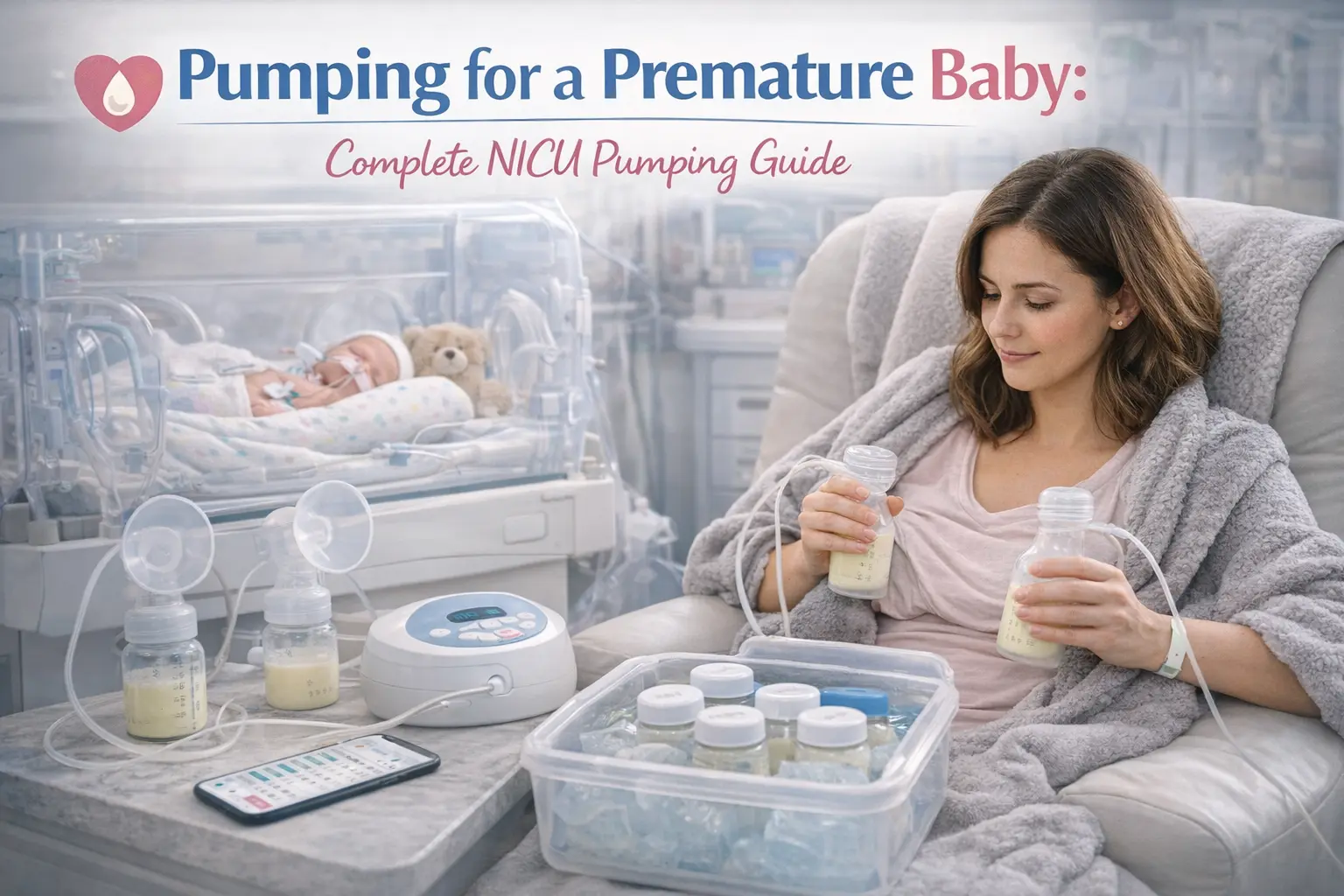
If your baby is in the NICU, pumping is one of the most powerful things you can do for them. Breast milk — especially your own — provides premature babies with immune protection, nutrients, and growth factors that formula cannot replicate.
But pumping for a NICU baby is different from pumping for a full-term baby. The rules are different, the stakes feel higher, and you're doing it while managing fear, exhaustion, and grief. This guide is written for you.
Why Breast Milk Matters So Much for Premature Babies
For premature babies, breast milk isn't just food — it's medicine. The American Academy of Pediatrics strongly recommends human milk for all preterm infants:
- Reduces the risk of necrotizing enterocolitis (NEC) — a serious intestinal condition that affects preemies
- Provides antibodies and immune factors that premature immune systems desperately need
- Supports brain development — preterm breast milk has higher levels of certain fatty acids
- Improves feeding tolerance — preemies digest breast milk more easily than formula
- Supports bonding when skin-to-skin contact is limited
Even small amounts of breast milk matter. Every drop counts.
How Soon Should You Start Pumping After a Premature Birth?
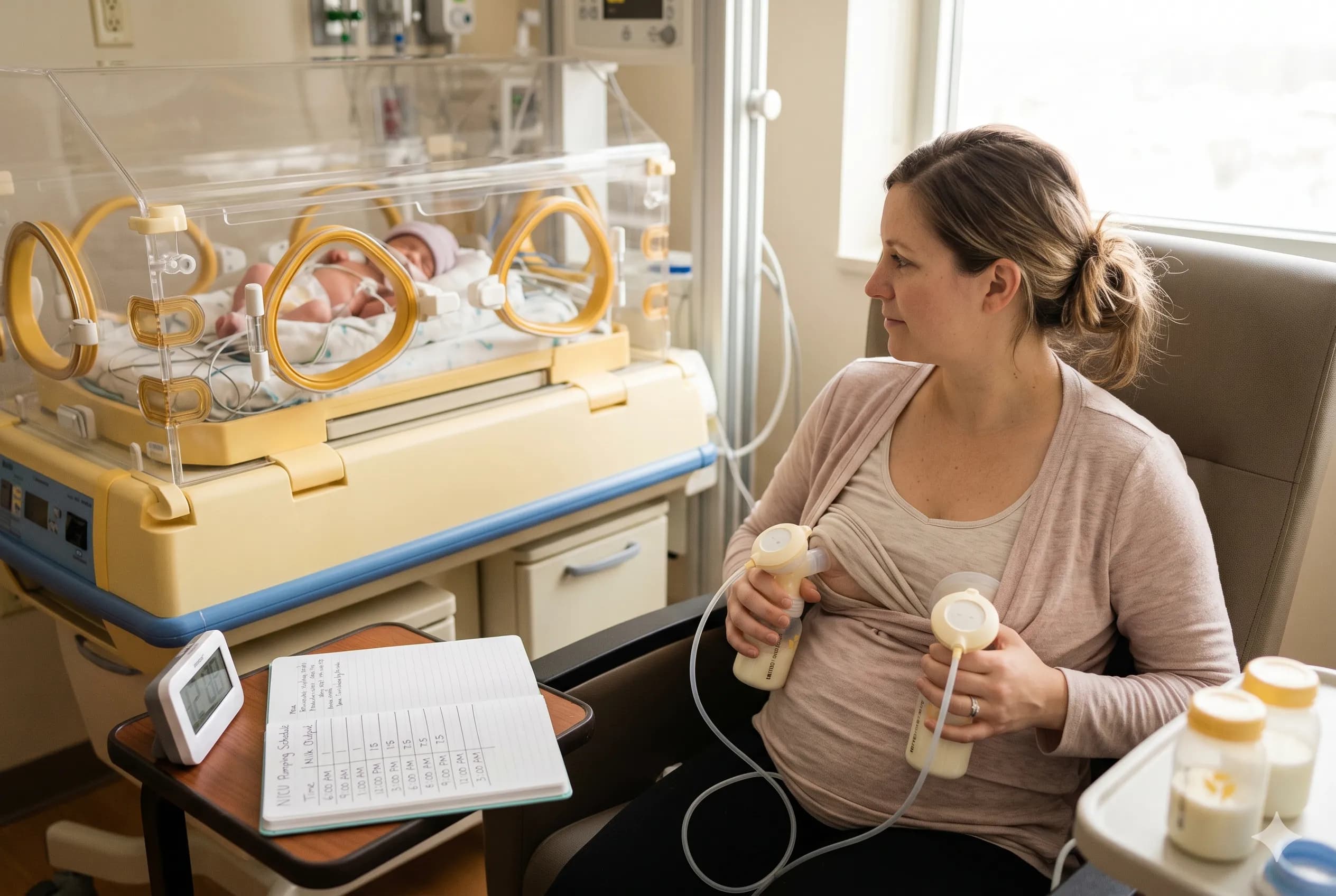
As soon as possible — ideally within 1–6 hours of birth.
The earlier you start, the better your chances of establishing a strong supply. Your body doesn't know your baby is in the NICU — it needs stimulation to produce milk, and that stimulation needs to start immediately.
Ask the NICU nurses for a hospital-grade pump as soon as you're physically able. Most NICUs have pumps available for mothers.
NICU Pumping Schedule: How Often to Pump
| Week | Sessions per Day | Notes |
|---|---|---|
| Week 1 | 8–12 | Critical supply establishment period |
| Week 2–4 | 8–10 | Maintain frequency, build supply |
| Month 2+ | 7–8 | Adjust as baby begins to feed directly |
Never go more than 4–5 hours without pumping, especially in the first weeks. Include at least one session between midnight and 5 AM when prolactin is highest.
What to Expect in the First Week
The first week is the hardest — physically, emotionally, and in terms of output:
- Days 1–3: You'll produce colostrum — thick, golden, and produced in tiny amounts (drops to a few ml). This is normal and incredibly valuable for your baby.
- Days 3–5: Milk "comes in" — volume increases significantly
- Week 2: Supply continues to build with consistent pumping
Don't judge your supply by first-week output. Judge it by whether you're pumping consistently.
Using a Hospital-Grade Pump
For NICU moms, a hospital-grade double electric pump is strongly recommended — not a consumer pump. Hospital-grade pumps are more efficient, more effective at establishing supply, and designed for frequent, long-term use.
- Most NICUs have pumps available for use in the unit
- Many hospitals offer rental programs for home use
- Your insurance may cover a hospital-grade pump rental with a prescription — ask your NICU team
How to get a breast pump covered by insurance →
Kangaroo Care and Pumping
Skin-to-skin contact (kangaroo care) with your premature baby has a remarkable effect on milk supply. Studies show that moms who practice kangaroo care produce significantly more milk.
If possible:
- Practice kangaroo care as often as the NICU allows
- Pump immediately after kangaroo care sessions — oxytocin levels are elevated
- Look at photos or videos of your baby during pumping sessions when you can't be with them
Storing and Transporting NICU Breast Milk
NICU breast milk storage has stricter requirements than standard storage. Use our Breast Milk Intake Calculator to understand how much your premature baby needs as they grow:
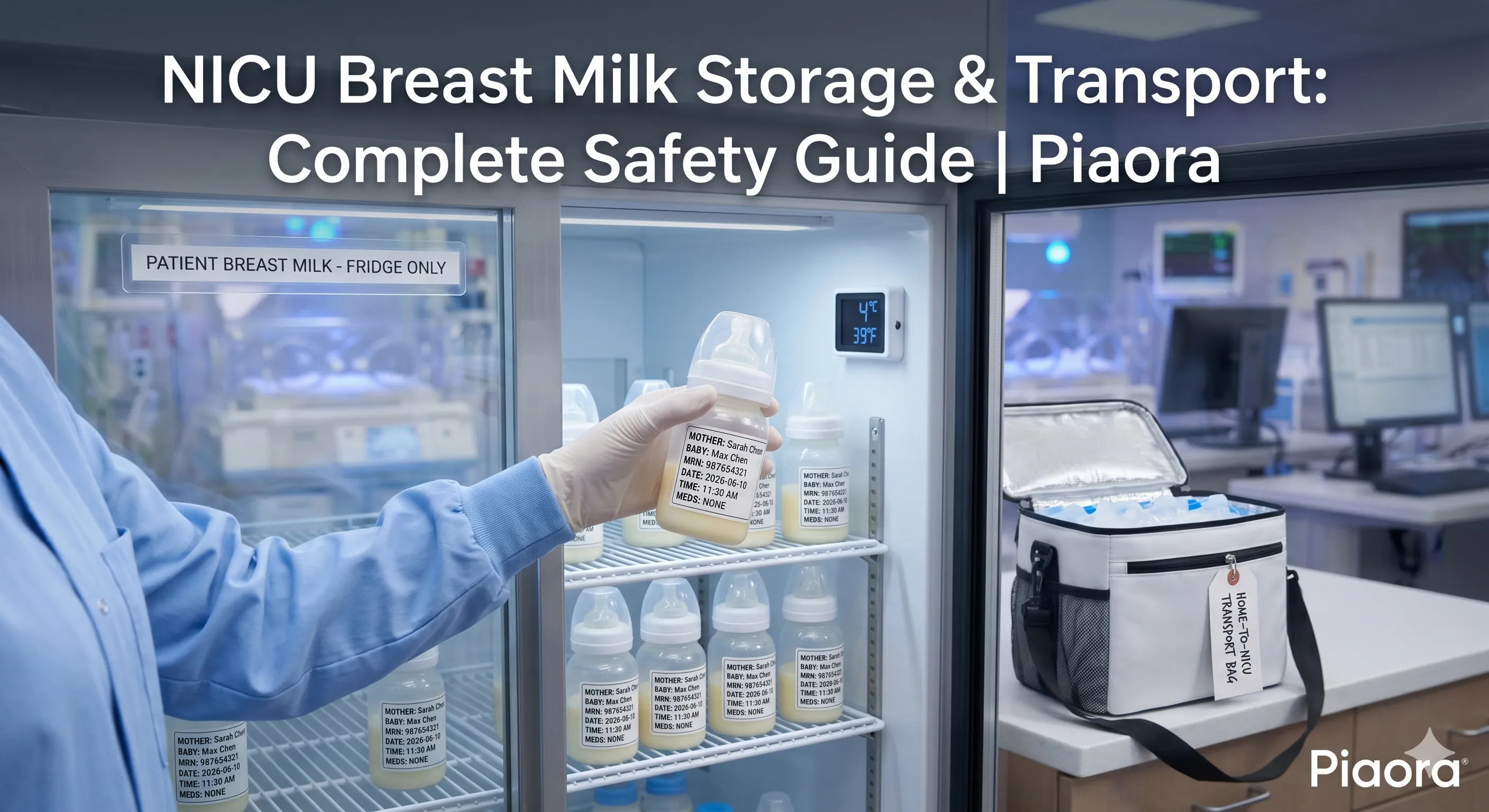
- Use sterile containers provided by the NICU — not standard storage bags
- Label every container with your name, baby's name, date, and time
- Follow the NICU's specific storage and transport protocols exactly
- Transport in an insulated cooler with ice packs
- Ask the NICU team about their specific requirements — they vary by hospital
Taking Care of Yourself
You cannot pour from an empty cup. NICU pumping is a marathon, not a sprint — and your wellbeing directly affects your supply.
- Eat enough — your body needs calories to produce milk
- Stay hydrated — keep water with you at all times
- Sleep when you can — ask for help so you can rest between sessions
- Accept support — let people bring food, help with other children, or just sit with you
- Talk to someone — NICU social workers and lactation consultants are there for you
The emotional toll of NICU pumping is real. Managing the emotional side of pumping →
Most NICU moms end up exclusively pumping for weeks or months before their baby can feed directly. Complete guide to exclusively pumping →
When Your Baby Starts to Feed Directly
As your baby grows stronger, they'll begin to breastfeed or bottle-feed directly. This transition is gradual:
- Continue pumping to maintain supply as direct feeding increases
- Work with your NICU lactation consultant on the transition plan
- Don't drop pump sessions too quickly — supply can drop faster than you expect
- Track your output to catch any supply drops early
Final Thoughts
Pumping for your NICU baby is one of the hardest and most loving things you can do. Every session, every drop, every time you drag yourself to the pump at 3 AM — it matters.
You are not alone. And you are doing an extraordinary thing for your baby.
Related Articles

Written by
Piaora Editorial Team
Evidence-based guides on pumping, breastfeeding, and PCOS — researched with input from lactation professionals and written for real moms.
Learn more about our team and editorial standards →