When to Start Pumping Before Birth
Many pregnant women wonder whether they should start pumping before their baby arrives. The short answer: you shouldn't use a breast pump before birth — but there is something you can do that's both safe and beneficial: antenatal hand expression.
This guide explains what's safe, what's not, and how to prepare for a successful pumping and breastfeeding journey before your baby is born.
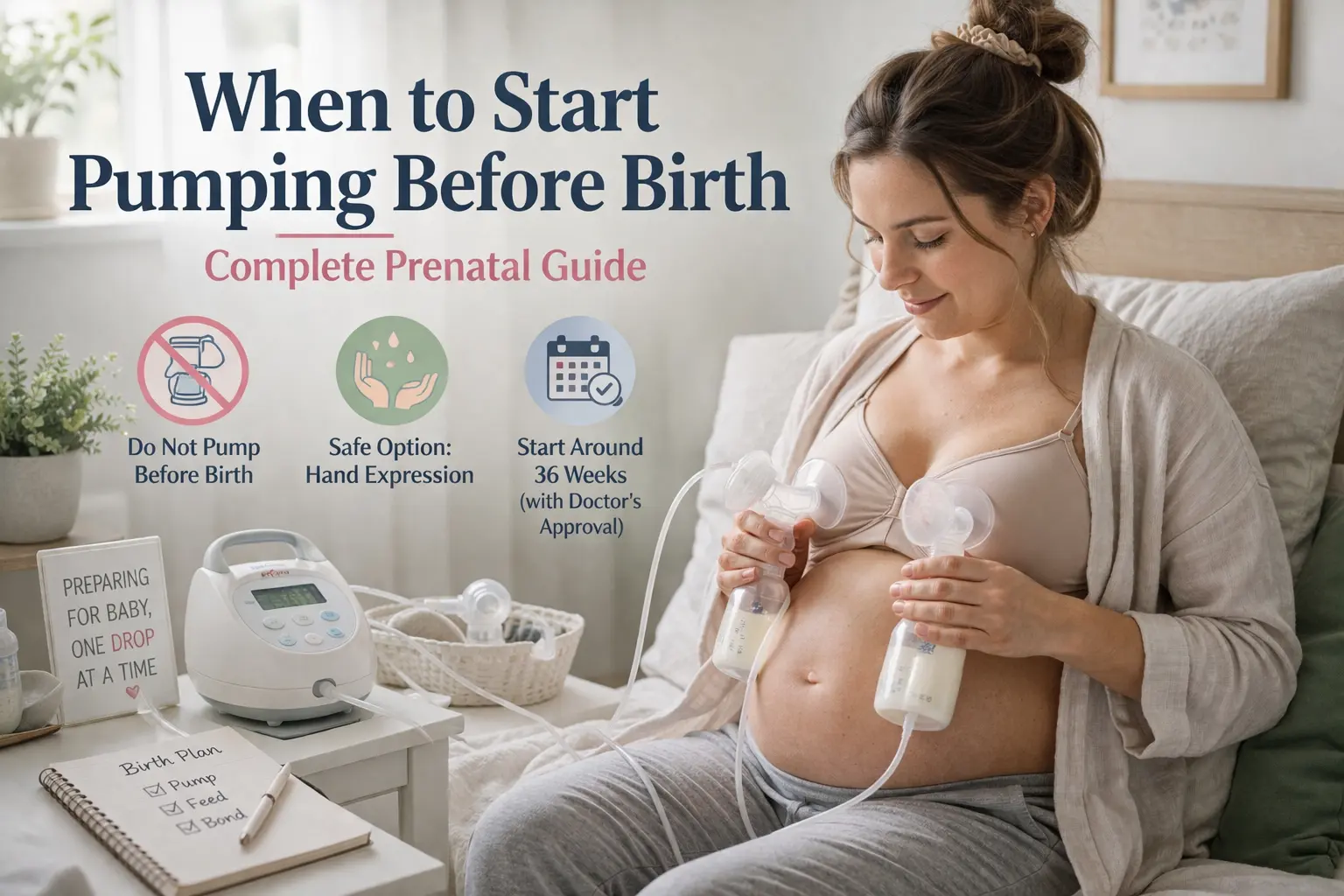
Should You Pump Before Birth? (Quick Answer)
Do not use a breast pump before birth. According to the American College of Obstetricians and Gynecologists (ACOG), nipple stimulation from a pump can trigger uterine contractions and potentially induce labor prematurely. This is not safe before 39 weeks, and even after 39 weeks should only be done under medical guidance.
What you can do safely from around 36 weeks (with your doctor's approval): antenatal hand expression — gently expressing colostrum by hand.
What Is Antenatal Hand Expression?
Antenatal hand expression (also called colostrum harvesting) is the practice of gently expressing small amounts of colostrum — your first milk — by hand during the last weeks of pregnancy.
It's recommended by many midwives and lactation consultants for:
- Moms with diabetes (gestational or pre-existing) — babies may need extra feeding support after birth
- Moms expecting multiples
- Moms who have had previous breastfeeding difficulties
- Moms planning to exclusively pump
- Any mom who wants to have colostrum ready in case of feeding challenges
When Can You Start Antenatal Hand Expression?
Most guidelines recommend starting no earlier than 36–37 weeks of pregnancy, and only with your doctor's or midwife's approval.
Do not attempt antenatal expression if you have:
- A history of preterm labor
- Placenta previa
- Cervical incompetence
- Any high-risk pregnancy condition
Always check with your healthcare provider before starting.
How to Do Antenatal Hand Expression
The technique is gentle and simple:
- Wash your hands thoroughly
- Place your thumb and index finger about 2–3cm back from the nipple
- Press gently back toward your chest, then compress and release
- Rotate around the breast to drain different ducts
- Collect drops in a sterile syringe (1ml or 5ml) or small container
- Sessions of 3–5 minutes, 1–2 times per day is typical
You may only get a few drops — this is completely normal. Colostrum is produced in very small amounts and is highly concentrated.
How to Store Harvested Colostrum
Colostrum collected before birth can be frozen and brought to the hospital:
- Collect in sterile 1ml or 5ml syringes
- Label with date and time
- Freeze immediately — colostrum can be frozen for up to 3 months
- Transport to hospital in a small cooler with ice packs
Having frozen colostrum available can be invaluable if your baby needs supplementation in the first days, or if you have difficulty with initial breastfeeding.
When to Start Using a Breast Pump After Birth
After your baby is born, the timing for starting to pump depends on your situation:
| Situation | When to Start Pumping |
|---|---|
| Baby in NICU / can't latch | Within 1–6 hours of birth |
| Exclusively pumping by choice | Within 6 hours of birth |
| Breastfeeding + building stash | Week 3–6 (after supply established) |
| Returning to work | 2–4 weeks before return date |
How to Prepare Before Birth
The best thing you can do before birth is prepare — not pump. Here's your prenatal checklist:
- Order your breast pump through insurance — do this in the third trimester
- Research flange sizes — most pumps come with 24mm, but many moms need smaller. How to find the right flange size →
- Set up your pumping station — have everything ready before baby arrives
- Learn about newborn pumping schedules — so you know what to expect
- Consider a lactation consultant — a prenatal consultation can prevent many early problems
How to get a free breast pump through insurance →
Newborn pumping schedule: what to expect →
Final Thoughts
You can't pump before birth — but you can prepare. Antenatal hand expression (with medical approval after 36 weeks) is a safe and valuable option for many moms. And having your pump ordered, your station set up, and your knowledge ready means you'll hit the ground running from day one.
The first days and weeks are the most important for establishing supply. Being prepared makes all the difference.
Ready to start tracking from day one? Our free Pumping Tracker is ready when you are.
Learn more about Pumping Tracker →Related Articles
Written by
Piaora Editorial Team
Evidence-based guides on pumping, breastfeeding, and PCOS — researched with input from lactation professionals and written for real moms.
Learn more about our team and editorial standards →