Pumping and Mental Health: Managing the Emotional Side of Pumping
Nobody talks about how emotionally hard pumping can be. The physical demands get all the attention — the schedule, the output, the equipment. But the mental and emotional toll is just as real, and for many moms, it's what ultimately makes pumping unsustainable.
This guide addresses the emotional side of pumping honestly — the anxiety, the guilt, the burnout — and offers practical ways to protect your mental health while continuing to provide for your baby.
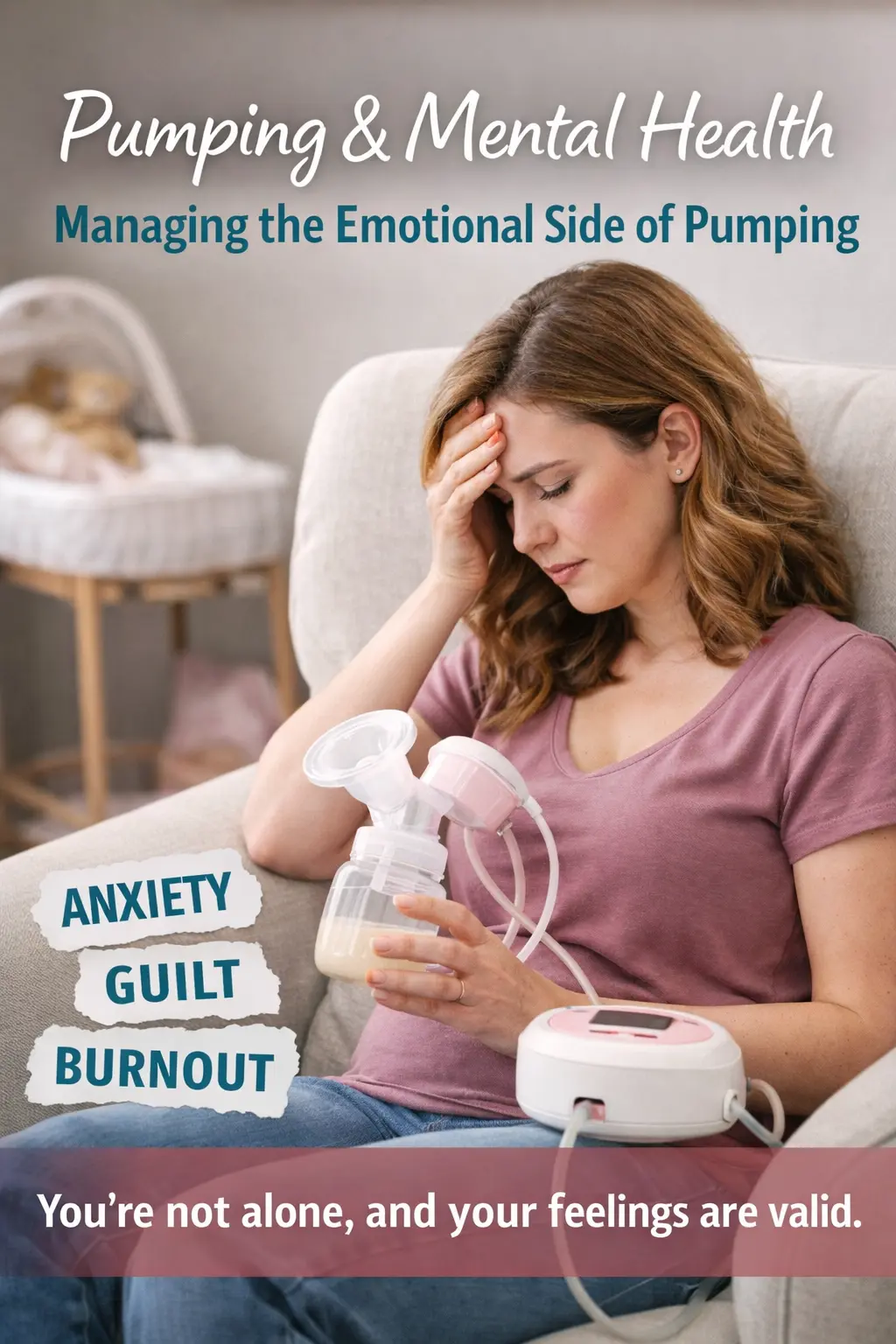
The Emotional Challenges Nobody Warns You About
Research published in the Journal of Human Lactation confirms that pumping moms face unique mental health challenges distinct from breastfeeding mothers. Common experiences include:
- Output anxiety — obsessively watching the bottles, feeling like a failure when numbers are low
- Schedule pressure — the constant clock-watching, the guilt when sessions are missed
- Isolation — especially for exclusively pumping moms who don't fit neatly into breastfeeding or formula-feeding communities
- Identity loss — feeling like your entire day revolves around a machine
- Guilt about stopping — the pressure to continue even when it's affecting your wellbeing
- D-MER — a physiological condition causing sudden negative emotions at let-down
These feelings are valid. They're also more common than most moms realize — because nobody talks about them.
Output Anxiety: When the Numbers Take Over
Output anxiety is one of the most common mental health challenges for pumping moms. It looks like this:
- Staring at the bottles during every session
- Feeling devastated when output is lower than yesterday
- Pumping extra sessions "just in case" even when supply is fine
- Comparing your output to other moms online
The problem: anxiety itself suppresses milk supply. Cortisol blocks oxytocin, which is required for let-down. The more anxious you are about output, the less you produce — creating a self-reinforcing cycle.
What helps:
- Cover the bottles during pumping — don't watch
- Track weekly averages, not individual sessions — daily variation is normal
- Set a "good enough" threshold and stop optimizing once you hit it
- Remind yourself: one low session doesn't mean your supply is dropping
Understanding how stress affects supply can help break this cycle. How stress affects milk supply →
D-MER: The Emotional Side Effect That's Physical
Dysphoric Milk Ejection Reflex (D-MER) causes a sudden wave of negative emotions — sadness, dread, or anxiety — right as milk lets down. It lasts 30–90 seconds and then passes completely.
D-MER is caused by a brief drop in dopamine during let-down. It's not depression, it's not a sign you don't want to pump, and it's not in your head. It's a physiological response.
- Knowing it's coming — and that it will pass in under 2 minutes — helps many moms cope
- It often improves over time as your body adjusts
- If it's severe or persistent, talk to your doctor — there are treatment options
More on D-MER and other pumping side effects: Side effects of pumping: what's normal →
Pumping Burnout: When It Becomes Too Much
Pumping burnout is real — and it's not a character flaw. It's what happens when the physical and emotional demands of pumping exceed your capacity to sustain them.
Exclusively pumping moms are especially vulnerable — doing the work of two feeding methods simultaneously, on a strict schedule, often while working. Complete guide to exclusively pumping →
Signs of pumping burnout:
- Dreading every session
- Feeling resentful of your pump or your baby
- Crying before, during, or after pumping
- Feeling like pumping is consuming your entire identity
- Physical exhaustion that doesn't improve with rest
Burnout is a signal — not a failure. It means something needs to change, not that you're not trying hard enough.
What to Do When You're Burned Out
You have options — and none of them require you to choose between your mental health and your baby:
- Reduce sessions — dropping from 8 to 6 sessions per day can significantly reduce burden without eliminating supply
- Set an end date — having a goal (pump until 6 months, then reassess) gives you a light at the end of the tunnel
- Ask for help — partner, family, or postpartum support can take over bottle feeding so you get breaks
- Talk to someone — a therapist, lactation consultant, or even an online EP community can provide perspective
- Give yourself permission to stop — a mentally healthy mom is more important than any amount of breast milk
The Guilt of Stopping
Many moms continue pumping long past the point of sustainability because of guilt — guilt about stopping, guilt about formula, guilt about not doing "enough."
Here's what's true: your baby needs a present, healthy, emotionally available parent more than they need breast milk. Fed is fed. A mom who stopped pumping at 3 months because it was destroying her mental health made the right choice.
You are not failing your baby by taking care of yourself.
Building a Sustainable Pumping Practice
The moms who pump longest aren't the ones who push hardest — they're the ones who build sustainable systems:
- Realistic goals, not maximum output
- Flexibility built into the schedule
- Support systems in place
- Permission to adjust without guilt
Tracking your sessions helps you see patterns and make data-driven decisions — rather than emotional ones made in moments of exhaustion.
Final Thoughts
Pumping is hard. The physical demands are real. But the emotional demands are just as real — and they deserve just as much attention.
You're not alone in finding this difficult. And you're not failing if you need to adjust, reduce, or stop. The goal was never to pump at any cost — it was to feed your baby while staying healthy yourself.
Take care of yourself. Your baby needs you more than they need the milk.
Track your sessions to stay consistent — without the anxiety of watching every drop.
Learn more about Pumping Tracker →Related Articles


Written by
Piaora Editorial Team
Evidence-based guides on pumping, breastfeeding, and PCOS — researched with input from lactation professionals and written for real moms.
Learn more about our team and editorial standards →