Side Effects of Pumping Breast Milk: What's Normal and What's Not
Pumping is generally safe — but it does come with side effects that many moms aren't warned about. Some are completely normal and temporary. Others are signs that something needs to change.
This guide covers the most common pumping side effects, what causes them, and what to do about each one.
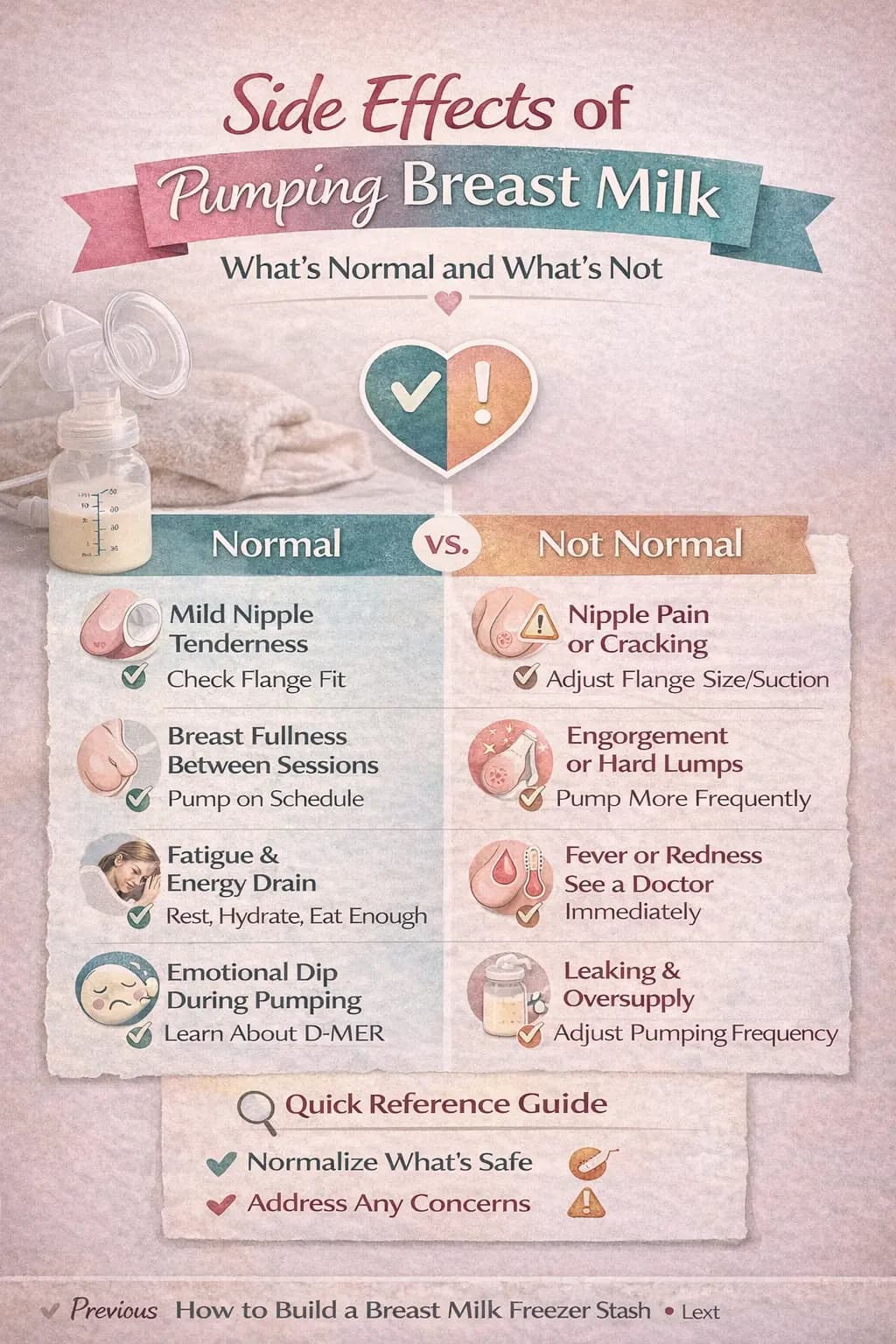
Quick Reference: Normal vs. Needs Attention
| Side Effect | Normal? | Action Needed |
|---|---|---|
| Mild nipple tenderness | Normal early on | Check flange fit |
| Nipple pain or cracking | Not normal | Adjust flange size/suction |
| Breast fullness between sessions | Normal | Pump on schedule |
| Engorgement or hard lumps | Needs attention | Pump more frequently |
| Fatigue after pumping | Normal | Rest, hydrate, eat enough |
| Emotional dip during pumping | Common | See D-MER section below |
| Oversupply / leaking | Common early on | Adjust pumping frequency |
| Fever, red streaks on breast | Not normal | See a doctor immediately |
Nipple Pain and Soreness
Mild tenderness in the first few days of pumping is normal as your body adjusts. Persistent pain is not — and it's almost always fixable.
Most common causes:
- Wrong flange size — the most common cause. If your nipple rubs against the tunnel walls, it will hurt. Most pumps come with 24mm flanges, but many moms need 21mm or smaller.
- Suction too high — higher suction doesn't mean more milk. Start low and increase only until milk flows well.
- Pumping too long — continuing after milk stops flowing causes friction without benefit.
If pumping hurts, check your flange size first. A lactation consultant can measure you properly.
Engorgement and Clogged Ducts
Engorgement happens when milk builds up faster than it's removed. It's uncomfortable and can lead to clogged ducts if not addressed.
- Pump more frequently — don't wait until you're painfully full
- Apply warm compress before pumping to encourage let-down
- Massage any hard spots during pumping
- If a clogged duct doesn't resolve in 24–48 hours, contact your doctor
Untreated clogged ducts can develop into mastitis — a breast infection that requires medical treatment.
D-MER: The Emotional Side Effect Nobody Talks About
Dysphoric Milk Ejection Reflex (D-MER) is a condition where moms experience a sudden wave of negative emotions — sadness, anxiety, or dread — right as milk lets down. It lasts only 30–90 seconds and then passes.
D-MER is caused by a brief drop in dopamine that occurs during let-down. According to La Leche League International, it is a physiological response, not a psychological one. Many moms think they're depressed or don't want to breastfeed, when actually they have D-MER.
- D-MER is real and recognized — you're not imagining it
- It often improves over time as your body adjusts
- Knowing it's coming and that it will pass quickly helps many moms cope
- If it's severe or persistent, talk to your doctor
Fatigue and Energy Drain
Producing milk burns approximately 400–500 extra calories per day. Combined with the time and mental load of pumping, fatigue is a very real side effect.
- Eat enough — caloric deficit directly reduces supply and increases fatigue
- Stay hydrated — dehydration compounds exhaustion
- Use hands-free pumping to reclaim time during sessions
- Ask for help — pumping is a full-time job on top of everything else
Oversupply: When You Make Too Much
Oversupply sounds like a good problem — but it comes with its own side effects: constant leaking, engorgement, forceful let-down that overwhelms your baby, and increased risk of mastitis.
Oversupply is often caused by pumping too frequently or too long in the early weeks. If you suspect oversupply:
- Don't pump to empty every session — pump just enough to relieve discomfort
- Gradually reduce session frequency rather than stopping abruptly
- Consult a lactation consultant if it's causing significant problems
Supply Drops: When You Make Too Little
The opposite problem — and more common. Supply drops can be caused by stress, skipped sessions, dehydration, or hormonal changes.
7 proven ways to increase milk supply →
If stress is the main factor: How stress affects milk supply →
When to See a Doctor
Most pumping side effects are manageable at home. See a doctor if you experience:
- Fever over 101°F (38.3°C)
- Red streaks on your breast
- A hard, painful lump that doesn't resolve with pumping
- Nipple discharge that is bloody or unusual color
- Severe or worsening pain
These can be signs of mastitis or a breast infection that requires antibiotics.
Final Thoughts
Most pumping side effects are either normal and temporary, or fixable with small adjustments. The key is knowing the difference — and not pushing through pain that's telling you something needs to change.
Track your sessions and output. Patterns in your data often reveal the cause of side effects before they become serious problems.
Track your sessions and spot patterns that affect your comfort and supply.
Learn more about Pumping Tracker →Related Articles


Written by
Piaora Editorial Team
Evidence-based guides on pumping, breastfeeding, and PCOS — researched with input from lactation professionals and written for real moms.
Learn more about our team and editorial standards →