How to Prevent Mastitis While Pumping
Mastitis is a breast infection that causes pain, swelling, and flu-like symptoms. It's one of the most common reasons moms stop pumping or breastfeeding early — but most cases are preventable.
This guide covers what causes mastitis, how to recognize it early, and the most effective prevention strategies for pumping moms.
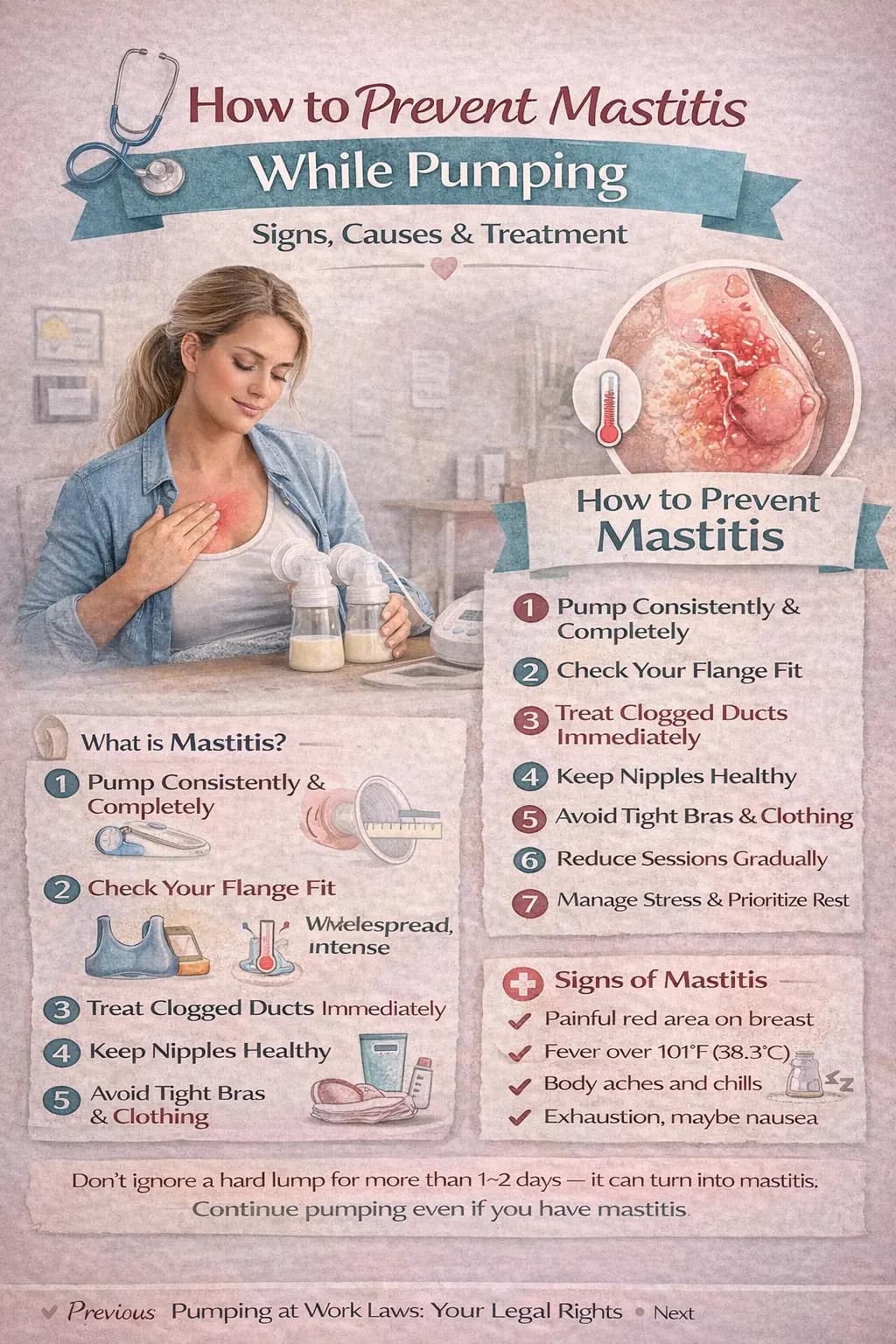
What Is Mastitis? (Quick Answer)
Mastitis is an inflammation of breast tissue that can involve infection. According to the WHO, it affects up to 10% of breastfeeding women and is most common in the first 6 weeks postpartum, though it can occur at any point during pumping or breastfeeding.
Clogged Duct vs Mastitis: Know the Difference
| Symptom | Clogged Duct | Mastitis |
|---|---|---|
| Hard lump | Yes | Yes |
| Breast pain | Localized | Widespread, intense |
| Redness | Mild or none | Red, warm area |
| Fever | No | Yes (101°F / 38.3°C+) |
| Flu-like symptoms | No | Yes — body aches, chills, fatigue |
| Treatment | Pump more, massage, warm compress | Doctor visit, may need antibiotics |
A clogged duct that isn't resolved within 24–48 hours can develop into mastitis. Act quickly when you feel a hard lump.
What Causes Mastitis in Pumping Moms
Mastitis is one of the more serious pumping side effects — but understanding the causes makes it largely preventable. Common pumping side effects and what to do →
Understanding the causes helps you prevent it:
- Infrequent or skipped pumping sessions — milk builds up and stagnates
- Incomplete emptying — often caused by wrong flange size or poor suction
- Cracked or damaged nipples — bacteria can enter through breaks in the skin
- Tight clothing or bras — pressure on breast tissue can block ducts
- Sudden reduction in pumping frequency — dropping sessions too quickly
- Stress and fatigue — weakens immune response
How to Prevent Mastitis: 7 Key Strategies
1. Pump consistently and completely
Never go more than 4–5 hours without pumping during the day. Pump until milk flow slows to drops — incomplete emptying is the most common cause of clogged ducts.
2. Check your flange fit
A poorly fitting flange causes incomplete emptying and nipple damage — both mastitis risk factors. How to find the right flange size →
3. Treat clogged ducts immediately
At the first sign of a hard lump:
- Apply warm compress before pumping
- Massage the lump toward the nipple during pumping
- Pump more frequently — every 2 hours if needed
- Try different pumping positions to drain different ducts
4. Keep nipples healthy
- Apply lanolin or nipple cream after pumping
- Let nipples air dry when possible
- Address any cracking or damage immediately
5. Avoid tight bras and clothing
Underwire bras and tight sports bras can compress breast tissue and block ducts. Choose well-fitting, supportive bras without underwire during the pumping period.
6. Reduce sessions gradually
Never drop pumping sessions abruptly. Reduce by one session every few days to give your body time to adjust without milk building up.
7. Manage stress and prioritize rest
Exhaustion and stress weaken your immune system and make you more susceptible to infection. This is easier said than done with a newborn — but even small improvements help. How stress affects milk supply →
What to Do If You Have Mastitis
If you develop fever, flu-like symptoms, and a painful red area on your breast:
- Keep pumping — stopping makes it worse. Milk removal is essential for recovery.
- See a doctor promptly — mastitis often requires antibiotics. Don't wait more than 24 hours if you have a fever.
- Rest as much as possible — your body needs energy to fight the infection
- Stay hydrated — fever increases fluid needs
- Pain relief — ibuprofen reduces both pain and inflammation
Is it safe to pump with mastitis? Yes — continuing to pump is actually recommended. Stopping abruptly can worsen the infection and lead to an abscess.
When to Go to the ER
Seek emergency care if you have:
- High fever (over 103°F / 39.4°C) that doesn't respond to medication
- A fluctuant (fluid-filled) lump — this may be an abscess requiring drainage
- Red streaks spreading from the breast
- Symptoms worsening despite 48 hours of antibiotics
Final Thoughts
Mastitis is painful and disruptive — but most cases are preventable with consistent pumping, good flange fit, and prompt treatment of clogged ducts.
Track your sessions to ensure you're pumping frequently enough and completely enough. Gaps in your schedule are often the first warning sign that a clogged duct is developing.
Stay consistent with your pumping schedule — track every session to prevent gaps that lead to clogged ducts.
Learn more about Pumping Tracker →Related Articles


Written by
Piaora Editorial Team
Evidence-based guides on pumping, breastfeeding, and PCOS — researched with input from lactation professionals and written for real moms.
Learn more about our team and editorial standards →