How Stress Affects Milk Supply (And What to Do About It)
You're back at work, trying to keep up with pumping sessions, meetings, and everything else — and suddenly your milk output drops. Sound familiar?
Stress is one of the most common — and most overlooked — reasons for a sudden drop in milk supply. The good news is that once you understand why it happens, you can take steps to protect your supply and feel more in control.
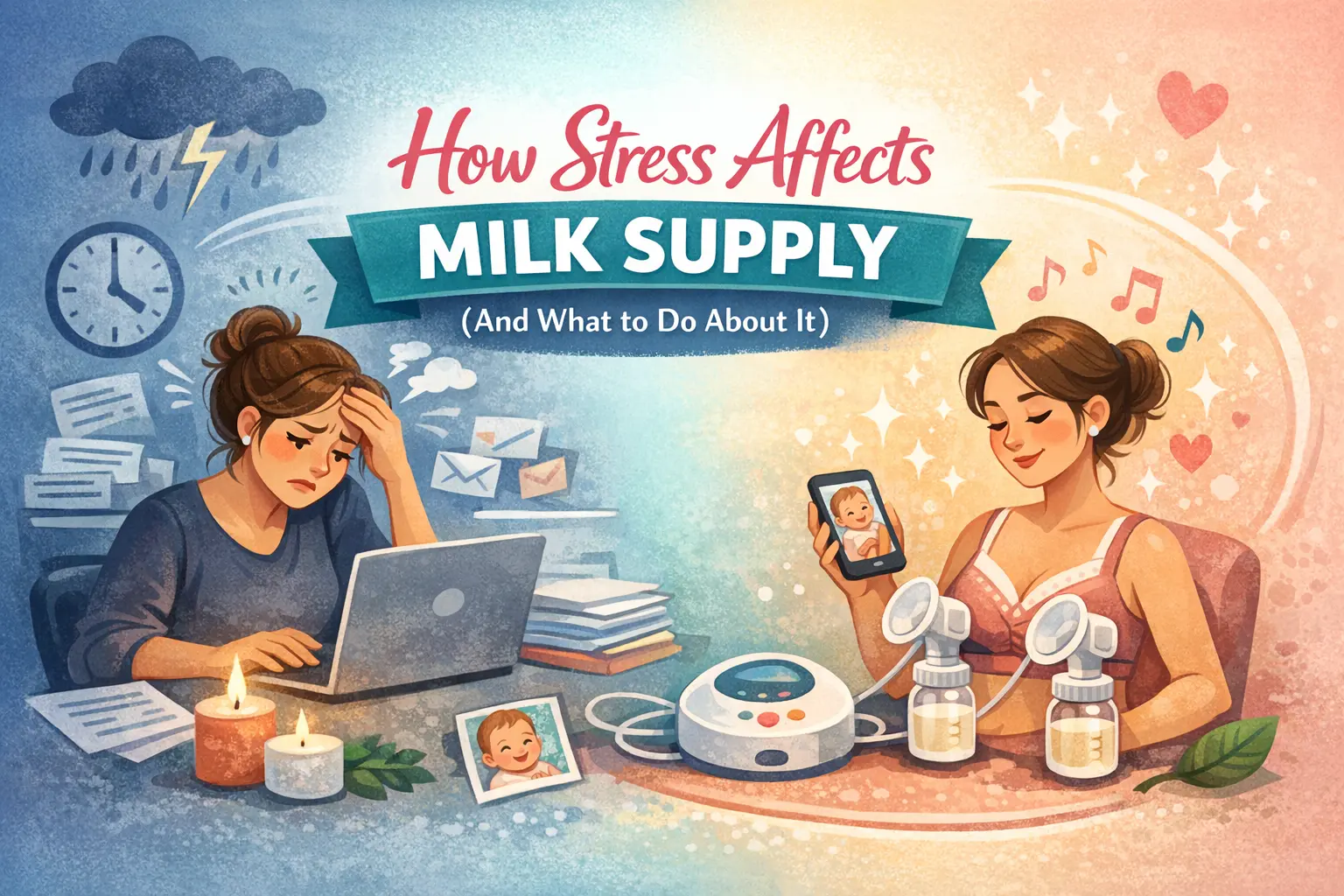
Does Stress Really Affect Milk Supply? (Quick Answer)
Yes — but not in the way most people think. Stress doesn't directly reduce how much milk your body produces. Instead, it interferes with your let-down reflex — the process that releases milk during pumping or feeding.
When you're stressed, your body releases cortisol. According to research published in the Journal of Human Lactation, high cortisol levels can block oxytocin — the hormone responsible for let-down. The result: milk is there, but it won't flow easily.
Over time, if let-down is consistently blocked, your body may start producing less milk because it's not being fully emptied.
The Science: Cortisol vs Oxytocin
Understanding the hormones involved helps explain why stress has such a direct impact:
- Oxytocin — triggers let-down, released when you feel calm, safe, and connected to your baby
- Prolactin — stimulates milk production, works best when sessions are consistent
- Cortisol — the stress hormone, suppresses oxytocin when elevated
This is why moms often pump less at work than at home — the environment, time pressure, and anxiety all raise cortisol levels.
Signs That Stress May Be Affecting Your Supply
Not every supply drop is caused by stress, but these signs suggest it might be a factor:
- Output drops noticeably on high-stress days
- Let-down takes longer than usual or feels incomplete
- You pump less at work than at home, even with the same schedule
- You feel anxious or rushed during pumping sessions
- Supply improves on weekends or days off
Tracking your output over time makes it much easier to spot these patterns. Try our free Pumping Tracker →
What You Can Do: Practical Strategies
The goal is to lower cortisol and support oxytocin during pumping sessions. Here's what actually works:
Before your session:
- Look at photos or videos of your baby — this triggers oxytocin naturally
- Take 3–5 slow, deep breaths to activate your parasympathetic nervous system
- Warm your breasts with a warm cloth or gentle massage
During your session:
- Create a calm environment — close the door, play soft music or a podcast
- Avoid checking emails or work messages while pumping
- Use hands-on pumping to encourage let-down
Outside of pumping:
- Prioritize sleep — even short naps help regulate cortisol
- Stay hydrated and eat regularly — skipping meals raises stress hormones
- Set boundaries at work around your pumping time
How to Protect Your Supply Long-Term
Managing stress is important, but consistency is what protects your supply over time.
- Stick to your pumping schedule even on busy days
- Don't skip sessions — even a short 10-minute pump is better than nothing
- Track your output to catch drops early before they become a bigger issue
- Be kind to yourself — one bad day won't ruin your supply
If you're already seeing a drop, these strategies can help: 7 proven ways to increase milk supply →
When to Ask for Help
If stress is significantly affecting your supply or your wellbeing, it's okay to reach out:
- A lactation consultant can assess your pumping technique and supply
- Your doctor can check for other factors like thyroid issues or hormonal imbalances
- Online communities of pumping moms can offer real-world support and encouragement
You don't have to figure this out alone.
Final Thoughts
Stress affects milk supply more than most moms realize — but it's also one of the most manageable factors once you know what's happening.
Small changes to your pumping environment, your mindset, and your daily routine can make a real difference. Track your output, notice your patterns, and give yourself grace on the hard days.
Track your output over time and spot stress-related patterns with our free Pumping Tracker.
Learn more about Pumping Tracker →Related Articles



Written by
Piaora Editorial Team
Evidence-based guides on pumping, breastfeeding, and PCOS — researched with input from lactation professionals and written for real moms.
Learn more about our team and editorial standards →