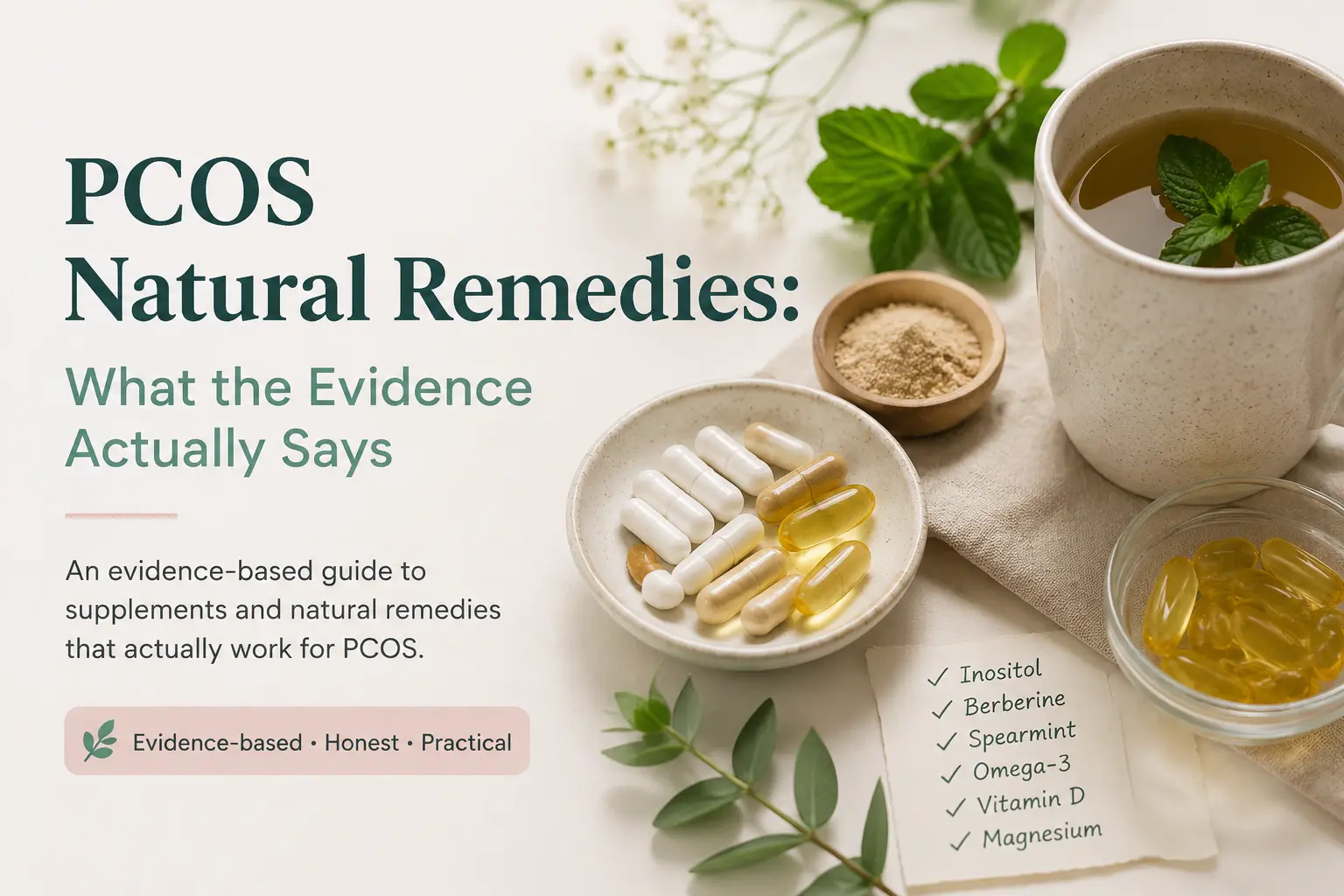
PCOS Natural Remedies: What the Evidence Actually Says
The PCOS supplement market is enormous — and confusing. Between Instagram wellness influencers, Facebook PCOS groups, and supplement company blogs, it's hard to know what's backed by real research and what's just marketing.
This guide cuts through the noise. We've looked at the actual evidence for the most commonly recommended natural remedies for PCOS — and given you an honest rating for each.
Before We Start: The Fundamentals Come First
No supplement replaces the foundation. If you haven't yet addressed diet, exercise, sleep, and stress management, no natural remedy will make a meaningful difference.
That said, for women who are already doing the basics, several natural interventions have real evidence behind them. Think of them as tools that can enhance — not replace — the fundamentals.
Inositol — Strong Evidence
Evidence rating: ★★★★☆
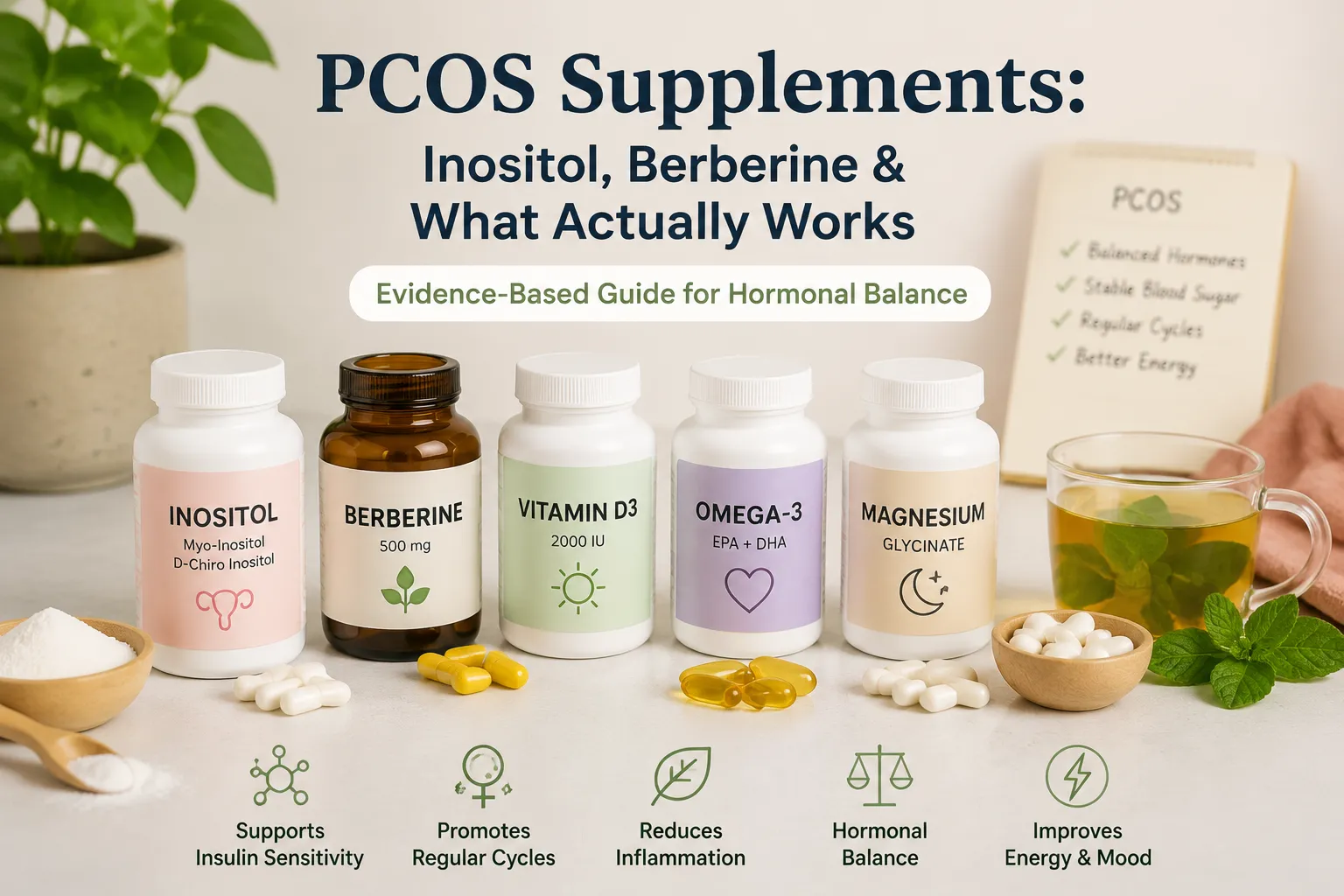
Inositol is the best-studied natural supplement for PCOS, and it made it into the 2023 International Evidence-Based PCOS Guidelines as a recommended option. A 2024 systematic review and meta-analysis published in the Journal of Clinical Endocrinology & Metabolism confirmed its benefits for insulin resistance, hormonal parameters, and ovulation.
Inositol is a naturally occurring compound involved in insulin signaling. Two forms are relevant to PCOS:
- Myo-inositol (MI) — improves insulin sensitivity and lowers androgens
- D-chiro-inositol (DCI) — helps regulate androgen production in the ovaries
The most studied combination is a 40:1 ratio of MI to DCI, which mirrors the body's natural balance. Most studies use 2–4g of myo-inositol daily.
What it helps with: Insulin resistance, irregular periods, ovulation, androgen levels, egg quality (relevant for fertility)
Side effects: Generally very well tolerated. Mild GI symptoms at high doses.
Verdict: One of the most evidence-backed natural supplements for PCOS. Worth trying, especially if you have insulin resistance or are trying to conceive.
Berberine — Promising Evidence
Evidence rating: ★★★★☆
Berberine is a plant compound found in barberries and goldenseal. It activates AMPK — the same cellular pathway that metformin activates — which is why it's often called "nature's metformin."
Research shows berberine can reduce testosterone, lower fasting insulin, improve menstrual regularity, and reduce hirsutism in women with PCOS. A 2024 review found it effectively reduces androgens and can mitigate acne and excess hair growth.
What it helps with: Insulin resistance, androgen levels, acne, hirsutism, cholesterol
Typical dose: 500mg 2–3 times daily with meals
Cautions:
- Not safe during pregnancy or breastfeeding
- Can interact with certain medications (check with your doctor)
- GI side effects (nausea, constipation, diarrhea) are common especially initially — start low
Verdict: Strong evidence, comparable to some studies of metformin. Worth discussing with your doctor, especially if you want to avoid or can't tolerate metformin.
Spearmint Tea — Moderate Evidence
Evidence rating: ★★★☆☆
Spearmint has anti-androgenic properties — it inhibits enzymes involved in testosterone production. Small clinical trials have shown that drinking 2 cups of spearmint tea daily for 30 days can reduce free testosterone and improve hirsutism scores.
The evidence is limited to small studies, but the mechanism is plausible and the intervention is safe and inexpensive.
What it helps with: Hirsutism, elevated testosterone
How to use: 2 cups of spearmint herbal tea daily (not peppermint — spearmint specifically). Use actual spearmint tea bags, not peppermint, which has different properties.
Verdict: Worth trying as a low-risk, low-cost add-on. Don't expect dramatic results, but the evidence is genuinely promising for reducing androgens.
Omega-3 Fatty Acids — Moderate Evidence
Evidence rating: ★★★☆☆
A 2024 Mendelian randomization study found that omega-3 fatty acid supplementation reduced PCOS risk. Multiple studies have shown omega-3s can reduce testosterone, improve insulin sensitivity, lower triglycerides, and reduce inflammation in PCOS.
Omega-3s are also important for mental health — relevant given the elevated rates of anxiety and depression in PCOS.
What it helps with: Inflammation, androgen levels, triglycerides, mental health, possibly fertility
Dose: 1–3g of combined EPA+DHA daily from fish oil or algae-based supplements
Verdict: Good evidence for general health and specific PCOS parameters. A reasonable supplement for most women with PCOS.
Vitamin D — Moderate Evidence
Evidence rating: ★★★☆☆
Vitamin D deficiency is extremely common in PCOS — studies suggest 67–85% of women with PCOS are deficient. Vitamin D receptors are present in ovarian tissue and vitamin D plays a role in insulin signaling, androgen production, and follicle development.
Supplementing in women who are deficient has shown improvements in menstrual regularity, insulin resistance, and androgen levels. The key is: supplementation only helps if you're actually deficient.
What to do: Get your vitamin D level tested. If deficient (<30 ng/mL), supplement to correct it. A common starting dose for deficiency is 2000–4000 IU daily, but this should be tailored to your specific level.
Verdict: Test first. If deficient (very likely), supplementing is one of the most evidence-backed interventions you can do.
Magnesium — Limited but Promising Evidence
Evidence rating: ★★☆☆☆
Magnesium deficiency is common in insulin resistance, and many women with PCOS are low in magnesium. Magnesium plays a role in insulin receptor function — it's needed for insulin to work properly.
Some studies show magnesium supplementation improves insulin sensitivity and reduces inflammation in PCOS. The evidence is less robust than inositol or berberine, but magnesium has a good safety profile and is beneficial for sleep and stress management as well.
Verdict: Reasonable to try, especially if you have sleep issues, muscle cramps, or known low magnesium. Magnesium glycinate or malate are better tolerated than magnesium oxide.
Things With Weak or No Evidence
A lot of supplements are marketed for PCOS without meaningful evidence. Be skeptical of:
- Vitex (chasteberry) — some anecdotal evidence for PMS and irregular cycles, but no good evidence specifically for PCOS; may actually worsen PCOS in some women by affecting LH
- Saw palmetto — anti-androgenic in theory, but minimal human evidence for PCOS
- Ashwagandha — adaptogen with stress-reducing properties, but limited PCOS-specific evidence
- Most "PCOS supplements" blends — proprietary blends often contain underdosed ingredients; you can usually buy the individual evidence-backed ingredients more cost-effectively
- Detox teas and cleanses — no evidence, some can be harmful
How to Approach Natural Remedies Sensibly
- Start one at a time — if you add multiple supplements simultaneously, you won't know which one is working (or causing side effects)
- Give it time — hormonal changes take 2–3 months to show up in symptoms or blood tests
- Track your symptoms — without tracking, it's impossible to know if something is actually helping
- Tell your doctor — some supplements interact with medications; berberine in particular can interact with common drugs
- Don't replace proven treatments — if your doctor has recommended metformin or other medications, don't substitute supplements without discussing it first
Summary: PCOS Natural Remedies Ranked by Evidence
| Remedy | Evidence | Best for |
|---|---|---|
| Inositol (MI:DCI 40:1) | Strong ★★★★☆ | Insulin resistance, cycles, fertility |
| Berberine | Strong ★★★★☆ | Insulin resistance, androgens, acne |
| Omega-3 | Moderate ★★★☆☆ | Inflammation, androgens, mood |
| Vitamin D (if deficient) | Moderate ★★★☆☆ | Cycles, insulin, androgens |
| Spearmint tea | Moderate ★★★☆☆ | Hirsutism, testosterone |
| Magnesium | Limited ★★☆☆☆ | Insulin, sleep, stress |
Track your PCOS symptoms to see what's actually working
A dedicated PCOS tracker is coming to Piaora. Join the waitlist for early access.
Related Articles
Written by
Piaora Editorial Team
Evidence-based guides on pumping, breastfeeding, and PCOS — researched with input from lactation professionals and written for real moms.
Learn more about our team and editorial standards →