Kangaroo Care in the NICU: Benefits of Skin-to-Skin for Preemies
In the NICU, surrounded by machines and monitors, one of the simplest and most powerful things you can do for your baby is hold them against your bare chest. This is kangaroo care — skin-to-skin contact between parent and baby — and decades of research show it's far more than just a bonding moment.
For premature babies, kangaroo care is medicine. It stabilizes vital signs, promotes growth, reduces pain, and helps both parent and baby heal.

What Is Kangaroo Care?
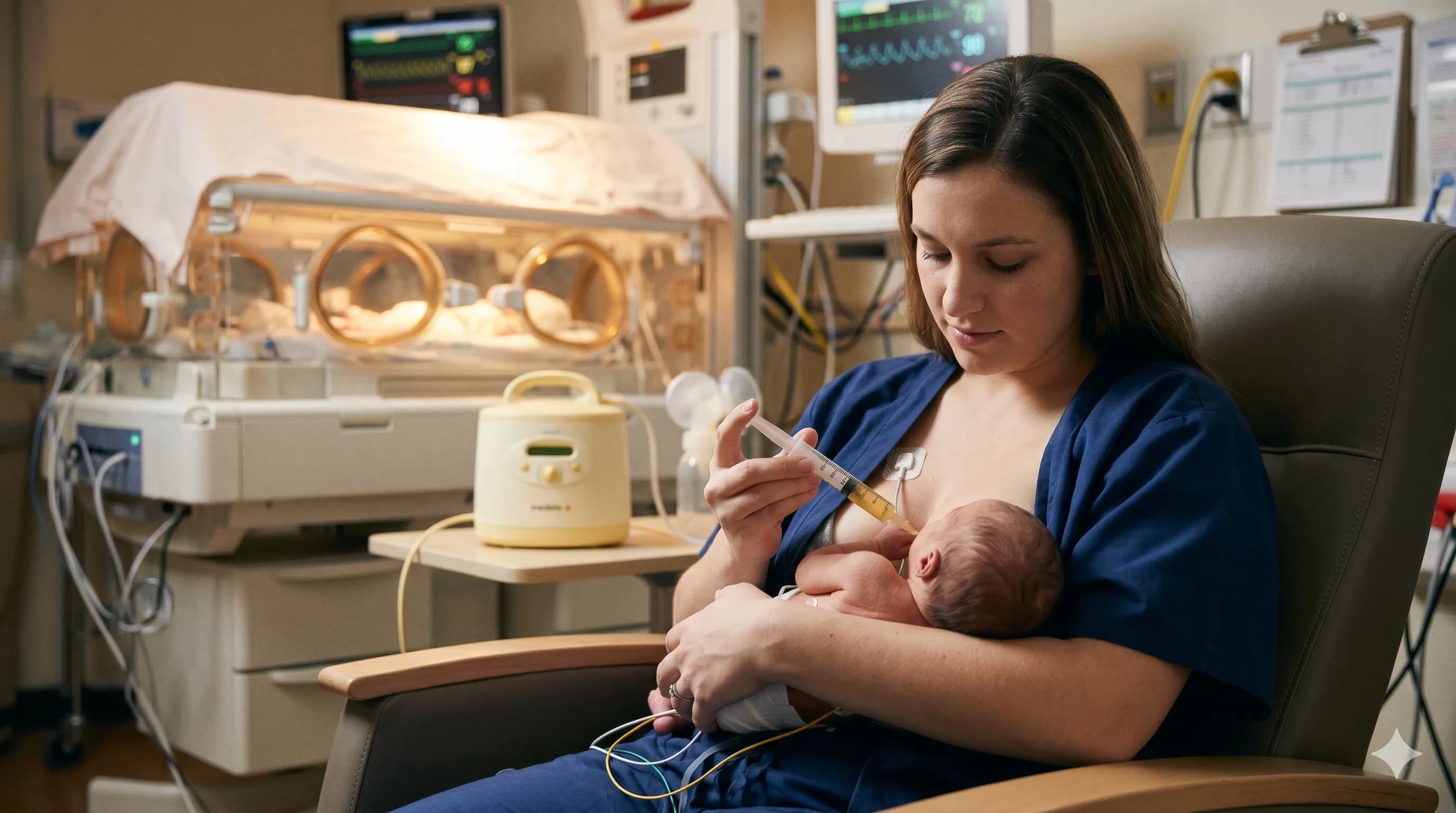
Kangaroo care (also called kangaroo mother care or KMC) involves placing your baby — wearing only a diaper — directly against your bare chest, in an upright position. Your baby is then covered with a blanket or wrapped in a kangaroo care wrap.
The name comes from how kangaroo joeys develop in their mother's pouch — close to the body, warm, and in constant contact. For premature babies who left the womb too early, kangaroo care recreates some of that protective environment.
Proven Benefits for Premature Babies
Kangaroo care is one of the most researched interventions in neonatal medicine. A WHO recommendation strongly supports skin-to-skin contact for all newborns, especially preterm infants. The evidence is overwhelming:
Physical Benefits
- Temperature regulation: Your body automatically adjusts its temperature to keep your baby warm — more precisely than an incubator
- Stabilized heart rate and breathing: Babies experience fewer apnea and bradycardia episodes during skin-to-skin
- Better oxygen levels: Oxygen saturation improves during kangaroo care
- Pain reduction: Skin-to-skin significantly reduces pain responses during procedures
- Weight gain: Babies who receive regular kangaroo care gain weight faster
- Reduced infections: Exposure to parental skin bacteria colonizes the baby with protective flora
Developmental Benefits
- Better brain development: Sensory stimulation from skin-to-skin promotes neural connections
- Improved sleep patterns: Babies sleep more deeply and cycle between sleep states more effectively
- Earlier discharge: Studies show kangaroo care is associated with shorter NICU stays
- Better long-term outcomes: Follow-up studies show cognitive and motor benefits that persist for years
Benefits for Milk Supply
- Increased milk production: Skin-to-skin contact triggers oxytocin release, which stimulates let-down and production
- More efficient pumping: Moms who pump during or immediately after kangaroo care often produce significantly more milk
- Supports transition to breastfeeding: Babies who practice non-nutritive sucking during kangaroo care often breastfeed earlier
Benefits for Parents
Kangaroo care isn't just for the baby — it helps parents too:
- Reduces anxiety and depression: Physical contact with your baby lowers cortisol and increases oxytocin
- Increases confidence: Holding your baby builds parental confidence and competence
- Strengthens bonding: Especially important when separation is the default in the NICU
- Reduces feelings of helplessness: Kangaroo care is something you can actively do for your baby
- Both parents benefit: Fathers and partners who do skin-to-skin also show reduced stress and stronger bonding
When Can You Start Kangaroo Care?
The timing depends on your baby's condition and your NICU's policies:
- Stable preemies: Many NICUs allow kangaroo care as soon as the baby is medically stable — even on ventilators
- Very premature babies (under 28 weeks): May need to wait until initial stabilization, but many NICUs now offer skin-to-skin within the first days
- Post-surgery babies: Usually after the surgical team clears it
- Babies on respiratory support: Often possible with nursing assistance — even with CPAP or ventilators
Don't assume your baby is "too sick" for kangaroo care. Ask your NICU team. Many parents are surprised at how early it's offered.
How to Do Kangaroo Care in the NICU
Here's what a typical kangaroo care session looks like:
- Preparation: Wear a button-down or zip-up top (easy access). Remove jewelry that could scratch.
- Transfer: A nurse will help transfer your baby from the incubator to your chest. This is often the trickiest part — especially with wires and tubes.
- Position: Baby is placed upright between your breasts, skin-to-skin, head turned to one side. Their diaper stays on.
- Cover: A blanket or wrap goes over baby's back to maintain warmth.
- Duration: Aim for at least 60 minutes per session — longer is better. Some parents do 2–4 hours.
- Frequency: Daily if possible. Multiple times per day is even better.
Tips for Successful Kangaroo Care Sessions
- Recline your chair slightly — a semi-reclined position is most comfortable for longer sessions
- Bring a book, phone, or headphones — you'll be sitting still for a while
- Use the bathroom before you start (you won't want to disturb a sleeping baby)
- Keep water and snacks within reach
- Pump immediately after kangaroo care for maximum output
- Take photos — you'll want to remember these moments
- Don't wear strong perfumes or lotions — your natural scent is what your baby knows
Kangaroo Care and Pumping: The Connection
There's a powerful synergy between kangaroo care and milk production:
- Skin-to-skin triggers oxytocin → easier let-down
- Oxytocin release → more milk expressed in the following pump session
- Looking at/smelling your baby → stronger hormonal response during pumping
Pro tip: If you can't be at the NICU for every pumping session, keep a cloth that smells like your baby or look at photos/videos during pumping at home.
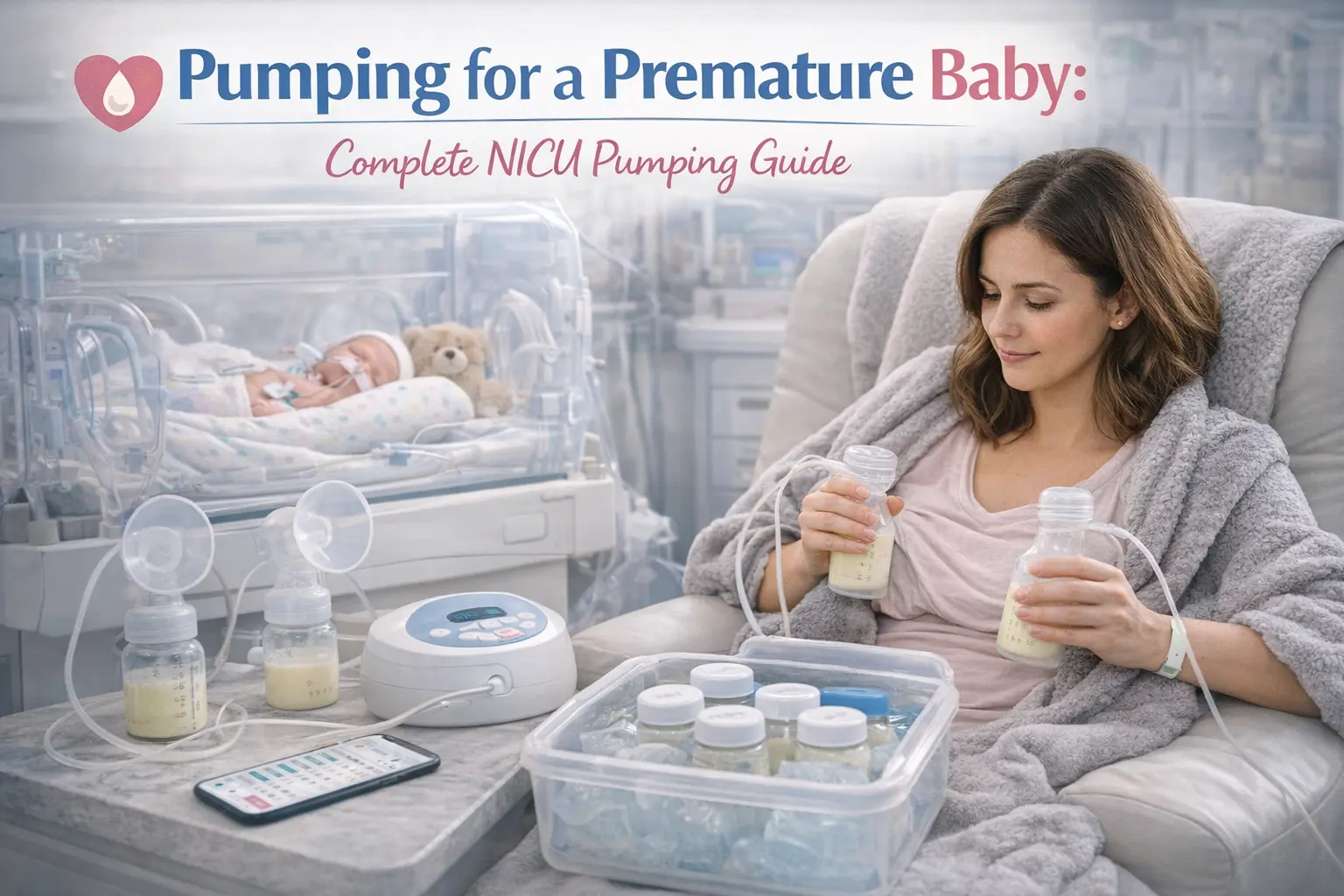
NICU pumping schedule: build and maintain supply →
What If You Can't Do Kangaroo Care?
Some situations limit kangaroo care — your baby may be too unstable, you may be recovering from surgery, or the NICU may have restrictions. If you can't do skin-to-skin:
- Hold your baby's hand through the incubator ports
- Talk or sing to your baby — they recognize your voice
- Leave a cloth with your scent in the incubator
- Ask about "hand containment" — gently cupping your hands around your baby
- Know that this phase is temporary — kangaroo care will come
The emotional weight of not being able to hold your baby is real. Coping with NICU anxiety and guilt →
Fathers and Partners: Your Role Matters
Kangaroo care is not just for mothers. Research shows that when fathers and partners do skin-to-skin:
- Baby's vital signs stabilize just as effectively
- Partners report lower anxiety and stronger bonding
- It gives the pumping mother a break while baby still receives skin-to-skin benefits
- Babies learn to recognize both parents' voices and scents
Final Thoughts
In a world of machines, monitors, and medical interventions, kangaroo care is a reminder that sometimes the simplest thing is the most powerful. Your body — your warmth, your heartbeat, your smell — is exactly what your baby needs.
Ask for kangaroo care early. Ask for it often. And know that every minute of skin-to-skin is actively helping your baby grow stronger.
Pump after kangaroo care for maximum output — and track every session.
Browse the complete NICU Guide →Related Articles

Written by
Piaora Editorial Team
Evidence-based guides on pumping, breastfeeding, and PCOS — researched with input from lactation professionals and written for real moms.
Learn more about our team and editorial standards →