NICU Breastfeeding Guide: How to Feed Your Baby in the NICU
Breastfeeding a baby in the NICU looks nothing like what you imagined. There's no quiet room, no immediate skin-to-skin latch after birth. Instead, there are wires, monitors, and a tiny baby who may not be ready to feed on their own yet.
But breastfeeding — or providing breast milk — is still possible. And for premature babies, it's one of the most impactful things you can do. This guide walks you through the entire journey, from the first drops of colostrum to direct breastfeeding.
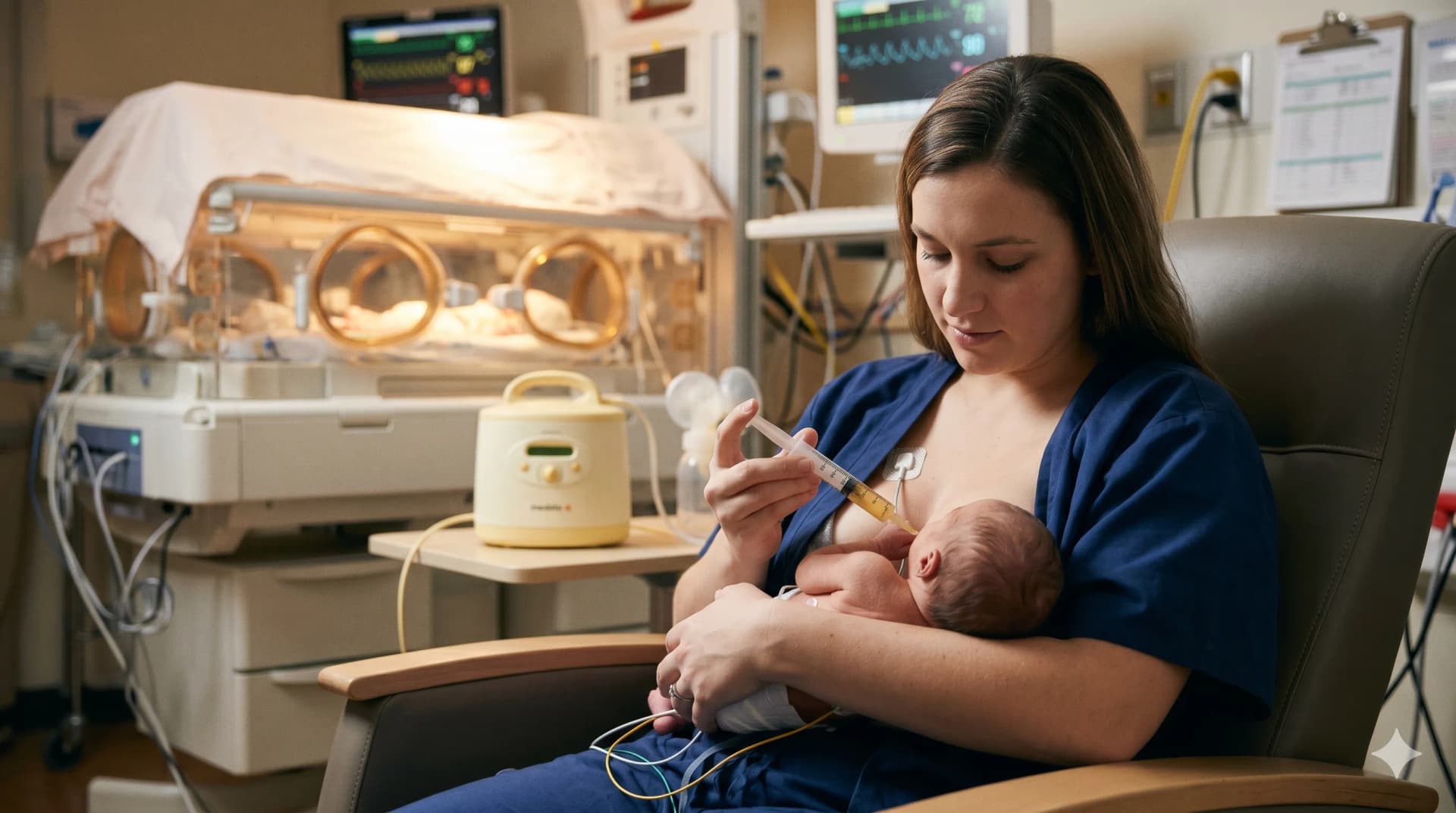
Why Breast Milk Is Critical for NICU Babies
For premature or sick babies, breast milk is not just nutrition — it's protective medicine. Research from the American Academy of Pediatrics strongly recommends human milk for all preterm infants:
- Reduces NEC risk by up to 77% — necrotizing enterocolitis is one of the most dangerous conditions for preemies, and breast milk is the single best prevention
- Provides immune protection — antibodies, lactoferrin, and white blood cells that premature immune systems cannot produce on their own
- Improves brain development — preterm breast milk contains higher levels of DHA and other fatty acids critical for neural growth
- Reduces infection rates — lower rates of sepsis, UTIs, and respiratory infections
- Shortens NICU stays — babies who receive breast milk often reach full feeds faster and go home sooner
Even tiny amounts matter. The first few milliliters of colostrum are sometimes called "liquid gold" in the NICU — and for good reason.
Kangaroo care boosts milk supply and bonding →
The First 24 Hours: Colostrum Collection
Whether you delivered vaginally or by C-section, your body starts producing colostrum immediately. The key is to start expressing as soon as possible — ideally within 1–6 hours of birth.
- Hand expression first: In the first hours, hand expression is often more effective than a pump for collecting colostrum. Ask a nurse or lactation consultant to help you.
- Collect every drop: Use a syringe to collect colostrum — even 0.5ml is valuable for oral care or tube feeding
- Start pumping within 6 hours: Once colostrum is flowing, begin with a hospital-grade double electric pump
- Don't wait for "enough": Any amount of colostrum can be used for oral care (swabbing your baby's mouth) which provides immune benefits
How NICU Babies Are Fed
Your baby may not be able to breastfeed directly at first. Here's how feeding typically progresses in the NICU:
| Stage | Method | When |
|---|---|---|
| IV Nutrition | TPN (total parenteral nutrition) | Very early or very premature |
| Trophic Feeds | Tiny amounts of colostrum via tube | Within first days |
| Gavage (Tube) Feeding | Breast milk via NG or OG tube | Until baby can coordinate suck-swallow-breathe |
| Non-nutritive Sucking | Practice at breast without transfer | ~32-34 weeks gestational age |
| Direct Breastfeeding | Baby latches and transfers milk | ~34-36 weeks gestational age |
This progression varies by baby. Some babies move faster, some slower. Trust your NICU team's assessment of your baby's readiness.
Oral Care with Colostrum
Even when your baby is too young or sick to feed, you can provide oral care with colostrum. This involves swabbing the inside of your baby's mouth with fresh colostrum or breast milk using a cotton swab.
- Provides immune factors directly to mucous membranes
- Reduces the risk of ventilator-associated pneumonia
- Introduces your baby to the taste and smell of your milk
- Can begin within hours of birth, even for the smallest preemies
Ask your NICU team about starting oral care — most NICUs support this practice.
Non-Nutritive Sucking: Practice at the Breast
Around 32-34 weeks gestational age, many babies can begin non-nutritive sucking — practicing at the breast without actually transferring milk. This is an important developmental step:
- Helps baby learn to coordinate suck, swallow, and breathe
- Builds positive associations with the breast
- Stimulates your milk production through skin contact
- Often done during or after kangaroo care
During this stage, your baby is still receiving most nutrition through tube feeds. Don't measure success by milk transfer — the practice itself is the goal.
Transitioning to Direct Breastfeeding
When your baby is developmentally ready (usually around 34-36 weeks gestational age), they can begin attempting direct breastfeeding:
- Start with one feeding per day — don't pressure yourself or your baby to switch all at once
- Use a nipple shield if needed — premature babies often have difficulty latching due to their small mouths; a shield can help
- Weigh before and after — the NICU may do pre- and post-feed weights to measure transfer
- Continue pumping — your baby won't be efficient at the breast initially, so maintain supply with pumping
- Be patient — some babies take days, some take weeks to become efficient breastfeeders
Common Challenges for NICU Breastfeeding
- Delayed milk production: Stress, separation, and medical conditions can delay the transition from colostrum to mature milk. Frequent pumping helps.
- Baby prefers bottle: If your baby has been bottle-fed expressed milk, they may resist the breast. Pacing bottle feeds and using slow-flow nipples can help.
- Low supply: Pumping without a baby at the breast is less efficient. Power pumping, skin-to-skin, and frequent sessions help maintain production.
- Guilt and pressure: If breastfeeding doesn't work out, your baby still received your pumped milk — which provided the same protective benefits.
Working with the NICU Lactation Consultant
Most NICUs have specialized lactation consultants (IBCLCs) who understand premature feeding. They can help with:
- Establishing pumping routine and optimizing output
- Positioning and latch for tiny babies
- Nipple shield fitting and weaning
- Creating a feeding transition plan before discharge
- Addressing supply concerns specific to NICU moms
Don't hesitate to ask for help — that's what they're there for.
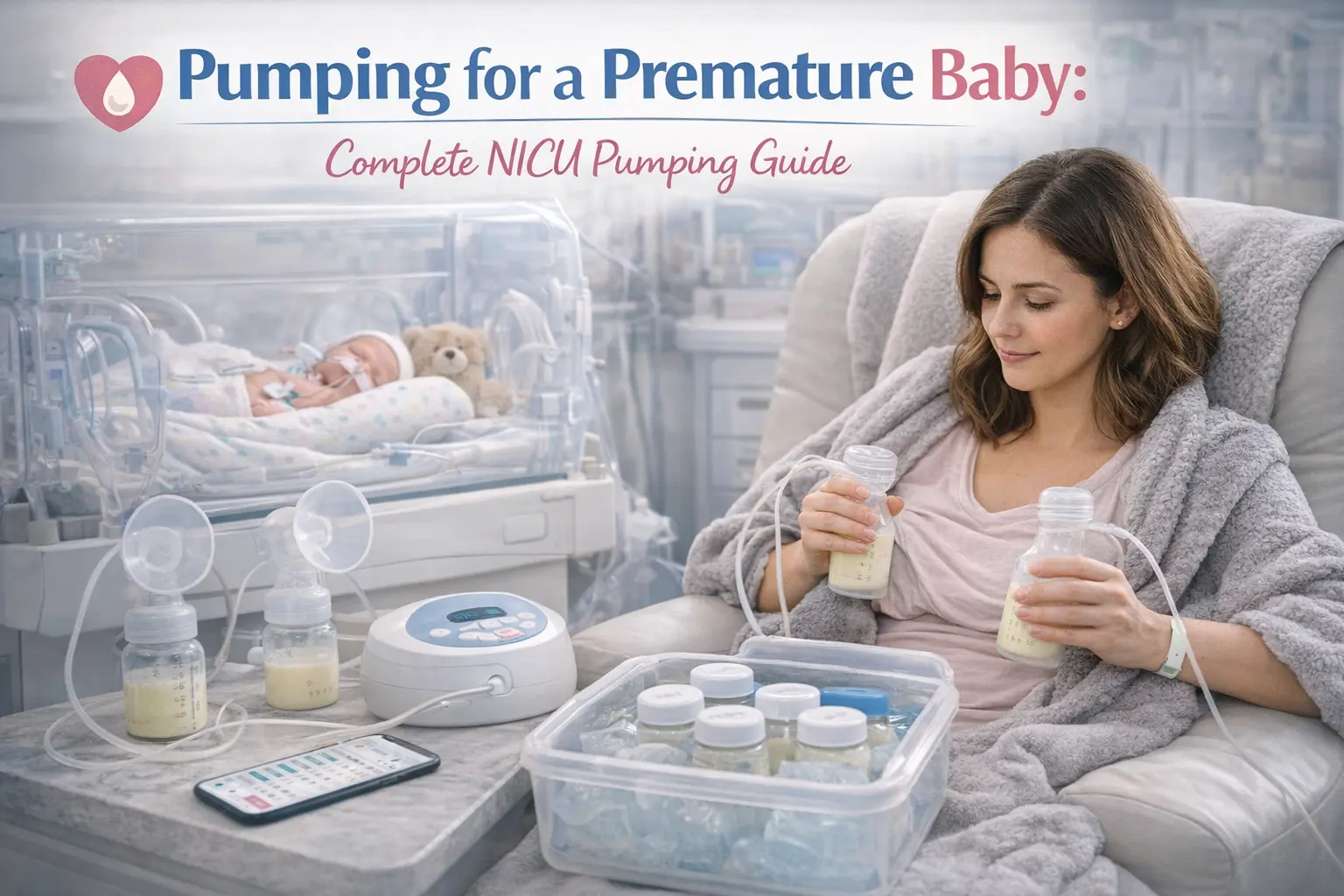
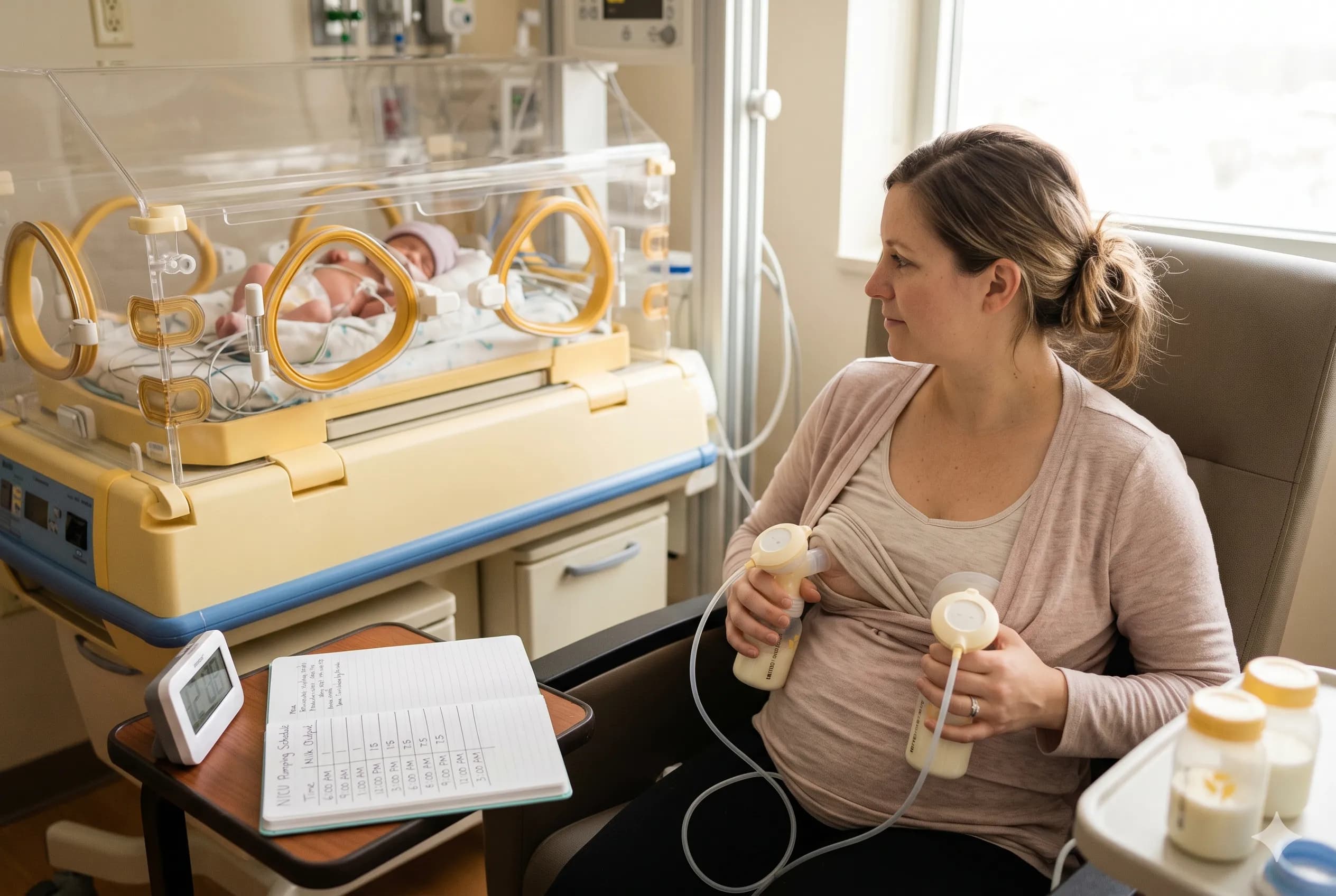
NICU pumping schedule: how to build and maintain supply →
What Happens After Discharge
Many NICU babies go home before they're fully breastfeeding. This is normal. Your post-discharge feeding plan might include:
- A combination of breast and bottle until baby builds stamina
- Continued pumping to maintain supply and supplement feeds
- Fortified breast milk if your baby needs extra calories
- Follow-up with a lactation consultant for ongoing support
NICU discharge preparation guide →
Final Thoughts
Breastfeeding a NICU baby is a marathon. It rarely goes as planned, and the milestones come slowly. But every drop of colostrum, every pumping session, every attempt at the breast — it all adds up.
Whether your baby eventually breastfeeds directly, takes expressed breast milk by bottle, or some combination — you are giving them the best possible start.
Related Articles
Written by
Piaora Editorial Team
Evidence-based guides on pumping, breastfeeding, and PCOS — researched with input from lactation professionals and written for real moms.
Learn more about our team and editorial standards →