NICU Discharge: Preparing to Bring Your Baby Home
You've waited weeks — maybe months — for this day. Your baby is coming home from the NICU. It should feel like pure joy, and maybe part of it does. But for most NICU parents, discharge also brings anxiety, uncertainty, and a strange kind of grief for the routines you've relied on.
This guide covers everything: what the NICU team looks for before discharge, how to prepare at home, feeding transitions, follow-up care, and the emotional adjustment nobody warns you about.

When Is a NICU Baby Ready for Discharge?
NICU discharge isn't based on a specific date — it's based on milestones. According to the AAP (American Academy of Pediatrics), your baby typically needs to meet all of these criteria:
- Temperature regulation: Maintaining body temperature in an open crib (no incubator) for 24–48 hours
- Feeding independently: Taking all feeds by mouth (breast or bottle) without tube supplementation
- Weight gain: Gaining weight consistently (typically 20–30g/day)
- No significant apnea or bradycardia: Usually event-free for 5–7 days (varies by NICU)
- Stable vital signs: Heart rate, respiratory rate, and oxygen levels within normal range
- Car seat test passed: Baby maintains stable vital signs in a car seat for 90+ minutes
Most premature babies are discharged around their original due date — but this varies significantly. Some go home earlier, some later.
The Discharge Checklist: What to Prepare at Home
Feeding Supplies
- Breast pump and supplies (if continuing to pump)
- Bottles and slow-flow nipples (the type your baby used in the NICU)
- Breast milk fortifier (if prescribed)
- Formula (if supplementing — use the specific type recommended by the NICU)
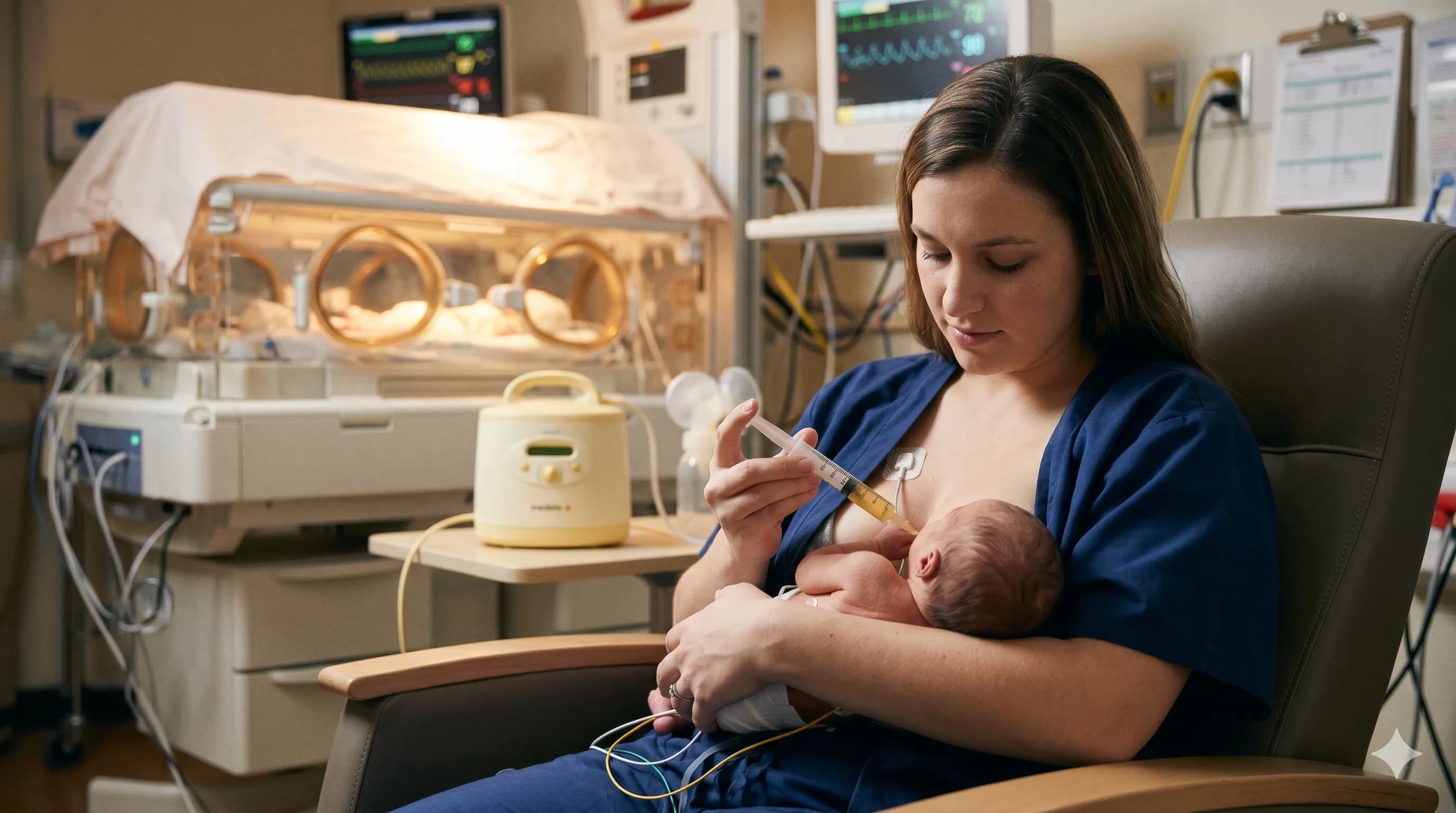
- Feeding syringes or supplemental nursing system (if needed)
- Milk storage containers and cooler bag
Safety Equipment
- Rear-facing car seat (installed and checked before discharge day)
- Firm, flat sleep surface (bassinet or crib) — no soft bedding, no inclined sleepers
- Pulse oximeter (if prescribed for home monitoring)
- Apnea monitor (if prescribed)
While in the NICU, continue doing kangaroo care daily — it helps prepare both you and baby for the transition home.
Medical Supplies
- Prescribed medications with clear dosing instructions
- Infant thermometer
- Vitamin D drops (usually recommended for breastfed babies)
- Iron supplements (if prescribed for preemies)
Support System
- Pediatrician appointment scheduled within 48 hours of discharge
- Emergency numbers posted (NICU, pediatrician, 911)
- Help at home for the first 1–2 weeks if possible
- Lactation consultant appointment (for breastfeeding transitions)
Feeding After Discharge
Feeding is often the biggest challenge after NICU discharge. Your baby may be:
- Fully breastfeeding — rare at discharge, but possible for older/bigger preemies
- Combination feeding — some breast, some bottle with expressed milk or formula
- Bottle feeding expressed milk — the most common scenario for preemies
- Using fortified breast milk — extra calories for catch-up growth
Key Feeding Tips Post-Discharge
- Feed on demand or on schedule — your NICU team will specify which
- Don't let your preemie sleep through feeds initially — they may not have the stamina to demand feeds
- Track intake carefully — especially in the first 1–2 weeks at home
- Watch for feeding cues: rooting, sucking on hands, increased alertness
- Weigh-ins at the pediatrician will confirm adequate intake
Transitioning to Breastfeeding at Home
If your baby wasn't fully breastfeeding in the NICU, the transition can continue at home:
- Offer the breast before bottle feeds
- Don't pressure — let baby practice without stress
- Continue pumping to maintain supply
- Consider a nipple shield if latch is difficult
- Work with a lactation consultant experienced with preemies
Complete NICU breastfeeding guide →
Sleep Safety for Former NICU Babies
Safe sleep is especially important for premature babies, who have a higher risk of SIDS:
- Always on their back — even if they slept on their stomach in the NICU
- Firm, flat surface — no inclined sleepers, swings, or car seats for sleep
- Nothing in the crib — no blankets, stuffed animals, bumpers, or positioners
- Room-sharing (not bed-sharing) — baby sleeps in their own space in your room
- Avoid overheating — dress in one layer more than you're wearing
Your baby may have been positioned on their stomach in the NICU (for medical reasons). At home, back sleeping is the rule — always.
Follow-Up Care After NICU Discharge
NICU babies need more follow-up than term babies. Expect:
- Pediatrician visit within 48 hours — weight check, feeding assessment, bilirubin if needed
- Weekly weight checks for the first few weeks
- NICU follow-up clinic — developmental assessments at regular intervals
- Eye exams (ROP screening) if your baby was very premature
- Hearing tests if not completed before discharge
- Early intervention referrals for developmental support
- RSV prevention — Palivizumab (Synagis) injections during RSV season if eligible
Use our Milk Intake Calculator to understand how much your baby should be eating as they grow at home.
Protecting Your Preemie's Health at Home
Premature babies have underdeveloped immune systems. Protect them by:
- Limiting visitors for the first 2–4 weeks — especially during cold/flu/RSV season
- Handwashing — everyone who touches the baby washes hands first
- Avoiding crowds — no shopping malls, restaurants, or large gatherings initially
- Keeping sick people away — anyone with cold symptoms should not visit
- Staying current on vaccinations — including household members' flu and Tdap vaccines
The Emotional Side of Coming Home
Nobody prepares you for how complicated discharge feels:
- Relief and joy — your baby is finally home
- Anxiety — no nurses, no monitors, no one watching
- Grief — for the NICU experience, for the birth you didn't have
- Hypervigilance — checking on baby constantly, watching every breath
- Identity shift — from NICU parent to "regular" parent (but not quite)
These feelings are normal. The transition takes time. Give yourself grace, and seek support if anxiety becomes overwhelming.
NICU parent mental health: coping with anxiety and trauma →
When to Call the Doctor After Discharge
Call your pediatrician or go to the ER if your baby:
- Has a rectal temperature above 100.4°F (38°C) or below 97.7°F (36.5°C)
- Shows signs of breathing difficulty (grunting, flaring, retractions)
- Refuses to feed for 2+ consecutive feeds
- Has fewer than 6 wet diapers in 24 hours
- Appears unusually lethargic or difficult to wake
- Has a color change (blue, gray, or very pale)
- Vomits repeatedly (not just spit-up)
Final Thoughts
Bringing your baby home from the NICU is a milestone you've fought for — and it's okay if it doesn't feel the way you expected. The anxiety is normal. The hypervigilance is normal. The strange grief mixed with relief — that's normal too.
You learned how to parent in the NICU. Now you're learning how to parent at home. Trust yourself — you already know this baby better than anyone.
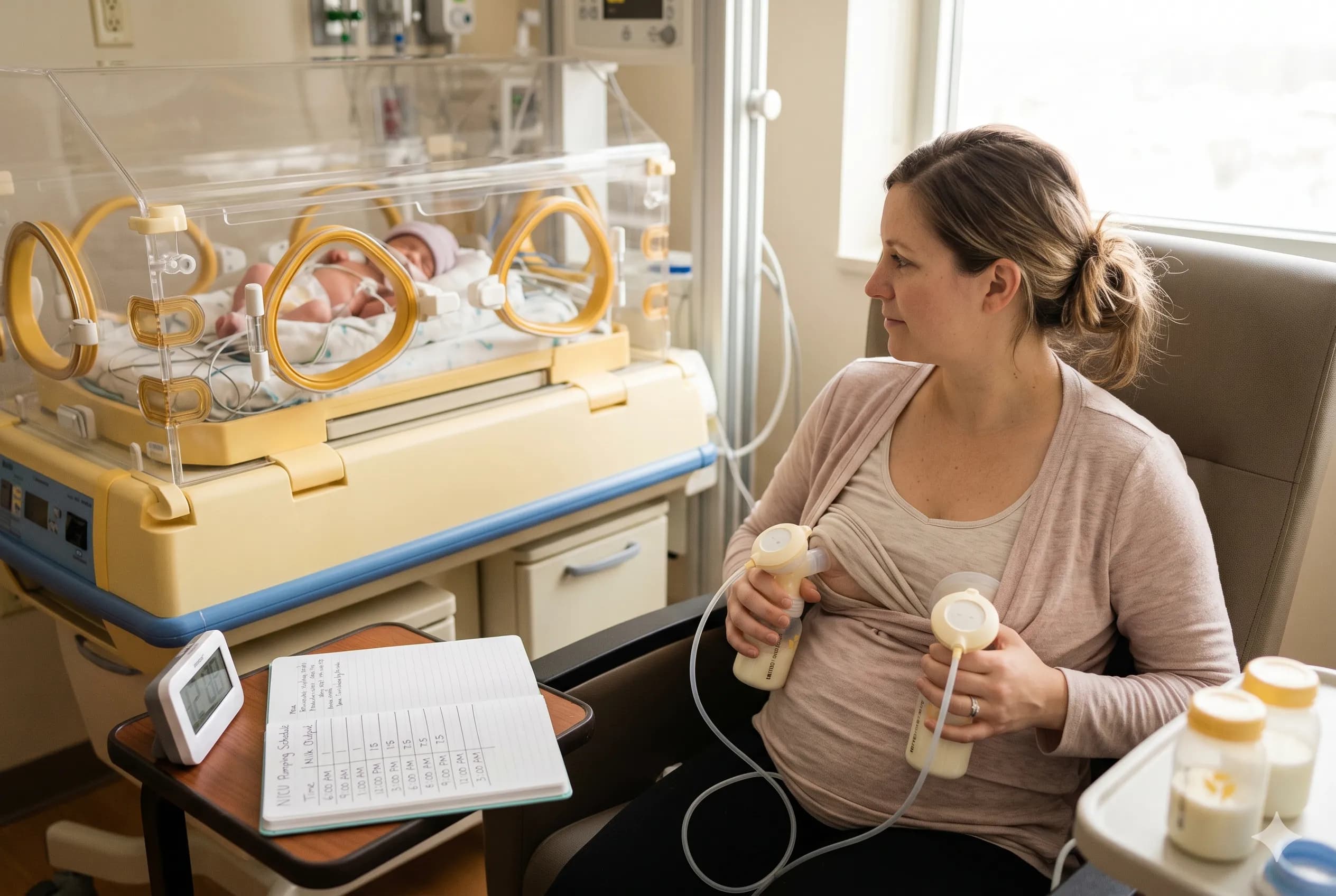
Continue tracking feeds and pumping sessions at home — consistency builds confidence.
Browse the complete NICU Guide →Related Articles
Written by
Piaora Editorial Team
Evidence-based guides on pumping, breastfeeding, and PCOS — researched with input from lactation professionals and written for real moms.
Learn more about our team and editorial standards →