How to Warm Breast Milk Safely (From Fridge & Freezer)
The safest way to warm breast milk is by holding the bottle or bag under warm running water or placing it in a bowl of warm water for 1–2 minutes. Never microwave breast milk — it creates hot spots that can burn your baby and destroys beneficial antibodies.
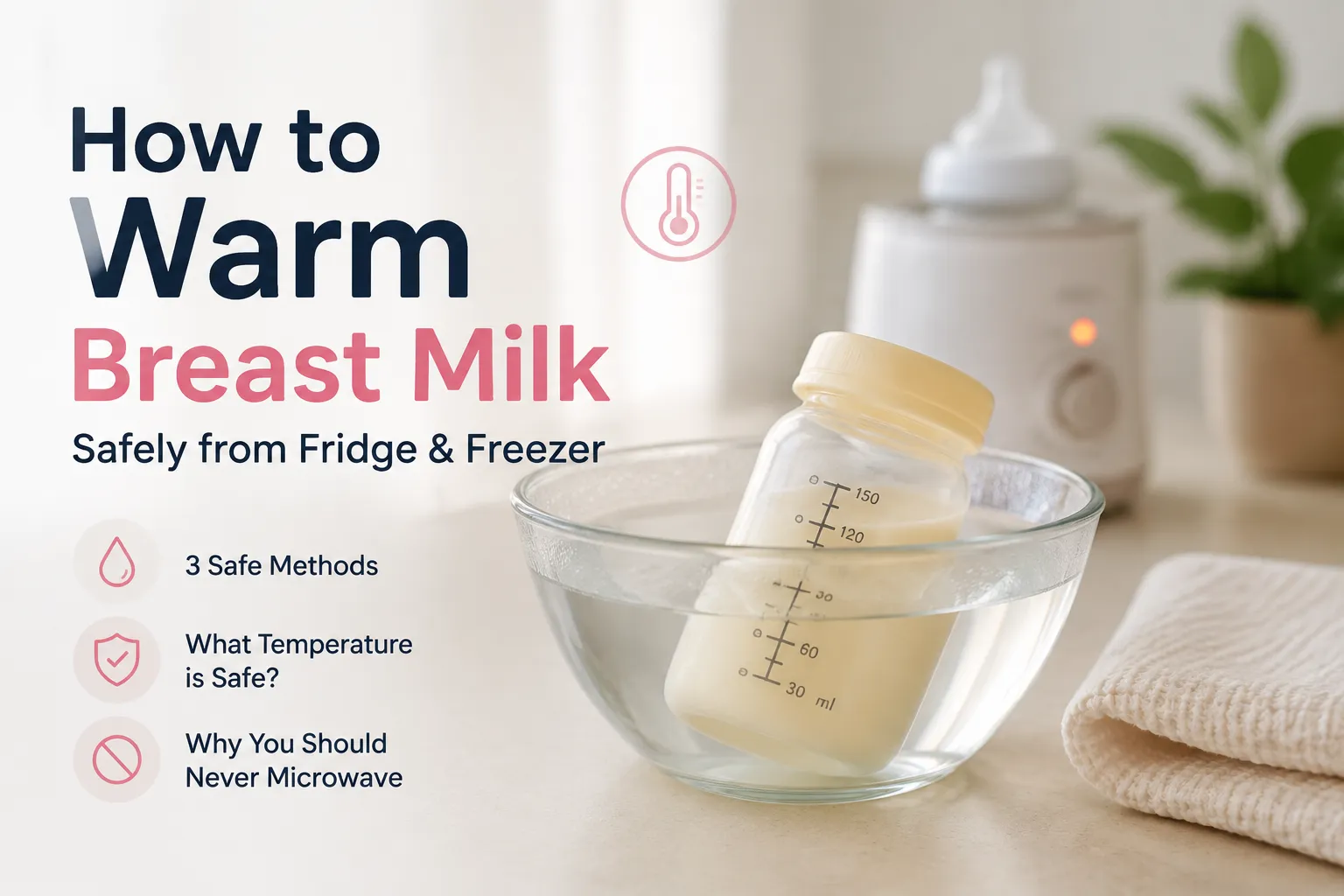
Quick Answer: 3 Safe Ways to Warm Breast Milk
| Method | Time | Best For |
|---|---|---|
| Warm running water | 1–2 minutes | Quick single bottle |
| Bowl of warm water | 2–5 minutes | Gentle, even warming |
| Bottle warmer | 3–5 minutes | Consistent temperature, night feeds |
All three methods are safe and recommended by the CDC. The right choice depends on your setup and how quickly you need the milk ready.
Method 1: Warm Running Water (Fastest)
This is the simplest and fastest method for a single bottle:
- Hold the sealed bottle or bag under warm (not hot) running water
- Rotate the bottle gently so all sides warm evenly
- Continue for 1–2 minutes until the milk reaches body temperature
- Swirl gently to mix any separated fat — don't shake vigorously
- Test a few drops on your inner wrist — it should feel lukewarm, not hot
Tip: Start with warm water, not hot. The goal is body temperature (about 98.6°F / 37°C), not hot milk.
Method 2: Bowl of Warm Water (Most Gentle)
This method is gentler and works well when you're not in a rush:
- Fill a bowl or mug with warm water (not boiling — you should be able to put your hand in comfortably)
- Place the sealed bottle or milk bag in the water
- Let it sit for 2–5 minutes, swirling occasionally
- If the water cools, replace it with fresh warm water
- Remove when milk feels lukewarm on your wrist
This method preserves the most nutrients because the temperature change is gradual. It's the approach most lactation consultants recommend.
Method 3: Bottle Warmer (Most Convenient)
Bottle warmers are designed to heat milk to a safe, consistent temperature. They're especially useful for night feeds when you're half-asleep:
- Follow your warmer's instructions for water level and time
- Most warmers take 3–5 minutes for a refrigerated bottle
- Don't leave milk in the warmer after it's done — overheating degrades nutrients
- Clean the warmer regularly to prevent mineral buildup
Important: Not all bottle warmers are created equal. Some can overheat milk if left too long. Choose one with an auto-shutoff feature and always test temperature before feeding.
How to Warm Frozen Breast Milk
Frozen milk needs an extra step — you must thaw it first before warming:
- Best method: Move frozen milk to the fridge the night before — it takes about 12 hours to thaw
- Faster method: Hold the frozen bag under cool running water until it's no longer solid, then switch to warm water
- Never thaw frozen milk in hot water or a microwave
Once thawed, warm it using any of the three methods above. Use our Milk Thawing Calculator to plan ahead and know exactly when your frozen milk will be ready.
Why You Should Never Microwave Breast Milk
The American Academy of Pediatrics explicitly advises against microwaving breast milk for two reasons:
- Hot spots: Microwaves heat unevenly, creating pockets of extremely hot milk that can scald your baby's mouth — even when the bottle feels cool on the outside
- Nutrient destruction: Microwave radiation breaks down immunoglobulins (antibodies) and other protective components more aggressively than gentle heating
Even “just a few seconds” in the microwave can create dangerous hot spots. It's never worth the risk.
What Temperature Should Warmed Breast Milk Be?
The ideal temperature for feeding is body temperature: 98.6°F (37°C). Your baby is used to milk at this temperature from direct breastfeeding.
However, many babies will happily drink milk that's slightly cool or at room temperature. There's no health reason to warm milk — it's purely a preference. If your baby accepts room-temperature or cold milk, you can skip warming entirely.
How to test: Drop a few drops on the inside of your wrist. It should feel neutral — not warm, not cold. If it feels warm to your skin, it's too hot for your baby.
Does My Baby Need Warmed Milk?
No — warming is optional. There's no medical reason to warm breast milk. Cold or room-temperature milk is perfectly safe and nutritionally identical to warmed milk.
That said, many babies prefer warmed milk (especially if they're used to nursing), and some will refuse cold bottles. If you're introducing bottles for the first time, warming to body temperature often helps with acceptance.
Pro tip for daycare: If your baby accepts room-temperature milk, tell your daycare provider. It saves them time and means your baby gets fed faster when hungry.
How Long Is Warmed Breast Milk Good For?
Once breast milk has been warmed, the clock starts ticking:
- Use within 2 hours of warming (at room temperature)
- Do not re-refrigerate warmed milk — bacteria multiply faster in reheated milk
- Do not reheat milk twice — if baby doesn't finish a warmed bottle, discard the remainder
This is why storing milk in small portions (2–4 oz) reduces waste — you only warm what your baby is likely to eat. See our Milk Storage Calculator for expiration timing.
Common Mistakes When Warming Breast Milk
- Using boiling water: Too hot — destroys nutrients and can warp plastic bottles. Use comfortably warm water only.
- Heating on the stove: Difficult to control temperature and very easy to overheat. Avoid.
- Shaking the bottle: Vigorous shaking can break down proteins. Swirl gently instead.
- Warming in a slow cooker or crockpot: Temperature is too high and uneven. Not safe.
- Leaving milk in a warmer too long: Bacteria grow rapidly in warm milk. Remove promptly once heated.
Warming Breast Milk at Night: Tips for Exhausted Parents
Night feeds are when warming feels hardest. Here's how to make it easier:
- Prep a thermos of warm water at bedtime — pour over the bottle when baby wakes, no need to run the tap
- Keep a bottle warmer on the nightstand — fill with water before bed, just press the button when baby cries
- Try offering room-temp milk — many babies will accept it, especially if introduced gradually
- Use the smallest portion size your baby takes — smaller bottles warm faster
For more on managing night sessions: Complete guide to pumping at night →
Summary: Safe Warming Guidelines
- Use warm (not hot) running water, a bowl of warm water, or a bottle warmer
- Target body temperature: 98.6°F / 37°C — test on your inner wrist
- Never microwave, boil, or reheat breast milk twice
- Use warmed milk within 2 hours — discard what's left
- Thaw frozen milk in the fridge overnight before warming
- Warming is optional — cold milk is safe if baby accepts it
Track your pumping sessions, stash, and never lose track of expiration dates.
Learn more about Pumping Tracker →Related Articles
Written by
Piaora Editorial Team
Evidence-based guides on pumping, breastfeeding, and PCOS — researched with input from lactation professionals and written for real moms.
Learn more about our team and editorial standards →