What Is PCOS? Symptoms, Causes & Diagnosis
Polycystic Ovary Syndrome (PCOS) is one of the most common hormonal conditions affecting women of reproductive age — yet it remains widely misunderstood and frequently underdiagnosed. If you've been told you might have PCOS, or you're trying to understand what's happening in your body, this guide covers everything you need to know.
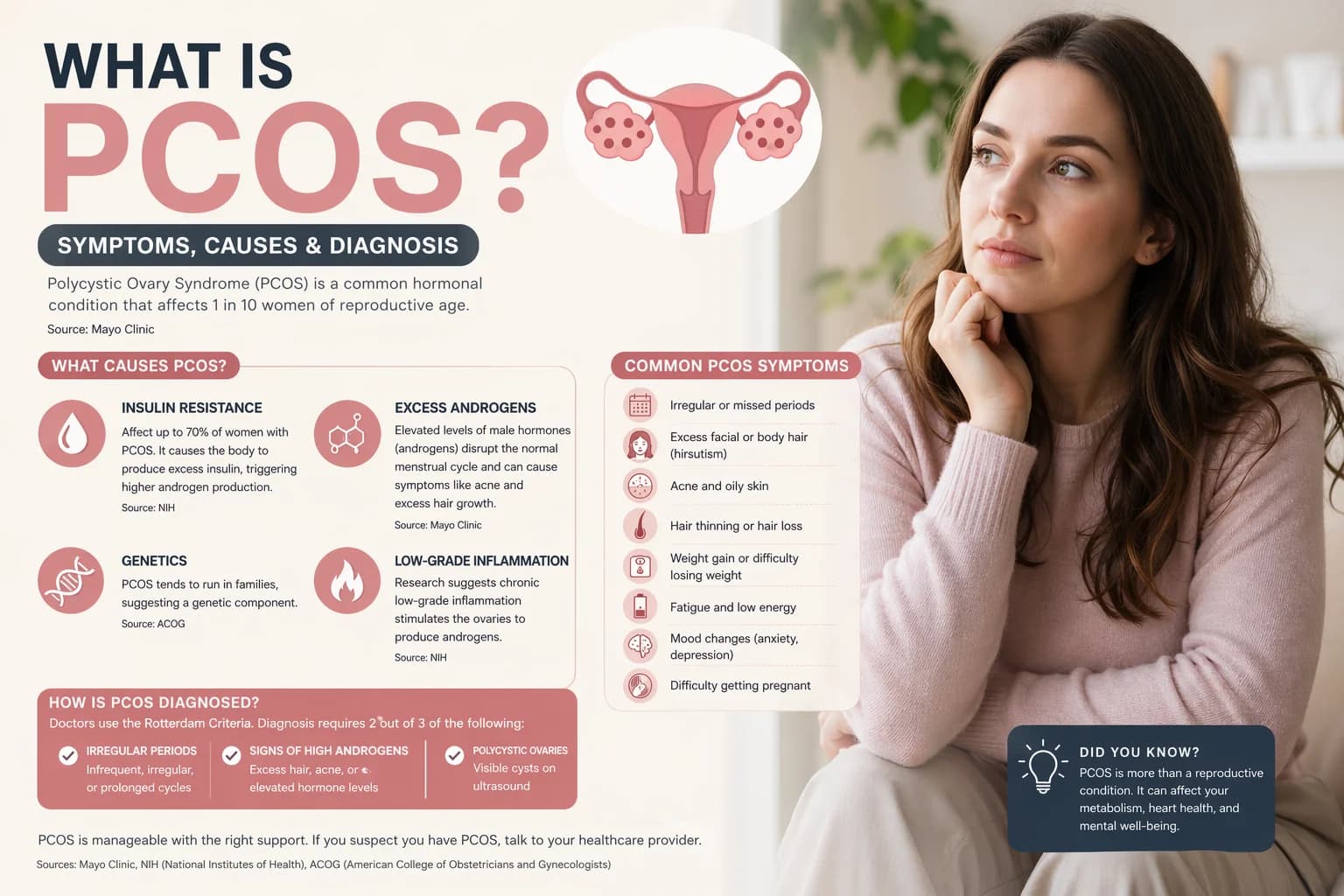
What Is PCOS? (Quick Answer)
PCOS is a hormonal disorder characterized by an imbalance of reproductive hormones. According to the Mayo Clinic, PCOS affects approximately 1 in 10 women of childbearing age, making it one of the most common endocrine disorders in women.
The name "polycystic" refers to the many small fluid-filled sacs (follicles) that can develop on the ovaries — though not all women with PCOS have cysts, and not all women with ovarian cysts have PCOS.
What Causes PCOS?
The exact cause of PCOS is not fully understood, but research points to several contributing factors:
- Insulin resistance — According to the NIH (National Institutes of Health), up to 70% of women with PCOS have insulin resistance, which causes the body to produce excess insulin, triggering higher androgen production
- Excess androgens — Elevated levels of male hormones (androgens) disrupt the normal menstrual cycle and can cause symptoms like acne and excess hair growth
- Low-grade inflammation — Research suggests chronic low-grade inflammation stimulates the ovaries to produce androgens
- Genetics — PCOS tends to run in families, suggesting a genetic component
Common PCOS Symptoms
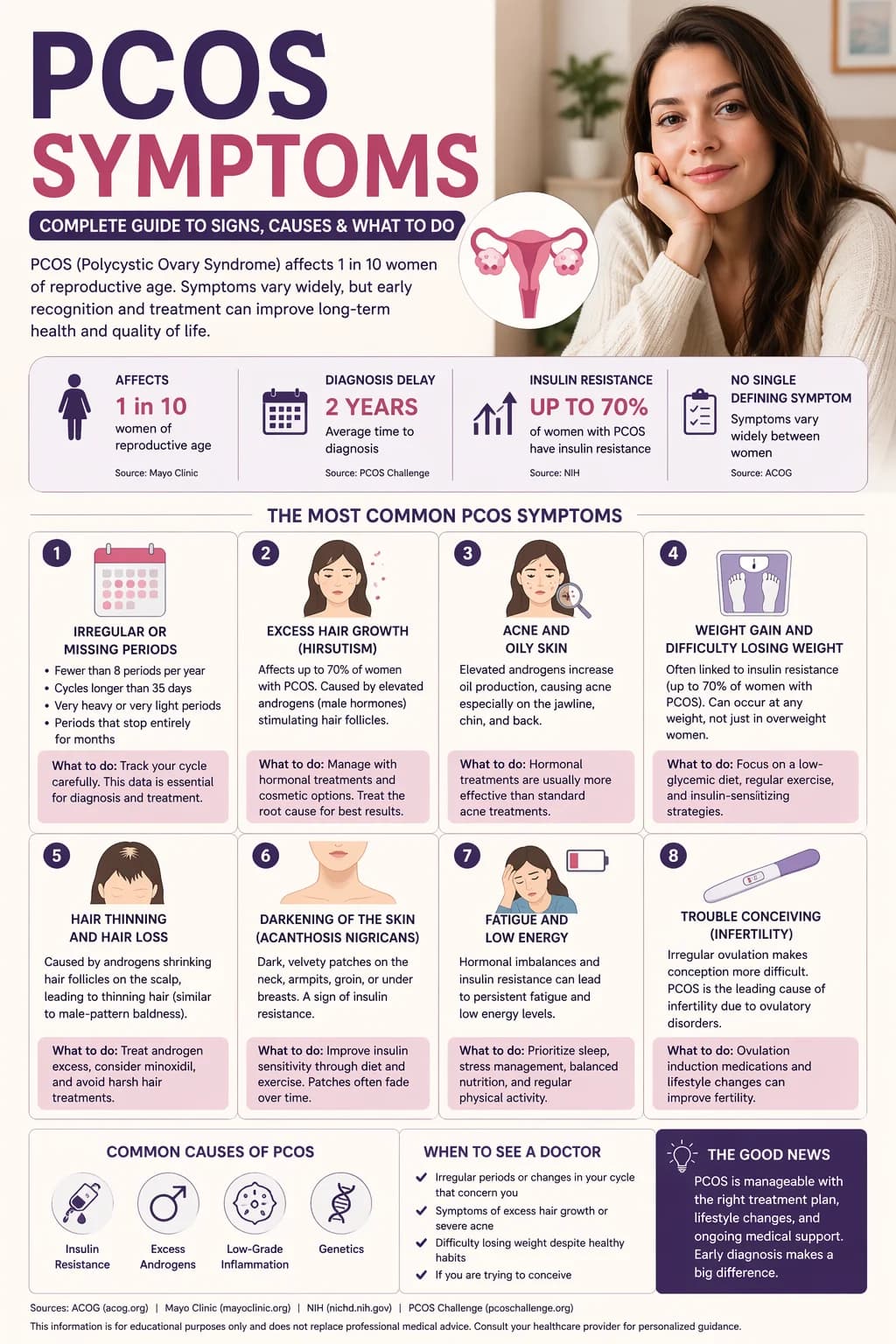
PCOS symptoms vary widely between women. According to the American College of Obstetricians and Gynecologists (ACOG), the most common symptoms include:
| Symptom | How Common |
|---|---|
| Irregular or missed periods | Very common |
| Excess hair growth (hirsutism) | Up to 70% of cases |
| Acne or oily skin | Common |
| Weight gain or difficulty losing weight | Common |
| Hair thinning or hair loss | Common |
| Darkening of skin (acanthosis nigricans) | Less common |
| Difficulty getting pregnant | Common |
| Mood changes, anxiety, depression | Common |
Many women with PCOS have only a few of these symptoms — which is one reason it's often missed or misdiagnosed for years.
How Is PCOS Diagnosed?
There is no single test for PCOS. According to the ACOG, doctors typically use the Rotterdam Criteria, which requires at least 2 of the following 3 features:
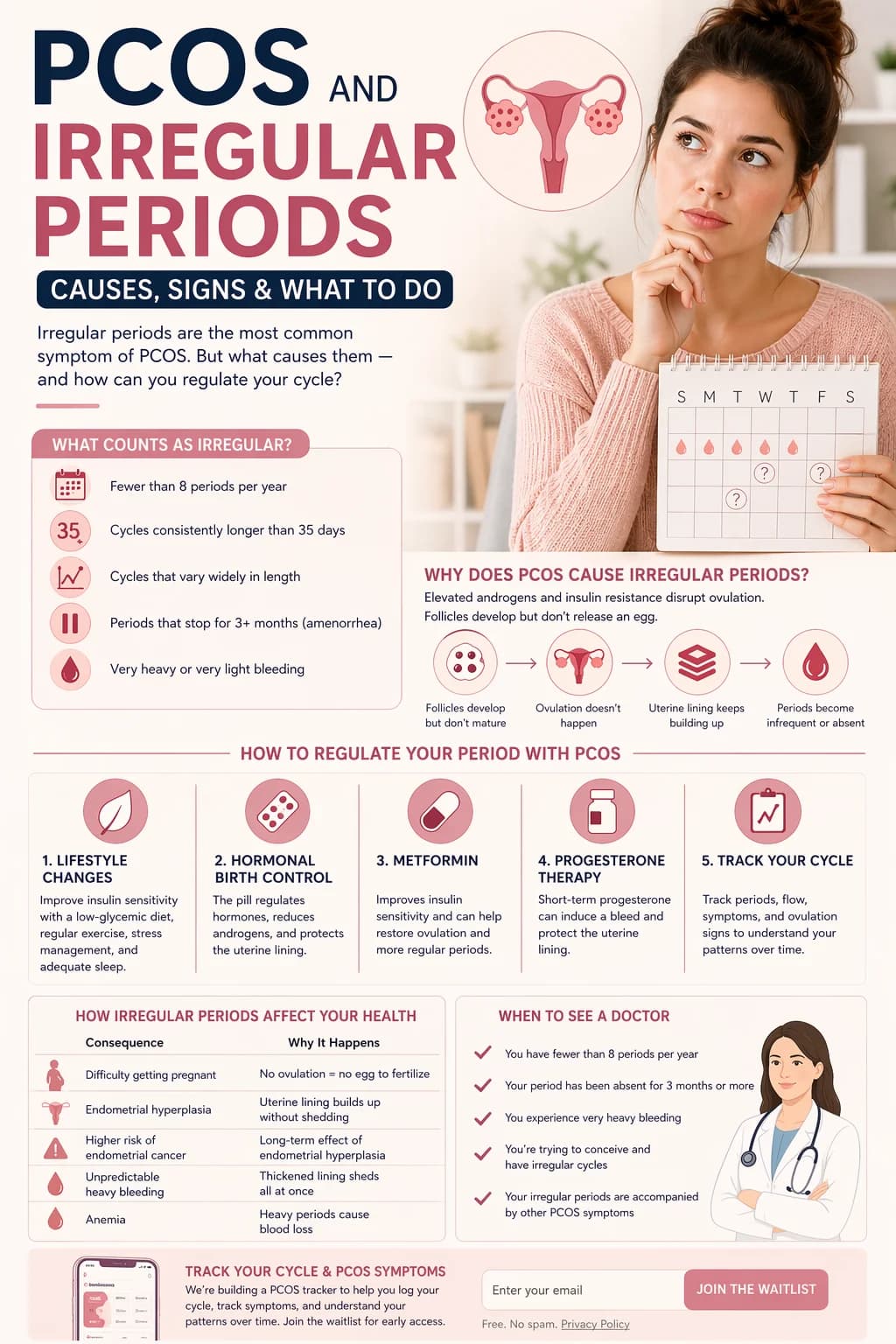
- Irregular or infrequent periods — fewer than 8 menstrual cycles per year, or cycles longer than 35 days
- Elevated androgens — either confirmed by a blood test or visible symptoms like excess hair growth or acne
- Polycystic ovaries — seen on an ultrasound (12 or more follicles in at least one ovary)
Your doctor may also order blood tests to check hormone levels, blood sugar, and cholesterol, and rule out other conditions with similar symptoms (such as thyroid disorders or elevated prolactin).
PCOS and Long-Term Health
PCOS is more than a reproductive condition. According to the NIH, women with PCOS have a higher risk of:
- Type 2 diabetes
- High blood pressure
- High cholesterol
- Sleep apnea
- Endometrial cancer (due to irregular periods)
- Depression and anxiety
This is why early diagnosis and management matters — not just for fertility, but for long-term health.
Is PCOS Curable?
PCOS has no cure, but it is very manageable. Lifestyle changes — particularly diet, exercise, and stress management — can significantly reduce symptoms and lower long-term health risks. For some women, symptoms improve substantially with the right approach.
Medications are also available to manage specific symptoms, including hormonal birth control for cycle regulation, metformin for insulin resistance, and fertility treatments for those trying to conceive. Take our PCOS Type Quiz to understand which type you may have and what to focus on.
What to Do If You Think You Have PCOS
- See your doctor — ask for a full hormonal panel and pelvic ultrasound
- Track your symptoms — keeping a record of your cycle, symptoms, and patterns helps your doctor make a more accurate diagnosis
- Don't self-diagnose — many conditions share PCOS symptoms; a proper diagnosis is essential
- Start with lifestyle — even before a formal diagnosis, improving diet and exercise can help regulate hormones
Final Thoughts
PCOS affects millions of women worldwide, yet many go undiagnosed for years. Understanding what PCOS is — and what it isn't — is the first step toward managing it effectively.
Tracking your symptoms, cycle, and patterns over time gives you and your doctor the clearest picture of what's happening in your body. The more data you have, the better equipped you are to make informed decisions about your health.
Related Articles
Written by
Piaora Editorial Team
Evidence-based guides on pumping, breastfeeding, and PCOS — researched with input from lactation professionals and written for real moms.
Learn more about our team and editorial standards →Frequently Asked Questions
Track Your PCOS Symptoms
We're building a simple PCOS tracker to help you log symptoms, track your cycle, and understand your patterns. Join the waitlist for early access.
Free. No spam. Privacy Policy
Continue reading: PCOS Symptoms: Complete Guide →