PCOS Symptoms: Complete Guide to Signs, Causes & What to Do
PCOS looks different in every woman. Some have irregular periods and nothing else. Others deal with acne, hair loss, weight gain, and fatigue all at once. This variation is one reason PCOS takes an average of 2 years to diagnose — many women don't realize their seemingly unrelated symptoms are all connected to the same condition.
This guide covers every major PCOS symptom, what causes it, how common it is, and what you can do about it.
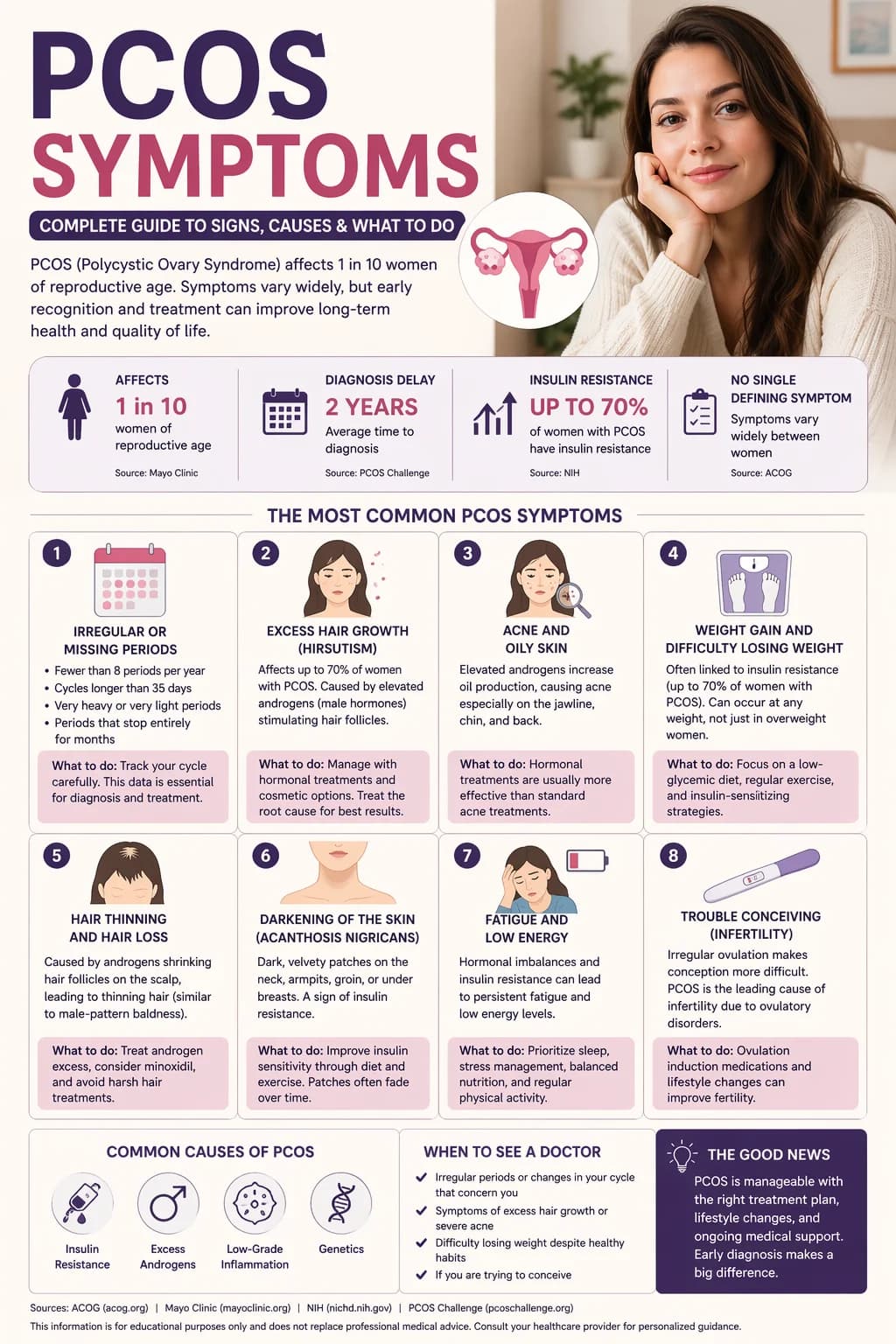
Why PCOS Symptoms Vary So Much
According to the American College of Obstetricians and Gynecologists (ACOG), PCOS is a hormonal disorder with no single defining symptom. The condition involves an imbalance of reproductive hormones — primarily elevated androgens (male hormones) and insulin resistance — which affect different women in different ways depending on genetics, lifestyle, and body composition.
You don't need to have all symptoms to have PCOS. In fact, the NIH notes that some women with PCOS have regular periods and no visible symptoms at all — their condition is only discovered during fertility investigations.
The Most Common PCOS Symptoms
1. Irregular or Missing Periods
This is the most common and often the first noticeable symptom. According to the Mayo Clinic, irregular periods in PCOS are caused by a failure to ovulate regularly. Without ovulation, the uterine lining builds up and isn't shed on a normal schedule.
- Fewer than 8 periods per year
- Cycles longer than 35 days
- Very heavy or very light periods when they do occur
- Periods that stop entirely for months
What to do: Track your cycle carefully — dates, duration, and flow. This data is essential for diagnosis and helps your doctor assess the pattern over time.
2. Excess Hair Growth (Hirsutism)
Hirsutism — unwanted hair growth on the face, chest, back, or abdomen — affects up to 70% of women with PCOS, according to the ACOG. It's caused by elevated androgens (testosterone and DHEA-S) stimulating hair follicles in areas typically associated with male-pattern hair growth.
What to do: Hirsutism can be managed with hormonal treatments (like birth control pills or anti-androgens) and cosmetic options (laser hair removal, waxing). Treating the underlying hormonal imbalance is the most effective long-term approach.
3. Acne and Oily Skin
Elevated androgens stimulate sebaceous glands to produce more oil, leading to acne — particularly on the jawline, chin, and back. PCOS-related acne tends to be deeper, more cystic, and more resistant to standard treatments than typical hormonal acne.
What to do: Standard acne treatments often don't work well for PCOS acne because they don't address the hormonal root cause. Hormonal treatments prescribed by a doctor are usually more effective.
4. Weight Gain and Difficulty Losing Weight
Many women with PCOS find it unusually difficult to lose weight, even with diet and exercise. This is largely due to insulin resistance — a condition where cells don't respond normally to insulin, causing the body to produce more of it. High insulin levels promote fat storage, particularly around the abdomen.
According to the NIH, up to 70% of women with PCOS have insulin resistance, regardless of their weight. Thin women can have PCOS too — weight is not a defining factor.
What to do: A low-glycemic diet and regular exercise are the most effective lifestyle interventions for insulin resistance. Metformin is sometimes prescribed to improve insulin sensitivity.
5. Hair Thinning and Hair Loss
While PCOS causes excess hair growth in some areas, it can also cause hair thinning on the scalp — a pattern similar to male-pattern baldness, starting at the crown or temples. This is also driven by elevated androgens, which shrink hair follicles on the scalp.
What to do: Treating the underlying androgen excess is the most effective approach. Topical minoxidil can help slow hair loss. Avoid harsh styling treatments that stress the hair shaft.
6. Darkening of the Skin (Acanthosis Nigricans)
Dark, velvety patches of skin — typically on the neck, armpits, groin, or under the breasts — are a sign of insulin resistance. This condition, called acanthosis nigricans, is more common in women with PCOS who are overweight, but can occur at any weight.
What to do: Improving insulin sensitivity through diet and exercise often reduces these patches over time. They are not harmful but are a useful indicator of metabolic issues.
7. Fatigue and Low Energy
Chronic fatigue is a frequently reported but often overlooked PCOS symptom. It can result from several factors: insulin resistance causing blood sugar fluctuations, poor sleep quality (often linked to sleep apnea, which is more common in women with PCOS), and the emotional toll of managing a chronic condition.
What to do: Stabilizing blood sugar through diet, improving sleep hygiene, and addressing any underlying sleep disorders can significantly improve energy levels.
8. Mood Changes, Anxiety, and Depression
Research published in the Journal of Clinical Endocrinology & Metabolism found that women with PCOS have significantly higher rates of anxiety and depression than women without the condition. Hormonal fluctuations, the stress of managing symptoms, and the impact on fertility and body image all contribute.
What to do: Mental health support is a legitimate and important part of PCOS management. Therapy, support groups, and in some cases medication can make a significant difference. Don't dismiss emotional symptoms as separate from your PCOS.
9. Difficulty Getting Pregnant
PCOS is one of the leading causes of female infertility, primarily because irregular ovulation makes it harder to conceive. However, most women with PCOS can get pregnant — either naturally or with medical assistance.
What to do: If you're trying to conceive, tracking ovulation is essential. Lifestyle changes that improve insulin sensitivity can restore regular ovulation in some women. Fertility treatments are available and effective for PCOS-related infertility.
10. Pelvic Pain
Some women with PCOS experience pelvic pain, particularly around the time of their period or during ovulation. This can be related to the ovarian follicles or to endometriosis, which is more common in women with PCOS.
What to do: Persistent or severe pelvic pain should always be evaluated by a doctor to rule out other conditions.
PCOS Symptoms at a Glance
| Symptom | Caused By | How Common |
|---|---|---|
| Irregular periods | Anovulation | Very common |
| Excess hair growth | High androgens | Up to 70% |
| Acne / oily skin | High androgens | Common |
| Weight gain | Insulin resistance | Common |
| Hair thinning | High androgens | Common |
| Dark skin patches | Insulin resistance | Less common |
| Fatigue | Insulin resistance / sleep | Common |
| Anxiety / depression | Hormonal + psychological | Common |
| Fertility issues | Irregular ovulation | Common |
| Pelvic pain | Ovarian follicles | Less common |
Symptoms That Are Often Missed
Several PCOS symptoms are frequently dismissed or attributed to other causes:
- Fatigue — often blamed on stress or poor sleep rather than investigated as a metabolic issue
- Mood changes — frequently treated as standalone anxiety or depression without investigating the hormonal connection
- Irregular periods in teens — often dismissed as "normal" in adolescence, delaying diagnosis by years
- Symptoms in thin women — PCOS is often associated with weight gain, so thin women with PCOS are frequently overlooked
When to See a Doctor
See your doctor if you experience any of the following:
- Fewer than 8 periods per year, or cycles consistently longer than 35 days
- Sudden or significant increase in facial or body hair
- Unexplained weight gain, particularly around the abdomen
- Difficulty getting pregnant after 12 months of trying (or 6 months if you're over 35)
- Severe acne that doesn't respond to standard treatments
Bring a record of your symptoms — including cycle dates, symptom patterns, and any changes you've noticed. The more information you can provide, the faster and more accurate your diagnosis will be.
Final Thoughts
PCOS symptoms are wide-ranging, often subtle, and easy to dismiss individually. The key is recognizing the pattern — and tracking your symptoms consistently over time so you and your doctor can see the full picture. Take our PCOS Type Quiz to understand which type may be driving your symptoms.
If you suspect PCOS, don't wait. Early diagnosis and management can prevent long-term complications and significantly improve your quality of life. Read about PCOS treatment options and how diet changes can help.
Related Articles
Written by
Piaora Editorial Team
Evidence-based guides on pumping, breastfeeding, and PCOS — researched with input from lactation professionals and written for real moms.
Learn more about our team and editorial standards →Frequently Asked Questions
Track Your PCOS Symptoms
We're building a simple PCOS tracker to help you log symptoms, track your cycle, and spot patterns over time. Join the waitlist for early access.
Free. No spam. Privacy Policy