PCOS and Weight Gain: Why It Happens and What Actually Works
If you have PCOS and struggle with your weight, you're not imagining it — and it's not a lack of willpower. PCOS creates a hormonal environment that makes weight gain easier and weight loss significantly harder than it is for women without the condition.
Understanding why this happens is the first step toward doing something about it.
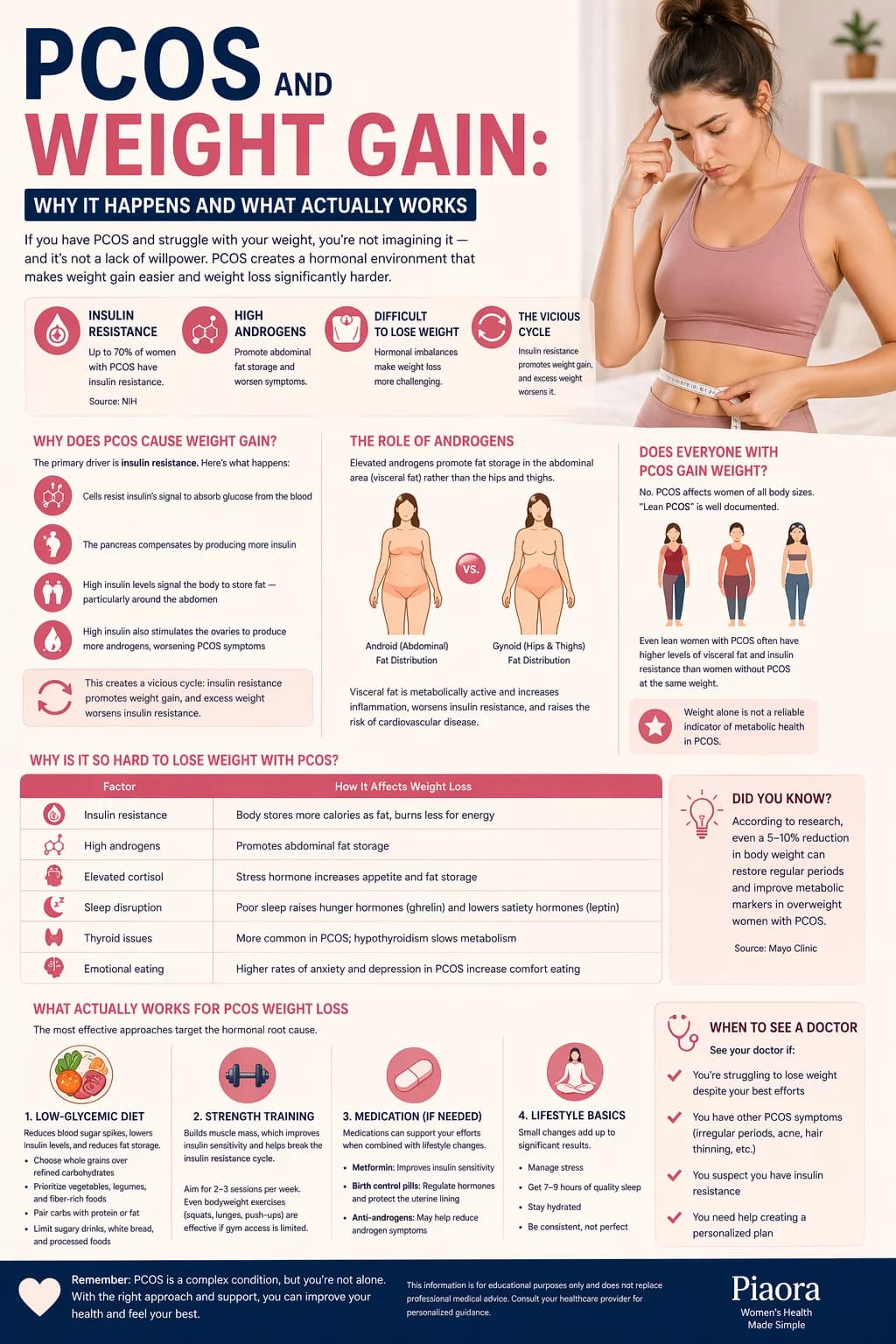
Why Does PCOS Cause Weight Gain?
The primary driver is insulin resistance. According to the NIH, up to 70% of women with PCOS have insulin resistance — a condition where the body's cells don't respond normally to insulin.
Here's what happens:
- Cells resist insulin's signal to absorb glucose from the blood
- The pancreas compensates by producing more insulin
- High insulin levels signal the body to store fat — particularly around the abdomen
- High insulin also stimulates the ovaries to produce more androgens, worsening PCOS symptoms
This creates a vicious cycle: insulin resistance promotes weight gain, and excess weight worsens insulin resistance.
The Role of Androgens
Elevated androgens — the male hormones that are characteristically high in PCOS — also contribute to weight distribution. According to research published in the Journal of Clinical Endocrinology & Metabolism, high androgens promote fat storage in the abdominal area (visceral fat) rather than the hips and thighs.
Visceral fat — the fat stored around internal organs — is metabolically active and more harmful than subcutaneous fat. It increases inflammation, worsens insulin resistance, and raises the risk of cardiovascular disease.
Does Everyone with PCOS Gain Weight?
No. PCOS affects women of all body sizes. "Lean PCOS" — where women have normal or low body weight — is well documented. These women still have the same hormonal imbalances but may not experience significant weight gain.
However, even lean women with PCOS often have higher levels of visceral fat and insulin resistance than women without PCOS at the same weight. This is why weight alone is not a reliable indicator of metabolic health in PCOS.
Why Is It So Hard to Lose Weight with PCOS?
Several factors make weight loss more difficult with PCOS:
| Factor | How It Affects Weight Loss |
|---|---|
| Insulin resistance | Body stores more calories as fat, burns less for energy |
| High androgens | Promotes abdominal fat storage |
| Elevated cortisol | Stress hormone increases appetite and fat storage |
| Sleep disruption | Poor sleep raises hunger hormones (ghrelin) and lowers satiety hormones (leptin) |
| Thyroid issues | More common in PCOS; hypothyroidism slows metabolism |
| Emotional eating | Higher rates of anxiety and depression in PCOS increase comfort eating |
What Actually Works for PCOS Weight Loss
Standard calorie-restriction advice often doesn't work as well for women with PCOS because it doesn't address the underlying insulin resistance. The most effective approaches target the hormonal root cause.
1. Low-Glycemic Diet
A low-glycemic diet reduces blood sugar spikes, which lowers insulin levels and reduces fat storage. According to a review in the Nutrients journal, low-GI diets are particularly effective for women with PCOS, improving both weight and hormonal markers.
- Choose whole grains over refined carbohydrates
- Prioritize vegetables, legumes, and fiber-rich foods
- Pair carbohydrates with protein or fat to slow glucose absorption
- Limit sugary drinks, white bread, and processed foods
2. Strength Training
Resistance training is particularly effective for PCOS because it builds muscle mass, which improves insulin sensitivity. Muscle tissue uses glucose more efficiently than fat tissue, helping to break the insulin resistance cycle.
Aim for 2–3 sessions per week. Even bodyweight exercises (squats, lunges, push-ups) are effective if gym access is limited.
3. Consistent Cardio
Regular aerobic exercise improves insulin sensitivity and supports weight management. The Mayo Clinic recommends at least 150 minutes of moderate-intensity exercise per week for women with PCOS.
Walking, cycling, swimming, and dancing all count. Consistency matters more than intensity.
4. Stress Management
Chronic stress raises cortisol, which promotes abdominal fat storage and worsens insulin resistance. Managing stress is not optional — it's a core part of PCOS weight management.
- Prioritize sleep (7–9 hours per night)
- Practice mindfulness, yoga, or meditation
- Set boundaries around work and social commitments
5. Medical Support
For women with significant insulin resistance, lifestyle changes alone may not be enough. Metformin — a medication that improves insulin sensitivity — is commonly prescribed for PCOS and can support weight loss efforts. Use our HOMA-IR Calculator to check your insulin resistance level, and speak to your doctor about whether medication is appropriate for you.
How Much Weight Loss Makes a Difference?
The good news: you don't need to reach an "ideal" weight to see significant improvements. According to the Mayo Clinic, losing just 5–10% of body weight can:
- Restore more regular menstrual cycles
- Improve insulin sensitivity
- Reduce androgen levels
- Improve fertility
- Reduce acne and excess hair growth
For a 70kg woman, that's just 3.5–7kg. Small, sustainable changes are more effective than aggressive dieting.
What Doesn't Work (And Why)
- Very low-calorie diets — often backfire by increasing cortisol and slowing metabolism
- Cutting all carbs — extreme carb restriction is hard to sustain and can worsen hormonal balance in some women
- Cardio only — without strength training, you miss the insulin-sensitizing benefits of muscle building
- Ignoring sleep and stress — these are not optional extras; they directly affect the hormones driving weight gain
Final Thoughts
PCOS weight gain is not a personal failure — it's a hormonal problem that requires a hormonal solution. Standard diet advice often doesn't account for the insulin resistance and androgen excess that drive weight gain in PCOS.
The most effective approach combines a low-glycemic diet, regular strength training, stress management, and adequate sleep — targeting the root cause rather than just the symptom. Progress may be slower than you'd like, but even small improvements in weight and lifestyle can produce significant hormonal benefits.
Track your symptoms, cycle, and patterns over time — this data helps you and your doctor understand what's working and adjust your approach accordingly. Take our PCOS Type Quiz to better understand what's driving your specific symptoms.
Related Articles
Written by
Piaora Editorial Team
Evidence-based guides on pumping, breastfeeding, and PCOS — researched with input from lactation professionals and written for real moms.
Learn more about our team and editorial standards →Frequently Asked Questions
Track Your PCOS Symptoms & Progress
We're building a PCOS tracker to help you log symptoms, track your cycle, and monitor your progress over time. Join the waitlist for early access.
Free. No spam. Privacy Policy