Safe Breast Milk Storage and Management Tips for Working Moms
Pumping efficiently is just the first step. Proper storage and handling of breast milk ensures your baby gets safe, nutritious milk whenever needed. This guide covers storage durations, freezing, thawing, and daily management tips for working moms.
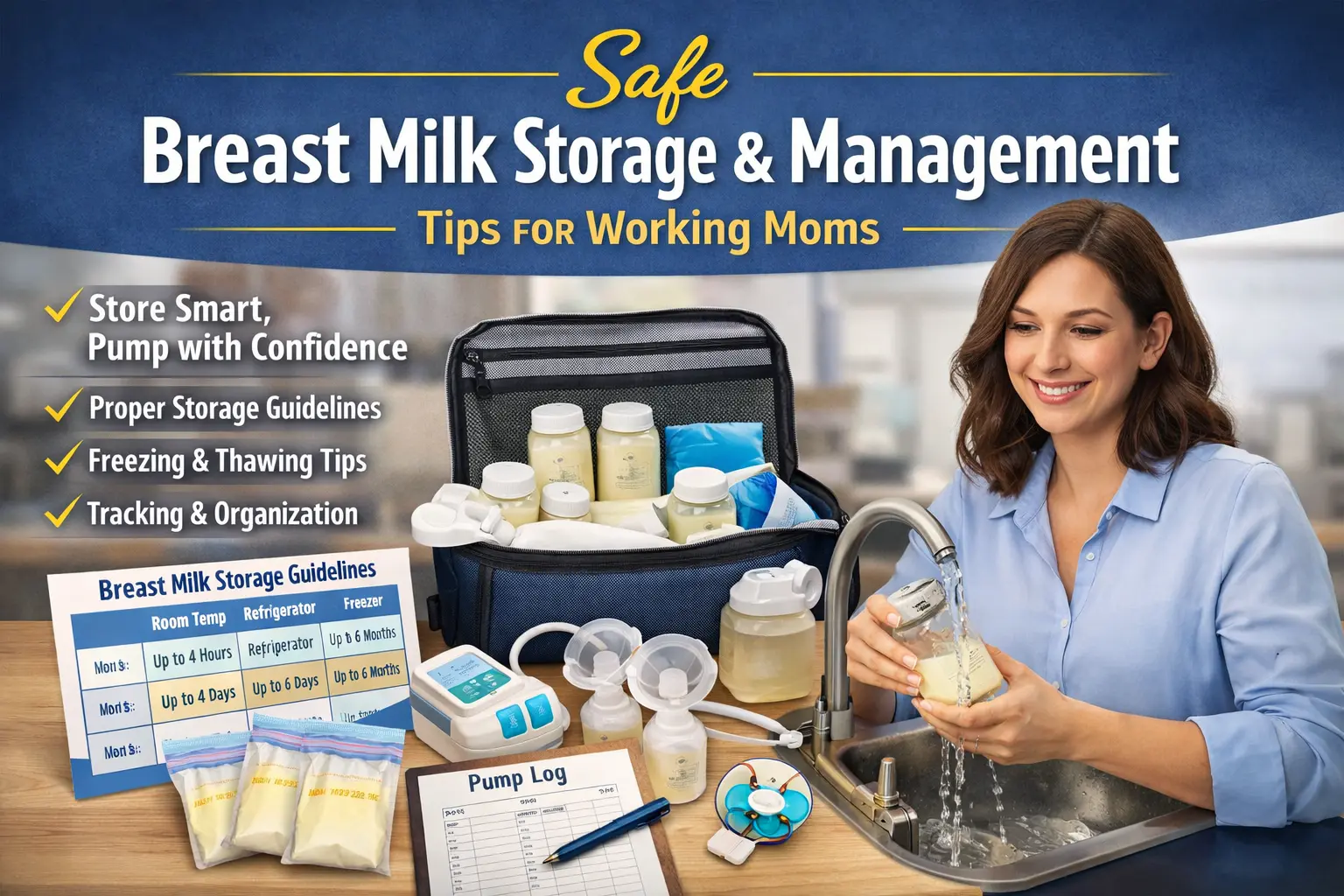
How Long Can Breast Milk Be Stored? (Quick Answer)
According to the CDC (Centers for Disease Control and Prevention), storage duration depends on where you keep the milk. Use our free Breast Milk Storage Calculator to instantly see when your milk expires. Here's a quick reference:
| Storage Location | Duration | Notes |
|---|---|---|
| Room temperature | Up to 4 hours | Keep away from heat |
| Refrigerator | Up to 4 days | Store at back, not door |
| Freezer | Up to 6 months | Best quality within 3 months |
| Deep freezer | Up to 12 months | Use airtight containers |
Understanding Breast Milk Storage Guidelines
Following proper breast milk storage guidelines protects your baby and prevents waste. A few key rules to remember:
- Always label bottles with the date and time pumped
- Use the oldest milk first (first in, first out)
- Never refreeze thawed breast milk
- Store in small portions (2–4 oz) to minimize waste
If you're also dealing with supply challenges, these tips can help: Common pumping problems and how to fix them →
Tips for Freezing and Thawing Milk
Freezing breast milk extends its shelf life significantly, but proper technique matters.
Freezing tips:
- Use breast milk storage bags or BPA-free containers
- Leave space at the top — milk expands when frozen
- Lay bags flat to freeze, then stack vertically to save space
- Store in small portions to avoid wasting thawed milk
Thawing tips:
- Thaw in the fridge overnight for the safest method
- For faster thawing, place in warm (not hot) water
- Never microwave breast milk — it destroys nutrients and creates hot spots
- Shake gently before feeding to mix the fat layer
- Use thawed milk within 24 hours — do not refreeze
Organizing Milk at Work
Keeping your milk organized at work prevents spoilage and reduces stress.
- Use an insulated cooler bag with ice packs for commuting
- If possible, keep a dedicated section in the office fridge
- Label everything clearly with your name and date
- Rotate older milk to the front so it gets used first
- Bring just enough for the day — don't overfill your cooler
If you travel for work, milk storage gets more complex — TSA rules, hotel fridges, and shipping milk home. Pumping while traveling for work →
Tracking and Managing Pumped Milk
Keeping track of your milk inventory prevents accidental spoilage and helps you plan ahead for daycare or work schedules.
- Log each session with volume, date, and storage location
- Track your freezer stash so you know exactly what you have
- Set reminders to use milk before it expires
- Review your weekly output to spot trends and adjust your routine
Piaora makes it easy to log sessions and track your milk output over time. Try our free Pumping Tracker →
Safety and Hygiene Practices
Good hygiene protects your baby and keeps your milk safe.
- Wash hands thoroughly before handling milk or pump parts
- Clean all pump parts after every session with warm soapy water
- Sterilize parts regularly, especially for newborns
- Avoid cross-contamination — don't mix fresh and cold milk
- Discard any milk that smells sour or looks unusual
Final Thoughts
Safe breast milk storage doesn't have to be complicated. Follow the storage guidelines, label everything clearly, and track your inventory to stay organized.
With the right habits in place, you can provide your baby with safe, nutritious milk — without the stress.
Track every pumping session and manage your milk supply with our free Pumping Tracker.
Learn more about Pumping Tracker →Related Articles
Written by
Piaora Editorial Team
Evidence-based guides on pumping, breastfeeding, and PCOS — researched with input from lactation professionals and written for real moms.
Learn more about our team and editorial standards →