Breast Milk Storage Bags: How to Choose and Use Them
Breast milk storage bags seem simple — but the wrong choice or incorrect use can lead to leaks, contamination, or wasted milk. This guide covers everything you need to know to choose the right bags and use them correctly.
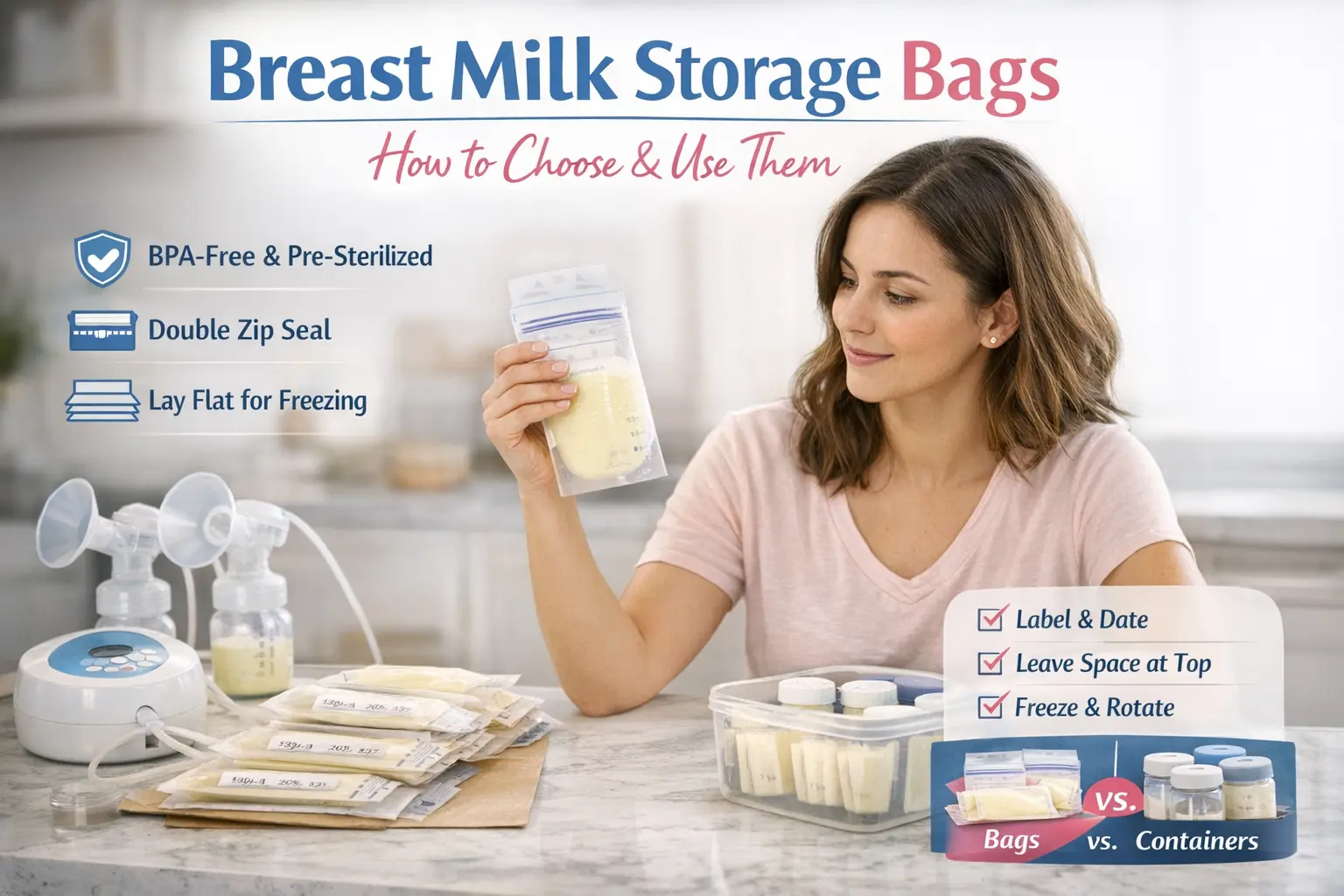
What to Look for in Breast Milk Storage Bags (Quick Answer)
The CDC recommends using bags specifically designed for breast milk storage. The most important features:
- BPA-free and food-safe materials — non-negotiable
- Double-sealed zipper — prevents leaks
- Pre-sterilized — ready to use without washing
- Clear labeling area — for date, time, and volume
- Lay-flat design — for efficient freezer storage
Storage Bag vs Hard Container: Which Is Better?
| Feature | Storage Bags | Hard Containers |
|---|---|---|
| Freezer space | Excellent — lay flat and stack | Takes more space |
| Cost | Single-use, ongoing cost | Higher upfront, reusable |
| Leak risk | Higher if not sealed properly | Lower with good lids |
| Portability | Lightweight, compact | Bulkier |
| Best for | Freezer stash building | Fridge storage, daily use |
Most moms use both — bags for the freezer, hard containers for fridge storage and daily feeding.
What Size Storage Bags Do You Need?
Storage bags typically come in 4oz, 6oz, and 8oz sizes. The right size depends on how much you pump per session and your baby's feeding amounts:
- 2–4oz bags: Best for newborns and building a stash — smaller portions mean less waste when thawing
- 6oz bags: Good all-purpose size for most moms
- 8oz bags: For moms with high output or older babies who take larger feeds
The golden rule: Store in the smallest portions your baby will eat in one feeding. You can always combine bags, but you can't refreeze thawed milk.
How to Use Breast Milk Storage Bags Correctly
Filling
- Leave 1 inch of space at the top — milk expands when frozen
- Squeeze out excess air before sealing
- Double-check the seal before storing
- Write date, time, and volume on the label immediately — use our Breast Milk Storage Calculator to check exactly when each bag expires
Freezing
- Lay bags flat to freeze — they'll be easier to stack once frozen
- Once frozen, stand upright or stack horizontally to save space
- Store at the back of the freezer where temperature is most stable
- Use oldest milk first — rotate your stash regularly
Thawing
- Thaw in the fridge overnight — safest method
- For faster thawing, place in warm (not hot) water
- Never microwave — destroys nutrients and creates hot spots
- Gently swirl to mix fat layer before feeding
- Use thawed milk within 24 hours — never refreeze
Common Mistakes That Waste Milk
- Overfilling bags — milk expands when frozen and can burst the seal
- Not labeling immediately — you will forget when you pumped it
- Storing in large portions — if baby only drinks 3oz, you waste the rest of a 6oz bag
- Not rotating the stash — older milk expires while newer milk gets used
- Reusing single-use bags — they're not designed for it and can harbor bacteria
- Mixing fresh and cold milk — always cool fresh milk before adding to cold stored milk
How Many Storage Bags Do You Need?
It depends on how much you're pumping and storing:
- Just starting out: A box of 50 is a good starting point
- Building a stash: 100–200 bags for a 3–5 day supply
- Exclusively pumping: Buy in bulk — you'll go through them quickly
For more on building your stash: How to build a breast milk freezer stash →
Storage Duration Reminder
Even with perfect bags, milk doesn't last forever:
- Room temperature: up to 4 hours
- Refrigerator: up to 4 days
- Freezer: up to 6 months (best quality within 3 months)
- Deep freezer: up to 12 months
Complete breast milk storage guide →
Final Thoughts
The best storage bag is the one you'll actually use consistently. Focus on BPA-free, double-sealed bags in the right portion size for your baby — and use them correctly every time.
Small habits — labeling immediately, leaving space at the top, rotating your stash — make a big difference in how much milk you save and how long it stays good.
Track your pumping sessions and stash inventory with our free Pumping Tracker.
Learn more about Pumping Tracker →Related Articles
Written by
Piaora Editorial Team
Evidence-based guides on pumping, breastfeeding, and PCOS — researched with input from lactation professionals and written for real moms.
Learn more about our team and editorial standards →