Realistic Pumping Schedule for Working Moms: How to Actually Stick to It
You have a pumping schedule. You know when you're supposed to pump. But then a meeting runs long, your coworker needs something urgent, and suddenly it's been five hours.
The problem isn't the schedule — it's execution. This guide focuses on the real-world obstacles that derail pumping routines and the specific strategies that actually work.
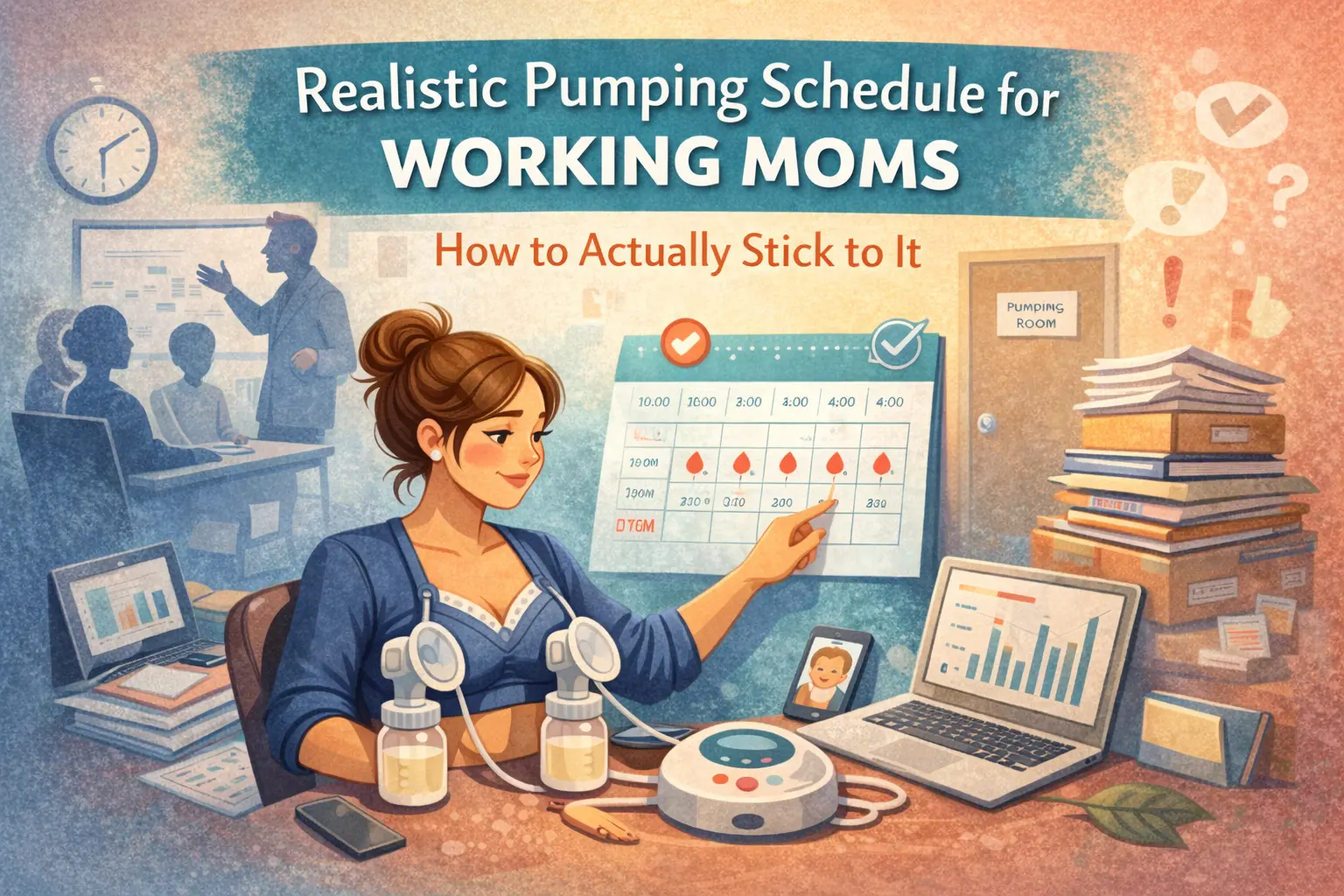
Why Is It So Hard to Stick to a Pumping Schedule at Work?
Most pumping schedules fail not because they're poorly designed, but because the workplace is unpredictable. Here's what actually gets in the way:
- Meetings that run over — the most common culprit
- No dedicated pumping space — having to search for a room adds friction
- Guilt about stepping away — many moms delay sessions to avoid judgment
- Fatigue and mental load — pumping gets deprioritized when you're exhausted
- Forgetting entirely — when you're deep in work, time disappears
Recognizing your specific obstacles is the first step. The PUMP for Nursing Mothers Act protects your right to reasonable break time — so if workplace barriers are the issue, know that the law is on your side. Once you know what's derailing you, you can build systems around it.
The Mindset Shift That Changes Everything
Most moms try to fit pumping around their work. The moms who succeed flip this: they treat pumping sessions as non-negotiable appointments — the same way they treat a client call or a deadline.
This isn't about being rigid. It's about giving pumping the same professional respect you give everything else on your calendar.
- Block pumping time in your calendar — make it visible to colleagues
- Decline or reschedule meetings that conflict with key sessions
- Communicate your needs to your manager if necessary — you have legal rights in most countries
Build Buffer Time, Not Exact Times
One of the biggest mistakes is scheduling pumping at exact times — 10:00 AM, 1:00 PM, 4:00 PM. When one session slips, the whole day feels off. Try our free Pumping Schedule Generator to build a flexible schedule that works around your day.
Instead, use windows:
| Session | Flexible Window |
|---|---|
| Mid-morning | 9:30 – 11:00 AM |
| Midday | 12:00 – 1:30 PM |
| Afternoon | 3:00 – 4:30 PM |
This gives you flexibility without sacrificing consistency. As long as you pump within the window, you're on track.
Not sure how wide your windows can be? See how pumping frequency affects supply →
What to Do When You Miss a Session
Missing a session happens. What matters is how you respond.
- Don't skip the next one — pump as soon as you can, even if it's a short session
- Don't double up aggressively — pumping twice as long doesn't make up for a missed session
- Add an extra session at home — evening or before bed can compensate
- If you miss multiple sessions — consider a power pumping session to restimulate supply
One missed session won't tank your supply. A pattern of missed sessions will. How power pumping can help recover supply →
Time-Saving Hacks That Actually Work
The less friction involved in pumping, the more likely you are to do it. These hacks reduce the time and effort of each session:
- Keep a dedicated pump bag at work — no packing and unpacking every day
- Use a hands-free pumping bra — lets you answer emails or eat lunch during sessions
- Store pump parts in the fridge between sessions — eliminates mid-day washing
- Set up your pumping space in advance — don't waste session time on setup
- Use a wearable pump for commutes — reclaim time you'd otherwise lose
How to Stay Consistent Without Burning Out
Consistency is the goal — but burnout is real, and it will derail your routine faster than any missed session.
- Lower the bar on hard days — a 10-minute session is better than nothing
- Track your output — seeing data over time shows you that small dips are normal
- Celebrate consistency, not volume — showing up matters more than how much you pump
- Protect your sleep and nutrition — fatigue is the #1 reason routines collapse
If stress is affecting your output, it's worth understanding why. How stress affects milk supply →
Final Thoughts
The moms who succeed at pumping at work aren't the ones with perfect schedules. They're the ones who build systems that survive imperfect days.
Build in flexibility. Reduce friction. Treat your sessions as non-negotiable. And when things go wrong — because they will — adjust and keep going.
You don't need a perfect routine. You need a resilient one.
Track your sessions, spot your patterns, and build a routine that actually sticks.
Learn more about Pumping Tracker →Related Articles



Written by
Piaora Editorial Team
Evidence-based guides on pumping, breastfeeding, and PCOS — researched with input from lactation professionals and written for real moms.
Learn more about our team and editorial standards →