How to Combine Breastfeeding and Pumping
Most breastfeeding moms end up doing both — nursing at home and pumping at work, or pumping to build a stash while still breastfeeding directly. Combination feeding is the norm, not the exception.
But doing both well requires a bit of planning. This guide covers how to build a schedule that works, how to protect your supply, and the common mistakes that trip moms up.
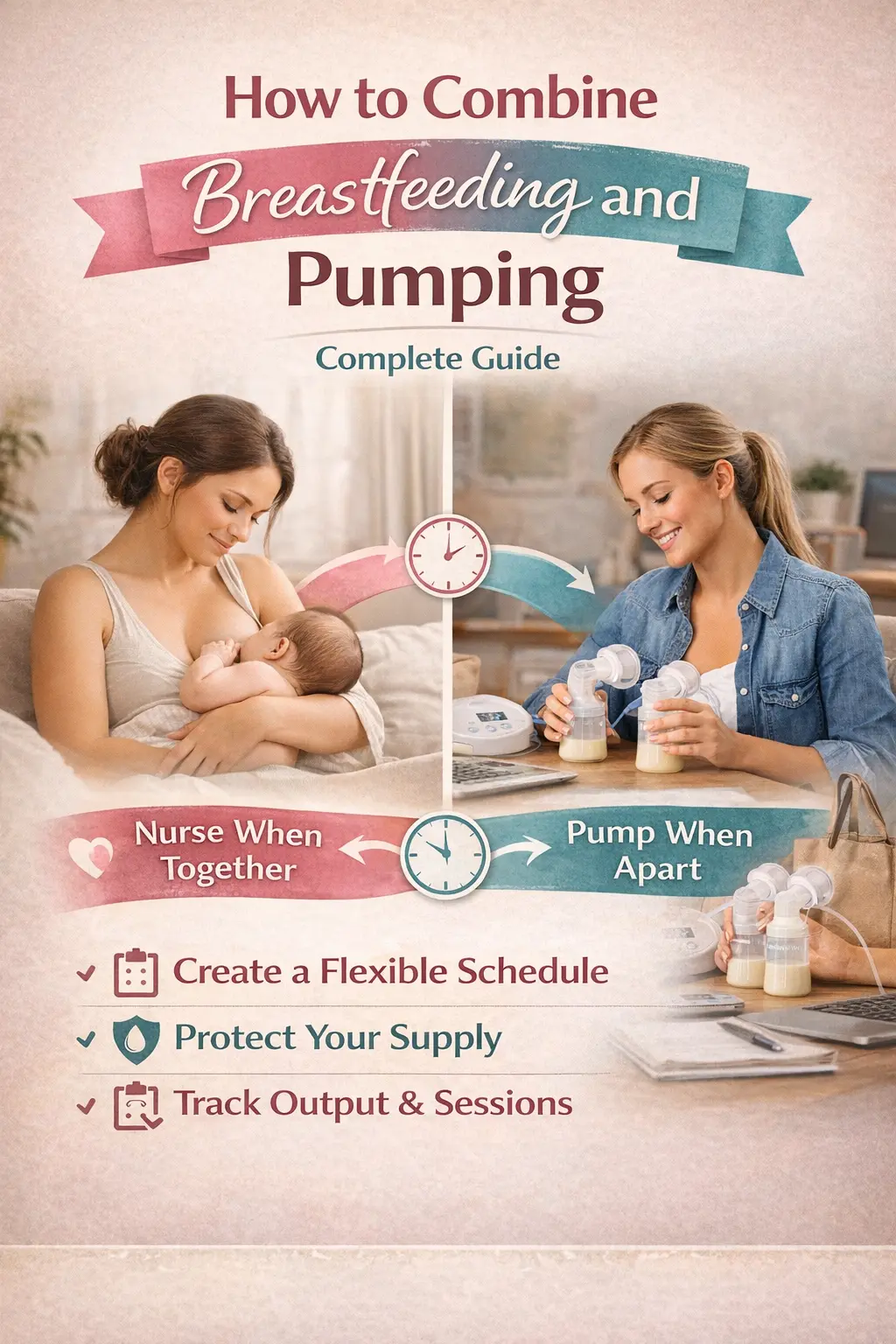
Can You Breastfeed and Pump at the Same Time? (Quick Answer)
Yes — and most working moms do exactly this. According to the AAP (American Academy of Pediatrics), combining breastfeeding and pumping is a safe and effective way to maintain milk supply while returning to work. The key is timing: breastfeed when you're with your baby, pump when you're not.
The main challenge is maintaining supply across both methods. Your body responds to total demand — so the combination of nursing and pumping sessions needs to match what your baby needs.
Why Moms Choose Combination Feeding
There are many reasons moms combine breastfeeding and pumping:
- Returning to work while wanting to continue providing breast milk
- Building a freezer stash for emergencies or future use
- Allowing partners or caregivers to feed the baby
- Supplementing when direct nursing isn't producing enough
- Maintaining supply during periods of separation
Still deciding between breastfeeding and pumping? Breastfeeding vs Pumping: Which Is Right for You? →
Still pregnant and planning ahead? When to start pumping before birth →
How to Build a Combination Feeding Schedule
The goal is to replace every missed nursing session with a pump session. Use our free Pumping Schedule Generator to build a personalized plan. Here's how to think about it:
| Time | At Home | At Work |
|---|---|---|
| Morning (before work) | Breastfeed baby | — |
| Mid-morning | — | Pump session |
| Lunch | — | Pump session |
| Afternoon | — | Pump session |
| Evening (after work) | Breastfeed baby | — |
| Night | Breastfeed baby | — |
The total number of sessions (nursing + pumping) should match your baby's feeding frequency. For most babies under 6 months, that's 8–10 times per day.
When to Pump If You're Also Breastfeeding
Timing matters. Here are the most effective windows:
- After morning nursing — prolactin is highest, so you'll get the most milk
- Between nursing sessions — pump 30–60 minutes after nursing to catch the next let-down
- When baby skips a session — pump to replace any missed nursing
- During work hours — pump every 2–3 hours to match baby's feeding schedule
Avoid pumping immediately before nursing — your baby needs the milk that's there. Give yourself at least 30 minutes between pumping and the next nursing session.
Will Pumping Affect My Breastfeeding Supply?
This is the most common concern — and the answer is: it depends on how you do it.
Pumping can increase supply if you're adding sessions on top of nursing. More stimulation = more milk.
Pumping can decrease supply if you're replacing nursing sessions with pumping and not pumping as effectively as your baby nurses. Babies are generally more efficient than pumps.
The safest approach: treat pumping as supplemental to nursing, not a replacement. Nurse whenever you can, pump when you can't.
Common Mistakes When Combining Breastfeeding and Pumping
- Pumping right before nursing — leaves less milk for baby, can cause frustration at the breast
- Not pumping enough at work — skipping sessions signals your body to produce less
- Expecting the same output as nursing — pumps are less efficient than babies; lower pump output doesn't mean low supply
- Stopping nursing too quickly — the more you nurse, the easier it is to maintain supply
- Not tracking sessions — without data, it's hard to know if your total stimulation is enough
How to Protect Supply When Doing Both
Supply drops are the biggest risk in combination feeding. These strategies help:
- Never go more than 4–5 hours without nursing or pumping during the day
- Keep at least one night nursing or pumping session, especially in the early months
- Track your total daily output — if it drops over several days, add a session
- Stay hydrated and eat enough — supply is sensitive to caloric deficit
If you notice a drop: 7 proven ways to increase milk supply →
Tracking Combination Feeding
When you're doing both, it's easy to lose track of how many total sessions you've had. Tracking helps you:
- See your total daily stimulation (nursing + pumping combined)
- Spot patterns — which days have lower output and why
- Catch supply drops early before they become a problem
Log your pump sessions with Piaora to stay on top of your output. Try our free Pumping Tracker →
Final Thoughts
Combining breastfeeding and pumping is completely doable — and for most working moms, it's the most practical way to continue providing breast milk. The key is consistency: nurse when you can, pump when you can't, and track your total output to catch problems early.
It takes a few weeks to find your rhythm, but once you do, it becomes second nature.
Track your pump sessions alongside breastfeeding to stay consistent and protect your supply.
Learn more about Pumping Tracker →Related Articles



Written by
Piaora Editorial Team
Evidence-based guides on pumping, breastfeeding, and PCOS — researched with input from lactation professionals and written for real moms.
Learn more about our team and editorial standards →